The Future of Steel Tube Exports from China: What to Watch
The future of steel tube exports from China is no longer a single forecast about tonnage. It is a shift from low-price standard pipe toward precision, documented, and standards-matched supply for OEMs and engineering buyers. That…
The future of steel tube exports from China is no longer a single forecast about tonnage. It is a shift from low-price standard pipe toward precision, documented, and standards-matched supply for OEMs and engineering buyers. That shift changes how importers should qualify suppliers, specify materials, and manage risk across a multi-week order cycle. Chinese mills still offer scale, but the durable advantage is moving toward process control, customized profiles, and the ability to prove material and dimensional integrity before shipment.
Why China’s Steel Tube Export Model Is Shifting
Chinese steel tube exports have historically been read as a volume story: commodity seamless pipe and welded tube made at scale and sold on price. That story is no longer enough. Rising domestic energy and environmental costs, more selective overseas buyers, and competition from other manufacturing regions have pushed mills to compete on capability rather than tonnage alone. The mills that remain credible are integrating cold drawing and cold rolling, adding special profiles, and documenting process control instead of shipping against a generic grade.
The shift matters because a buyer does not purchase tonnage. A buyer purchases a tolerance, a material certificate, a delivery window, and a shape that fits an assembly. When exporters compete on those variables, standard pipe becomes less interchangeable and supplier qualification becomes more valuable.
Trade Rules and Carbon Requirements Are Rewriting Sourcing Decisions
Export policy and market access are becoming a larger part of the cost equation. Tariffs, anti-dumping duties, and evolving carbon-border rules differ by destination, and they change the break-even point for identical tube specifications. An importer that chooses only on mill price can find that a landed-cost comparison reverses after duties and documentation requirements are applied. The future export flow will favor suppliers that can provide the paperwork and standard alignment a destination market demands: ASTM for North America, EN and DIN for Europe, JIS for Japan, and the relevant quality and traceability documents that accompany those systems.
This does not mean every market becomes closed. It means sourcing decisions must include compliance cost and documentation lead time as first-order variables rather than afterthoughts.
Destination-specific standards now determine whether an otherwise identical tube clears compliance review. <Understanding ASTM, EN, DIN and JIS Tube Standards> covers how the major standards differ and where buyers should focus their inspection requests.
The Precision and Customization Premium
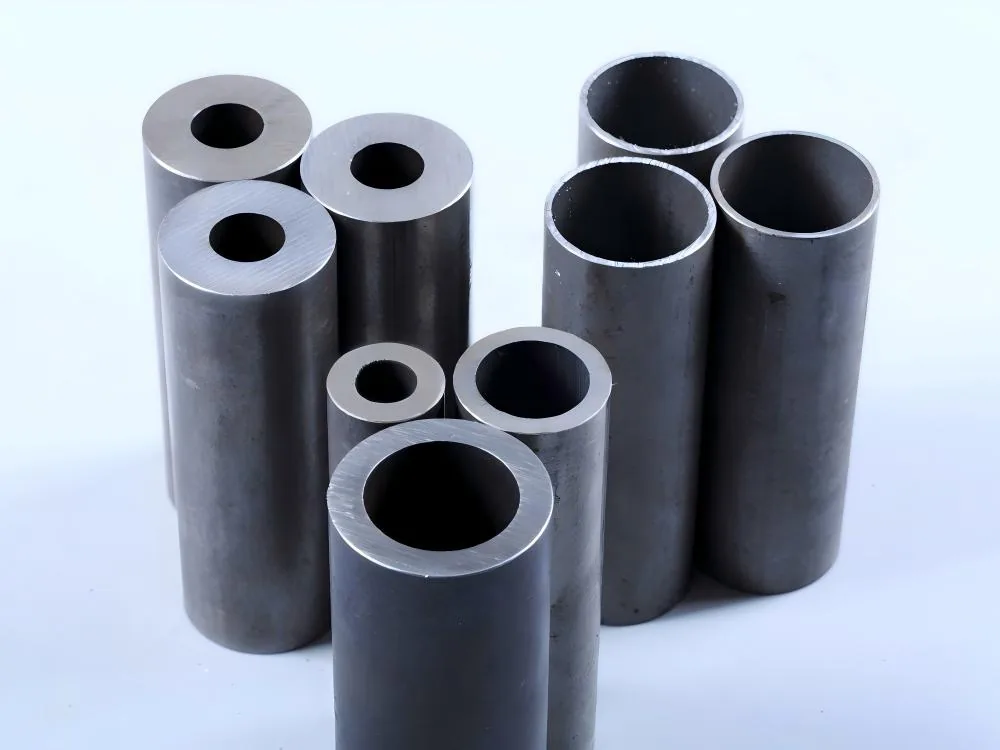
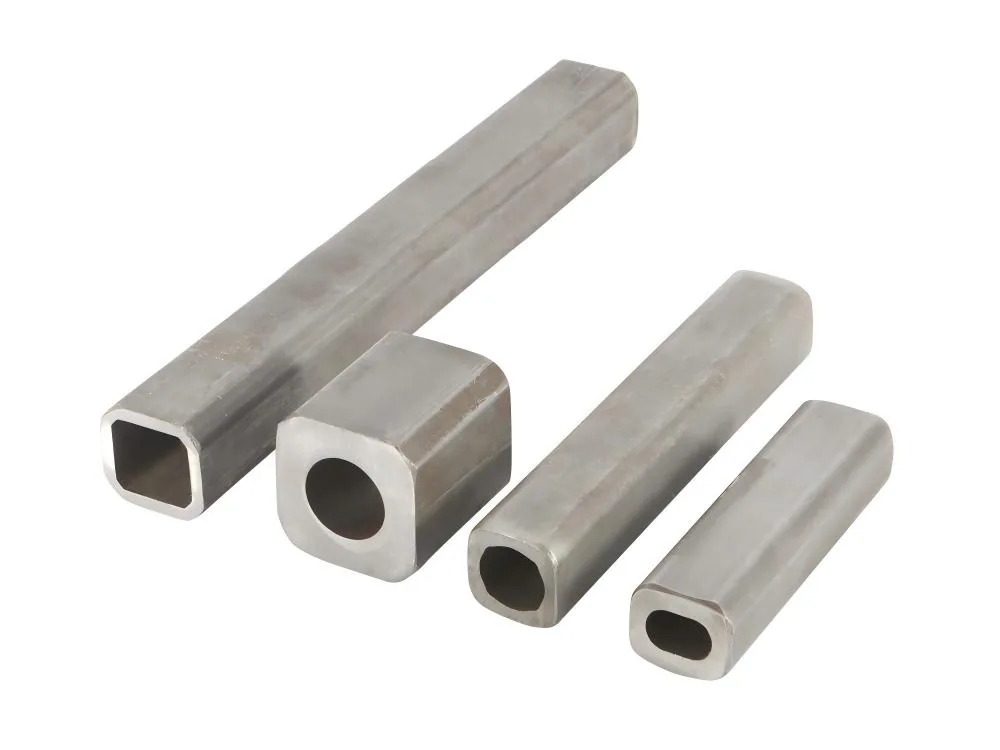
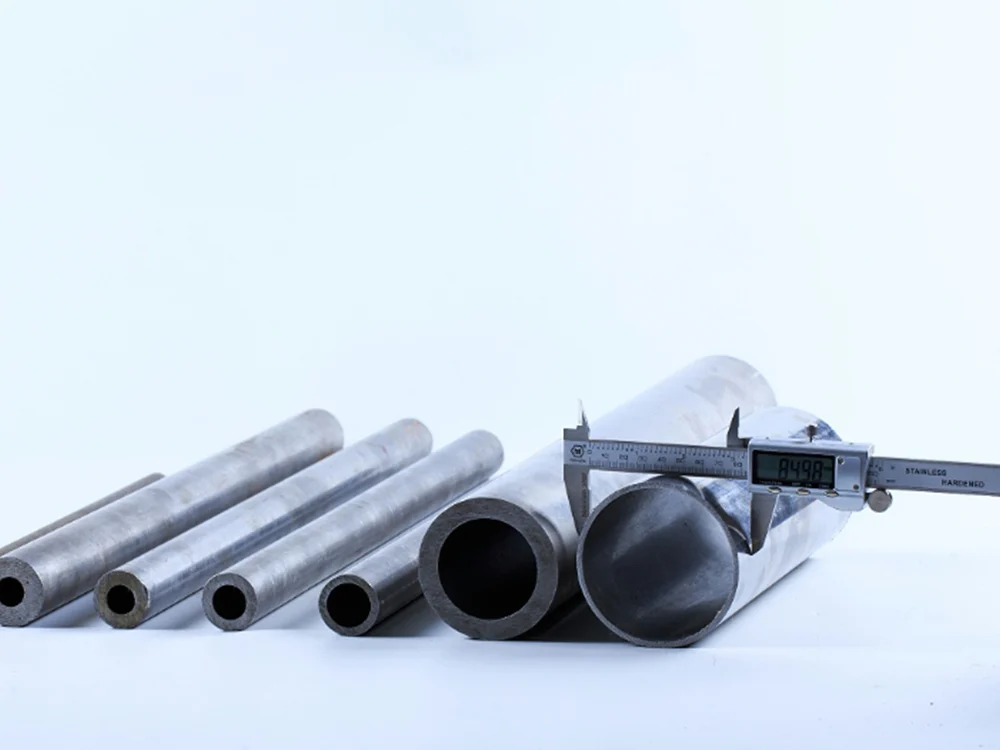
The export segment with the strongest defensible position is not plain round tube. It is tube that arrives with a controlled outer diameter, wall thickness, surface condition, and profile that the buyer can use without rework. Chinese precision tube suppliers that control the full process can hold outer diameters from 10 to 108 mm, wall thickness from 1 to 20 mm, and a ±0.1 mm precision tolerance after cold drawing and cold rolling. That range is useful not because it is exotic, but because it allows one supplier to cover a bracket, a machined component, a hydraulic cylinder, or a structural profile without changing process logic.
The buyer’s job is to verify that the stated tolerance is attached to the required material grade and test certificate, not assumed from a general catalogue claim. Custom shapes and small batches create value only when dimensional control and material traceability are included in the same order.
Custom profiles and tight tolerances only reduce total cost when the order window is managed as carefully as the drawing. <Managing Custom Steel Tube Lead Times for OEM Buyers> covers how OEM buyers can keep custom tube programs on schedule.
Digital Traceability and Quality Evidence
The next export advantage is proof. Buyers in automotive, high-pressure boiler, and hydraulic applications increasingly expect more than a mill test report that appears weeks after shipment. They want batch-level records that link a heat, a production step, an inspection result, and a final certification. Digital traceability does not change the steel itself, but it changes how quickly a buyer can audit a claim and isolate a problem.
That matters because an import decision is made before the product arrives. If the supplier can show the full record while the order is in transit, the buyer can clear customs, qualify the material for production, and handle a nonconformance without waiting for a paper trail to be reconstructed.

A clean certificate alone is no longer enough when buyers need to trace a batch back to its heat and production record. <How Digital Traceability Tightens Steel Tube Quality Control> covers how digital records tighten quality control without adding manual paperwork.
Where Application Demand Is Moving Next
Export demand is concentrating in applications where a tube failure is expensive and where material selection is tied to a standard. Automotive lightweighting, hydraulic systems, boiler and heat exchanger equipment, construction machinery, and corrosion-exposed structures all require more than a generic carbon steel grade. The specification becomes the product.
That is why standards literacy will separate reliable suppliers from transactional mills. A buyer who can name ASTM A519, EN 10305-1, DIN 2391, JIS G3445, or GOST 8733 can test a supplier’s technical response quickly. A supplier that can explain the difference between a cold drawn seamless tube and a cold rolled welded tube, and when each makes sense, is more likely to deliver a usable part rather than a material surprise.
How to Build a China Sourcing Strategy That Survives Change
Start with the landed specification, not the mill price. A useful sourcing screen compares the same material grade, tolerance, test scope, delivery window, and destination compliance burden across suppliers. Then monitor the signals that actually change that comparison.
| Signal | What to track | What not to infer |
|---|---|---|
| Export volume headlines | Destination mix, product mix, unit-value shift | A rising total means every buyer gets the same benefit |
| Standard revisions | Required test documents, tolerance tables, transition dates | A standard number alone verifies a supplier’s capability |
| Tariff and duty changes | HS code coverage, origin rules, landed-cost effect | A policy announcement instantly changes every order cost |
| Carbon reporting requirements | Data boundaries, verification scope, supplier readiness | A new rule creates the same compliance burden for all buyers |
| Mill capacity announcements | Qualified process range, available inspection capacity, real lead time | Installed capacity equals deliverable capacity for custom profiles |
The most practical rule is to make documentation a selection criterion at the quotation stage. If a supplier cannot explain which inspection certificate, standard edition, and dimensional tolerance will govern the order, the buyer is carrying risk that a cheaper price may not cover.
What to Watch in the Next Decade
The next decade will reward suppliers that can combine flexible geometry, standard compliance, and traceable quality evidence. It will penalize mills that compete only on price without process control. For buyers, that means the strongest China sourcing strategy is not to avoid the market because of uncertainty. It is to reduce uncertainty through specification discipline.
Watch for stronger customer-specific approval programs, more use of PMI and nondestructive testing as routine evidence, and closer links between design review and production capability. Buyers should also expect destination carbon and trade rules to become part of normal sourcing conversations rather than exceptions.
Plan Your Steel Tube Sourcing Around the Next Shift
If you are reviewing a current steel tube specification or qualifying a new source, send the required standard, dimensions, tolerance, material grade, annual volume, and destination compliance needs. Tenjan Steel Tube can review the requirement against its cold drawn seamless, cold rolled welded, and custom profile capabilities and return a material and inspection plan. Contact Sunny@tenjan.com, +86 51988789990, or WhatsApp +86 13401309791 for a technical quotation.
FAQ
Will Chinese steel tube prices remain lower than Western suppliers?
They often remain competitive, but the comparison that matters is landed cost. Freight, duties, certification, inspection, and the cost of correcting a nonconformance can reverse an FOB price advantage. Evaluate the total cost of the specified tube, not the average export price.
Is China still reliable for precision steel tube exports?
It depends on the supplier. Process-controlled mills that use cold drawing or cold rolling, maintain standard-aligned inspection records, and support traceability can be highly reliable. Verify capability with the required standard, tolerance, material certificate, and sample or batch inspection plan before committing to a program.
How do carbon border rules affect steel tube sourcing?
They may add reporting or compliance obligations in some destination markets, especially for energy-intensive material. Buyers should ask whether the supplier can provide the emissions data, production record, and certificate scope the destination requires. Do not assume a standard quotation already covers those new obligations.
What should an importer check before placing a future steel tube order?
Confirm the standard edition, outer diameter and wall thickness tolerances, material grade, required test documents, destination import rules, and realistic delivery window. Also check how the supplier handles changes in batch size, profile design, and urgent rescheduling before those issues become delays.
If you’re interested, check out these related articles:
How to Verify ISO Certification for Steel Tube Manufacturers
Steel Pipe Heat Treatment: Key Processes and Applications
Steel Tube Manufacturing Process: Precision and Quality
Steel Tube Supplier Evaluation: Technical Criteria for Engineers