Hot-Rolled Seamless Tube Production: Process and Checks
Review hot-rolled seamless tube production. Check scope, material condition, inspection evidence and ordering details before accepting a supplier quotation.
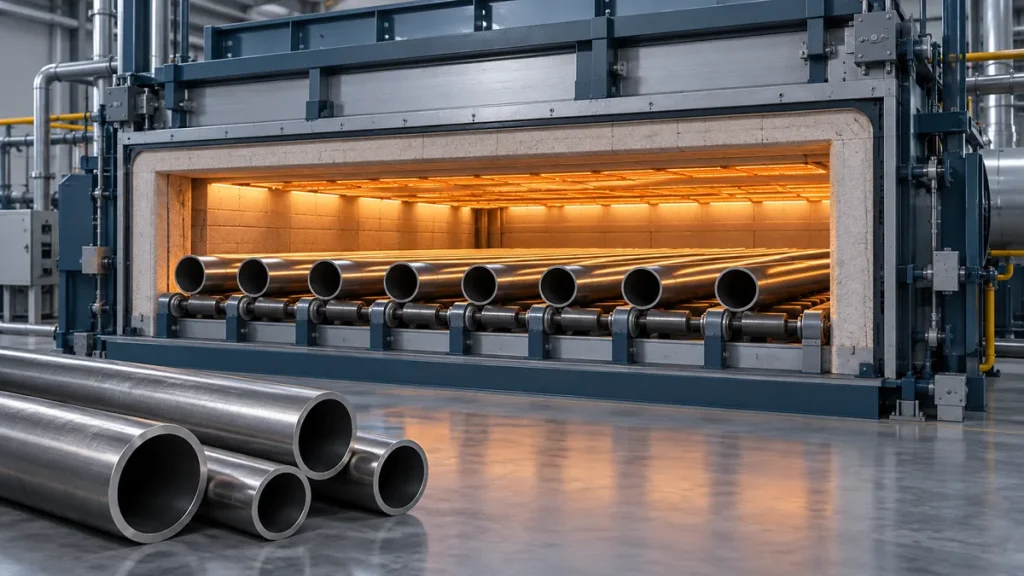
A common seamless production route begins with a prepared billet that is heated and pierced to form a hollow shell.
From billet to hollow
Subsequent rolling and sizing develop the required section. Mill arrangements differ, so a general process description is not a manufacturing specification. Billet quality, alignment, tooling condition and controlled deformation all influence the starting hollow that later operations must process.
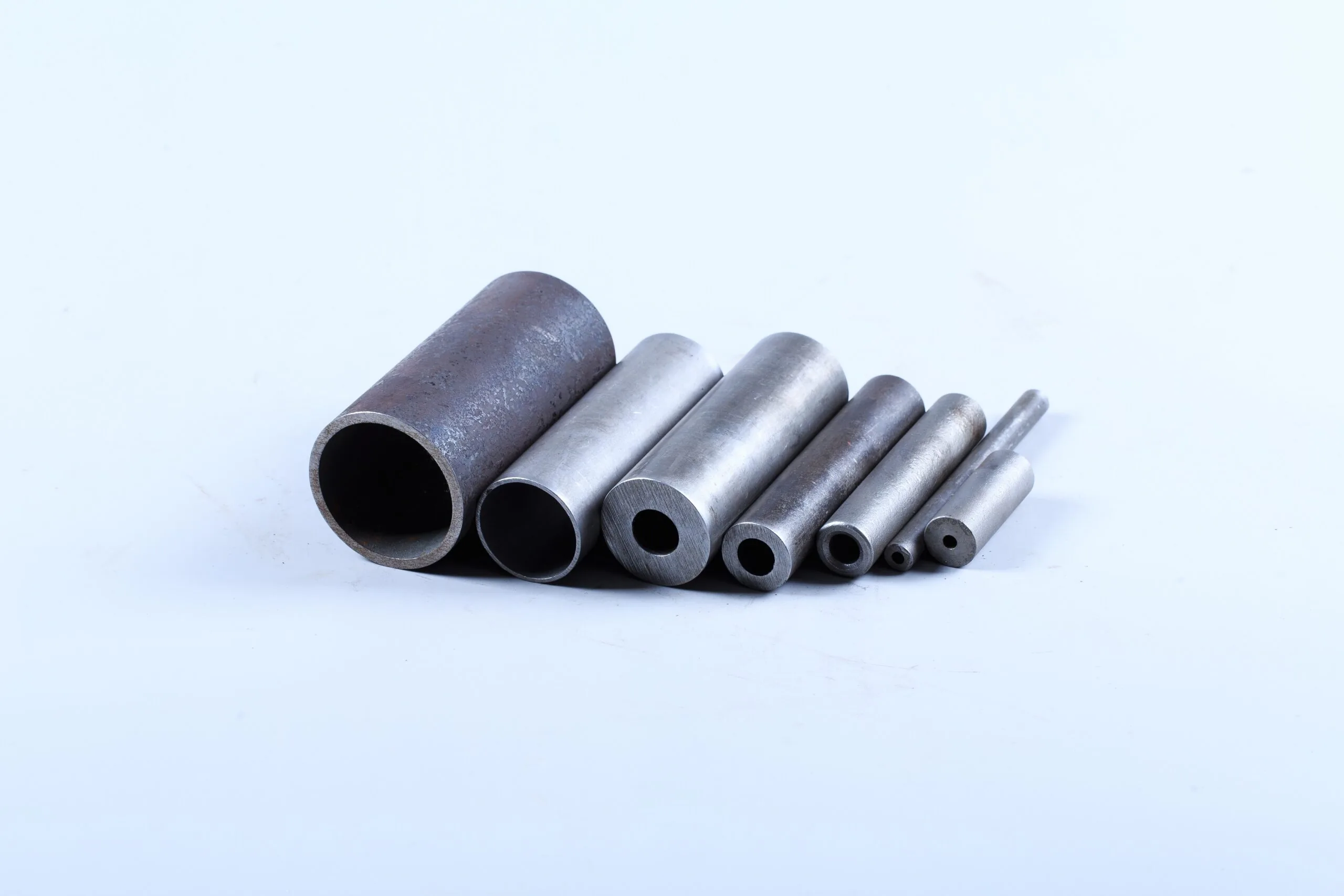
Rolling, sizing and finishing
Rolling changes length, wall and diameter through a controlled sequence. Sizing or reducing equipment brings the section toward its target dimensions, followed by the cooling and finishing operations required by the route. The final delivered condition depends on the product specification and additional treatment. A hot-finished description alone does not establish a particular microstructure, toughness value or finished surface requirement.
Where dimensional and surface checks belong
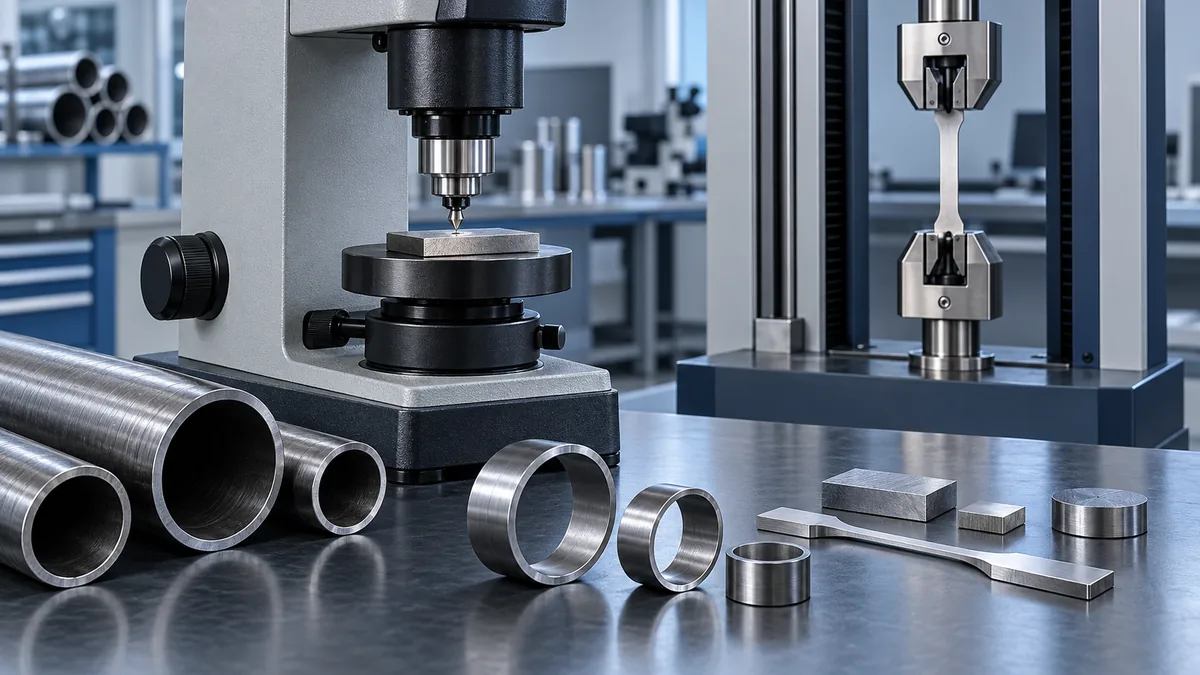
Inspection can include wall distribution, diameter, length, straightness and surface condition, together with the specified material testing and examination. The order should identify which characteristics matter to downstream processing. A defect in a starting hollow cannot be assumed to disappear in later finishing. Records and traceability help distinguish starting-material issues, rolling effects and problems introduced during subsequent operations.
When cold finishing follows
Cold drawing or cold rolling can be used after a hot-produced hollow when the required dimensions, condition or surface call for that route. Additional processing also changes the inspection and treatment plan. Evaluate the complete sequence through delivery, including any final heat treatment and straightening. Compare quotations for the same final acceptance requirements rather than ranking hot and cold processing as universally better or worse.
A practical specification review
When a hot-produced hollow will undergo further cold finishing, evaluate starting-hollow acceptance separately from final delivery acceptance. Record the conditions in which dimensions and surface defects will be checked. This makes it possible to identify which process stage is responsible for a deviation instead of treating all defects as something the final operation should remove.
Information to confirm before accepting an offer
- Identify the component or supply item, its intended function and the controlled drawing or procedure revision.
- State applicable product and project documents, material or test requirements, dimensions and the condition in which acceptance is assessed.
- Define the required evidence, inspection responsibilities, identification, reporting format and handling of deviations.
- Confirm what the quotation includes, any subcontracted operations, preservation requirements and how proposed changes will be approved.
Resolve unclear requirements before manufacture or examination. Keep the accepted offer, approved deviations and release records together so that a repeat order can use the same technical basis.
Related technical guides
- Steel Tube Manufacturing Process: Precision and Quality
- Cold Drawn vs Cold Rolled Steel Tubes
- Common Steel Tube Defects: Identification, Causes and Prevention
For a tube inquiry, send the drawing, required material and acceptance requirements through the Tenjan contact page so the requested scope and any supply limitations can be reviewed.