Welcome to Changzhou Tenjan Steel Tube Co., Ltd
Sunny@tenjan.com



ASTM A335 P11 alloy pipe shows up in projects where the margin for error is essentially zero. Power plants running superheaters at 540°C, refineries pushing corrosive feeds through heat exchangers under pressure—these environments punish weak materials quickly. The chromium-molybdenum chemistry in P11 exists precisely because ordinary carbon steel cannot hold its shape or resist oxidation under those conditions. What makes this grade worth understanding is not just its composition on paper, but how that composition translates into real performance when temperatures climb and pressures stay constant for years at a time.
ASTM A335 P11 belongs to the ferritic alloy steel family, with chromium and molybdenum doing most of the heavy lifting. Chromium sits in the 1.00–1.50% range, which is enough to form a protective oxide layer that resists scaling when the pipe faces hot, oxidizing atmospheres. Molybdenum, at 0.44–0.65%, strengthens the grain boundaries and slows creep—the gradual deformation that happens when metal stays under load at high temperature for extended periods.
| Element | P11 Composition Limits (%) | P22 Composition Limits (%) |
|---|---|---|
| Carbon | 0.05 – 0.15 | 0.05 – 0.15 |
| Manganese | 0.30 – 0.60 | 0.30 – 0.60 |
| Phosphorus | ≤ 0.025 | ≤ 0.025 |
| Sulfur | ≤ 0.025 | ≤ 0.025 |
| Silicon | 0.50 – 1.00 | 0.50 max |
| Chromium | 1.00 – 1.50 | 2.00 – 2.50 |
| Molybdenum | 0.44 – 0.65 | 0.90 – 1.10 |
The mechanical numbers matter just as much. P11 delivers a minimum tensile strength of 415 MPa and yield strength of 205 MPa. These values hold up under stress because the microstructure—typically bainitic or a mix of ferrite and bainite—remains stable even after thousands of hours in service. The alloy does not soften the way plain carbon steel would.
The chromium content prevents the surface from degrading in hot, corrosive atmospheres. Without it, oxide scale would flake off continuously, thinning the wall over time. Molybdenum works deeper in the structure, pinning dislocations and carbides so the material resists creep deformation. Together, these elements keep the ASTM A335 P11 alloy pipe dimensionally stable and mechanically sound through years of high-temperature cycling.
Power generation facilities rely heavily on P11 for boiler tubes, superheaters, and reheaters. Steam temperatures in these systems routinely exceed 500°C, and the pipes must handle both thermal stress and internal pressure without bulging or cracking. Creep resistance becomes the deciding factor—materials that cannot resist slow deformation under sustained load will fail eventually, often without warning.
Petrochemical plants present a different challenge. Here, the ASTM A335 P11 alloy pipe faces corrosive process fluids alongside high temperatures. Heat exchangers, pressure vessels, and piping networks all demand materials that resist both chemical attack and thermal degradation. The seamless construction eliminates weld seams, which are potential weak points where corrosion can concentrate or stress can accumulate. This matters when the consequences of a leak include process shutdowns, environmental incidents, or worse. The demand for Seamless Alloy Steel Tubes in these sectors reflects how seriously engineers take these risks.
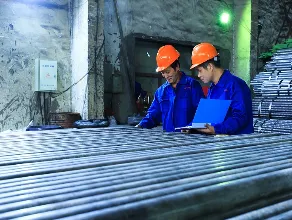
For more insights into maintaining material integrity, consider reading 《Analysis of Key Causes and Prevention Strategies for Cracking in Seamless Steel Tubes during Bending and Flattening》.
Manufacturing ASTM A335 P11 alloy pipe to specification requires tight process control at every stage. Cold drawing produces the dimensional precision that critical applications demand—tighter tolerances on wall thickness and outside diameter, plus a smoother surface finish that reduces friction losses in flow applications. The cold work also increases strength, though this benefit must be balanced through subsequent heat treatment.
The heat treatment sequence typically involves normalizing followed by tempering. Normalizing heats the pipe to a temperature where the microstructure transforms, then air-cools it to refine the grain size and improve uniformity. Tempering follows at a lower temperature, relieving internal stresses from cold drawing while optimizing the balance between strength and toughness. Skip either step, and the pipe may be too brittle or too soft for its intended service.
Quality verification runs throughout production. Ultrasonic testing catches internal flaws that would compromise pressure containment. Eddy current testing finds surface and near-surface defects. Positive Material Identification confirms the chemistry matches the specification—a critical check when multiple alloy grades move through the same facility. These controls ensure every Seamless Pipe&Tube leaving the line meets ASTM A335 requirements.
Welded pipes have a seam, and that seam represents a discontinuity in the material. Even a well-executed weld introduces a heat-affected zone with different properties than the base metal. Under high pressure and temperature, this zone can become a failure initiation site. Seamless P11 pipes avoid this entirely. The material properties remain uniform around the entire circumference, which translates to higher allowable stresses and greater confidence in long-term integrity. For applications where failure is not an option, seamless is the standard choice.
Manufacturers working to ASTM A335 standards run multiple tests on every heat of material. Ultrasonic testing detects internal voids or inclusions that could grow into cracks under cyclic loading. Eddy current testing identifies surface defects that might serve as stress concentrators. Hydrostatic testing pressurizes each pipe to verify it can contain its rated pressure without leaking or deforming. Positive Material Identification uses portable spectrometers to confirm the alloy chemistry matches the mill test report. Dimensional inspection verifies wall thickness and diameter fall within tolerance. Together, these checks provide documented assurance that the ASTM A335 P11 alloy pipe will perform as specified.
ASTM A335 defines the baseline requirements for P11 alloy pipes—chemical composition limits, mechanical property minimums, heat treatment parameters, and testing protocols. Each pipe must pass tensile testing, hardness testing, and either flattening or bending tests depending on size. Marking requirements ensure traceability: the manufacturer’s name, material designation, and heat number appear on every length.
International standards often align with ASTM but may add regional requirements. EN 10216-2 covers seamless steel tubes for pressure purposes in European markets. JIS standards, including JIS G3461 Steel Pipe specifications for boiler and heat exchanger tubes, serve Japanese and Asian markets. Manufacturers supplying global projects must understand these parallel requirements and maintain certifications accordingly. Material test reports documenting compliance with multiple standards simplify procurement for international projects.
The performance of ASTM A335 P11 alloy pipe depends partly on how it gets installed and maintained. Welding requires preheating to reduce thermal gradients and post-weld heat treatment to restore the heat-affected zone to acceptable properties. Without preheating, the rapid cooling after welding can create hard, brittle zones prone to hydrogen cracking. Without PWHT, residual stresses remain locked in the joint, reducing fatigue life and increasing susceptibility to stress corrosion cracking.
Installation practices matter too. Proper alignment prevents bending stresses that add to the operating load. Adequate support keeps the pipe from sagging under its own weight when hot. Protection during construction prevents mechanical damage that could become a corrosion initiation site later.
Once in service, inspection programs track the pipe’s condition over time. Thickness measurements detect wall loss from corrosion or erosion. Visual inspection catches external damage or coating failures. For high-temperature service, creep monitoring may be warranted on critical runs. Catching problems early extends service life and prevents unplanned outages.
Selecting a manufacturer for ASTM A335 P11 alloy pipe involves more than comparing prices. Vertical integration—where the manufacturer controls everything from raw material sourcing through final testing—provides assurance that quality remains consistent across production lots. A supplier dependent on outside sources for heat treatment or testing has less control over the final product.
Certifications indicate capability. ISO quality management systems provide a framework for consistent processes. The ability to perform PMI and NDT in-house means faster turnaround and direct accountability for results. Manufacturers offering Special-Shaped Alloy Steel Tubes or custom OEM solutions demonstrate engineering depth beyond standard catalog items. Experience with global projects suggests familiarity with international standards, export documentation, and logistics—practical considerations that affect delivery schedules and total cost.
Both grades handle high-temperature service, but P22 contains roughly twice the chromium and molybdenum of P11. This higher alloy content pushes P22’s useful temperature range higher and improves its creep resistance under extreme conditions. P11 works well up to about 593°C; P22 extends that capability further. The tradeoff is cost—more alloying elements mean higher material prices. Selecting between them comes down to matching the grade to the actual service conditions rather than overspecifying.
ASTM A335 P11 alloy pipe performs reliably up to approximately 593°C (1100°F) in continuous service. The chromium content resists oxidation at these temperatures while molybdenum maintains creep strength. Actual operating limits depend on pressure, design life, and safety factors specified by the applicable code. Running P11 beyond its recommended range accelerates degradation and shortens service life.
Standard practice includes ultrasonic testing for internal flaws, eddy current testing for surface defects, and hydrostatic testing for pressure containment. Some applications add radiographic testing for volumetric inspection of welds or suspect areas. Magnetic particle or liquid penetrant inspection can supplement these methods for surface-breaking defects. Positive Material Identification confirms the alloy chemistry matches specifications—a simple check that prevents costly material mix-ups.
For precision-engineered ASTM A335 P11 alloy pipes tailored to your exact specifications, trust Changzhou Tenjan Steel Tube Co.,Ltd. As a vertically integrated manufacturer with ISO-certified quality control and global project experience, we deliver seamless, cold-drawn solutions for critical high-temperature and high-pressure applications. Contact us today to discuss your project requirements and ensure material integrity and performance. Email: Sunny@tenjan.com | Tel: +86 51988789990| Tel: +86 51988789990


Home Product Capabilities Case Studies Blogs About Get a Quote
Pipe & Tube Manufacturing Process Shapes & Profiles Pipes & Tubes Material Standard Steel Pipes & Tube Rebar Couplers Cold Drawn Steel Profiles & Bars
Oil & Petrochemical Industry Automotive & Motorcycle Components Mechanical Engineering Components Mining Construction Support Structures High-Pressure Boiler System Construction Machinery Geological Drilling Agricultural Machinery Parts Industrial Fluid Transfer Systems


© 2024 Changzhou Tenjan Steel Tube Co., Ltd All rights reserved. Privacy StatementTerms-ConditionsSitemap
