Welcome to Changzhou Tenjan Steel Tube Co., Ltd
Sunny@tenjan.com



Picking the right pipe material for an industrial system is one of those decisions that shapes everything downstream—performance, safety, maintenance cycles, and ultimately what the project costs over its full lifespan. I’ve watched engineers spend weeks debating alloy steel versus carbon steel, and for good reason. The wrong call can mean premature failures or unnecessary expense. The right call requires understanding what each material actually does at the molecular level and how that translates to real-world conditions.
The distinction between alloy and carbon steel pipes starts with chemistry. Carbon steel is fundamentally iron combined with carbon, plus trace amounts of other elements. The carbon content drives most of its mechanical behavior—more carbon generally means harder, stronger material, but at the cost of ductility and ease of welding. Under a microscope, carbon steel typically shows ferrite and pearlite structures that define its baseline capabilities.
Alloy steel takes a different approach. Beyond carbon, manufacturers deliberately introduce elements like chromium, molybdenum, nickel, manganese, and silicon. Each addition serves a specific metallurgical purpose. Chromium builds corrosion resistance and improves how the steel responds to hardening treatments. Molybdenum contributes high-temperature strength and helps the material resist creep—that slow deformation that happens under sustained heat and stress. Nickel makes the steel tougher and more ductile, which matters enormously in cold environments where brittleness becomes dangerous. Silicon works as a deoxidizer during production and adds strength. Manganese does similar work while also improving hardenability.
Heat treatment then refines these compositions into final products. Annealing softens the steel for easier machining. Normalizing creates a more uniform grain structure. Quenching locks in hardness through rapid cooling. Tempering backs off some of that hardness to reduce brittleness. The combination of chemistry and thermal processing gives engineers a wide palette of performance characteristics to match specific applications.
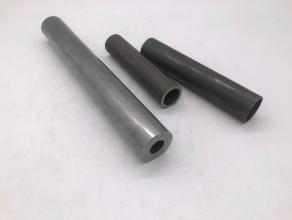
Think of alloying elements as precision tools that transform basic carbon steel into specialized materials. Chromium stands out for its impact on corrosion resistance and hardenability, which is why grades like 41Cr4 Alloy Pipe perform so well in aggressive environments. Molybdenum becomes critical when pipes face sustained heat—it prevents the gradual deformation that would otherwise compromise system integrity over time. Nickel proves its value in cold-temperature service, maintaining toughness when other steels would turn brittle and crack-prone.
Manganese and silicon play supporting roles that matter more than their modest percentages might suggest. Both contribute to strength, and both help during steel production by removing oxygen that would otherwise create defects. The precise ratios of these elements determine whether a pipe can handle 400°C service, resist acidic process fluids, or survive decades of pressure cycling without fatigue failure.
| Element | Carbon Steel (Typical %) | Alloy Steel (Typical %) | Primary Benefit |
|---|---|---|---|
| Carbon | 0.05-1.5 | 0.05-0.6 | Strength, Hardness |
| Chromium | < 0.3 | 0.4-18 | Corrosion Resistance, Hardenability |
| Molybdenum | < 0.05 | 0.15-5 | High-Temperature Strength, Creep Resistance |
| Nickel | < 0.3 | 0.5-5 | Toughness, Ductility (esp. low temp) |
| Manganese | 0.3-1.6 | 0.5-2 | Strength, Hardenability, Deoxidizer |
| Silicon | 0.1-0.5 | 0.1-2 | Strength, Deoxidizer |
When engineers evaluate steel pipes, three properties dominate the conversation: mechanical strength, durability under operating conditions, and resistance to corrosion. Carbon steel pipes deliver respectable tensile strength and yield strength for general structural work. They’re workable and economical. But their ductility and toughness have limits, and they rust readily when exposed to moisture or corrosive chemicals. A 1020 Steel Pipe, for instance, welds beautifully and forms easily—perfect for applications that don’t push material limits.
Alloy steel pipes occupy different territory. Their engineered compositions produce higher tensile strength (the maximum stress before fracture) and yield strength (where permanent deformation begins). Hardness increases. Ductility—the ability to stretch without breaking—can be maintained or even improved depending on the alloy design. Toughness, meaning resistance to sudden fracture under impact, typically runs higher. Alloy steels also handle cyclic loading better, resisting fatigue that would crack carbon steel over thousands of stress cycles. Their creep resistance keeps them dimensionally stable during years of high-temperature service. And their corrosion resistance, especially against chemical attack and localized pitting, makes them viable in environments that would destroy carbon steel within months.
Not automatically, but the odds favor it. The alloying elements that boost tensile strength and yield strength directly address what high-pressure containment demands. Materials like 4140 Steel Pipe and 25CrMo4 Steel Pipe exist specifically because chromium and molybdenum create the combination of strength and temperature stability that pressure vessels require. Pressure vessel codes often specify alloy steels for exactly this reason—the safety margins they provide justify the higher material cost.
Carbon steel pipes like ASTM A106 Gr.B Steel Pipe handle elevated temperatures competently for many applications. But when pressures climb into ranges where failure consequences become severe, alloy steels provide the additional security and service life that justify their selection. The decision ultimately depends on the specific pressure, temperature, and consequence profile of each application.
Corrosive environments separate steel grades quickly. Carbon steel exposed to seawater or industrial chemicals deteriorates through rust formation and chemical attack. The material simply lacks the protective mechanisms to survive. Alloy steels with elevated chromium content form passive oxide layers that resist ongoing corrosion. Some compositions specifically target pitting corrosion—those localized attacks that punch through pipe walls while surrounding areas look fine. Others resist stress corrosion cracking, where tensile stress and corrosive media combine to create cracks that propagate rapidly.
High-chromium stainless steels represent the extreme end of corrosion resistance, but other alloy steels offer intermediate solutions. 09CrCuSb Steel Pipe incorporates copper and antimony to enhance atmospheric corrosion resistance—useful when full stainless specification isn’t necessary but carbon steel won’t survive the environment.
| Property | Carbon Steel (General) | Alloy Steel (General) | Notes |
|---|---|---|---|
| Tensile Strength | Moderate | High to Very High | Crucial for load-bearing and pressure containment |
| Yield Strength | Moderate | High to Very High | Indicates resistance to permanent deformation |
| Hardness | Moderate | High | Resistance to indentation and abrasion |
| Ductility | Good | Variable (can be good) | Ability to deform plastically without fracture |
| Toughness | Moderate | High | Resistance to fracture under impact |
| Corrosion Resistance | Low | Moderate to High | Varies greatly with alloying elements; critical for longevity |
Application requirements drive material selection more than any other factor. Carbon steel pipes, including Seamless Carbon Steel Tubes, work well for general structural purposes, moderate-pressure fluid transport, and environments without aggressive corrosion. Construction machinery and certain automotive components use carbon steel where cost matters more than extreme performance.
Alloy steel pipes become necessary when operating conditions push beyond what carbon steel can reliably handle. Their enhanced properties make them standard choices in:
Oil & Gas: Pipelines and drilling equipment face high-pressure service combined with corrosive fluids. 4130 Seamless Pipe and 8620 Alloy Pipe see frequent specification.
Petrochemical: Heat exchangers and reactors demand high-temperature stability alongside chemical resistance.
Automotive and Aerospace: Components requiring high strength-to-weight ratios, fatigue resistance, and precision tolerances. SCM440 Steel Pipe and 5120 Alloy Pipe serve these needs.
Power Generation and High-Pressure Boilers: Extreme temperatures and pressures require materials like DIN 17175 Steel Pipe and ASTM A192 Steel Pipe.
Hydraulics: Precision tubing with tight dimensional control and consistent strength. EN10305-1 Steel Pipe and Precision Pipe&tube meet these specifications.
Construction Machinery: Robust components under significant stress and impact loading. ST52 Steel Pipe and Q355B Steel Pipe handle these demands.
Temperature extremes—both high and low—create distinct material challenges. High-temperature boilers and heat exchangers need steels that resist creep and thermal fatigue over years of service. JIS G3461 Steel Pipe and ASTM A106 Gr.B Steel Pipe represent carbon steel options formulated for elevated temperature work. When temperatures climb higher or service conditions become more severe, alloy steels like 25CrMo4 Steel Pipe deliver the chromium and molybdenum content that maintains strength and dimensional stability.
Cryogenic applications reverse the problem. At temperatures well below freezing, many steels lose toughness and become brittle. Fractures that would never occur at room temperature become real risks. Nickel-containing alloy steels maintain their ductility and toughness at these low temperatures, preventing the brittle fracture that could cause catastrophic failures in LNG systems or cold-climate installations.
Alloy steel pipes cost more per ton than carbon steel pipes. That’s the obvious part. The less obvious part involves what happens over the full service life of a piping system.
A complete cost picture includes several factors:
Material Cost: Carbon steel wins on initial purchase price.
Fabrication Cost: Some alloy steels need specialized welding procedures or post-weld heat treatment, adding labor and time.
Installation Cost: Generally comparable between the two.
Maintenance: Carbon steel in corrosive service requires ongoing protection—coatings, cathodic protection, regular inspections, and periodic replacement of degraded sections.
Lifespan: Alloy steels often last significantly longer under demanding conditions, reducing how often systems need replacement.
Downtime Costs: A failed pipe in a critical process means lost production, emergency repairs, and potentially damaged equipment downstream.
Safety and Environmental Exposure: Failures can trigger regulatory penalties, cleanup costs, and liability exposure.
Running a lifecycle cost analysis frequently shows that alloy steel’s higher upfront cost pays back through reduced maintenance, longer service intervals, and fewer unplanned shutdowns. The math becomes especially favorable in harsh environments or applications where failure consequences are severe.
| Cost Factor | Carbon Steel (Initial) | Alloy Steel (Initial) | Long-term Impact (TCO) |
|---|---|---|---|
| Material Purchase | Low | High | Varies |
| Fabrication | Moderate | Moderate to High | Moderate |
| Installation | Moderate | Moderate | Moderate |
| Maintenance | High | Low | Significant |
| Lifespan | Shorter | Longer | Significant |
| Replacement Frequency | High | Low | Significant |
Steel pipe integrity depends on manufacturing discipline as much as material selection. Precision steel tubing requires consistent execution from melt shop through final inspection. ISO-certified operations provide the framework for that consistency.
Production methods matter. Both seamless and cold-drawn processes create pipes with superior dimensional accuracy and surface quality compared to welded alternatives. For applications requiring non-circular cross-sections, Special-Shaped Alloy Steel Tubes and Special-Shaped Carbon Steel Tubes offer solutions that standard round pipe cannot provide.
Global standards govern specifications across regions. ASTM standards like ASTM A519 Steel Pipe cover North American requirements. European specifications including EN 10297-1 Steel Pipe apply across the EU. DIN standards such as DIN 2391 Steel Pipe address German engineering specifications. Japanese JIS standards like JIS G3445 Steel Pipe serve Asian markets.
Testing protocols verify that manufactured pipes meet their specifications. Positive Material Identification confirms that each batch contains the correct alloying elements in the right proportions—critical when material substitution could cause failures. Non-destructive testing using ultrasonic and eddy current methods detects internal flaws and surface defects without damaging the pipe. Full traceability from raw material through finished product ensures that any quality issue can be traced to its source and addressed.
Selecting the right steel pipe follows a logical sequence. Start by defining the operating environment—what temperatures, pressures, and chemical exposures will the pipe face? Identify the critical performance requirements: tensile strength, creep resistance, fatigue life, corrosion resistance. Run a total cost of ownership analysis that accounts for maintenance, replacement, and downtime over the expected service life. Check relevant engineering specifications and industry standards to ensure compliance. Finally, consult with suppliers who understand the nuances of different grades and can recommend appropriate solutions.
Consider a power plant requiring pipes for high-temperature fluid transport. DIN 17175 Steel Pipe might work for sections with moderate temperature exposure. The highest-temperature zones would call for 25CrMo4 Steel Pipe, where the chromium and molybdenum content provides the high-temperature strength that carbon steel cannot match. An automotive application requiring high strength and wear resistance might specify 16MnCr5 Steel Pipe for its case-hardening properties.
Custom solutions often bridge the gap between standard products and specific project needs. Custom-shaped steel tubes, specialized alloy compositions, and precision dimensional tolerances can all be engineered to match unique requirements.
For over two decades, Changzhou Tenjan Steel Tube Co.,Ltd has been the trusted partner for high-precision, vertically integrated steel tubing solutions. Our expertise in seamless, cold-drawn, and custom-shaped alloy and carbon steel tubes, compliant with global standards (ASTM, EN, DIN, JIS), ensures unparalleled quality for critical applications. Contact our engineering specialists today at Sunny@tenjan.com or +86 13401309791 for a consultation on your specific project requirements and discover how our ISO-certified manufacturing and rigorous NDT/PMI inspections guarantee material integrity and performance.
Alloy steel pipes gain their edge from added elements like chromium, molybdenum, and nickel. These additions create superior tensile strength, enhanced corrosion resistance, and stable performance at temperature extremes that would compromise standard carbon steel. Oil and gas operations, petrochemical processing, and other high-stress or corrosive applications rely on these properties.
Higher carbon content increases hardness and tensile strength but reduces ductility and makes welding more difficult. High-carbon steels require specialized welding procedures and post-weld heat treatments to prevent cracking. Lower carbon grades like 1020 Steel Pipe weld more easily and suit applications where extreme strength isn’t the primary requirement.
Several major standards systems govern steel pipe specifications. ASTM standards include ASTM A519 Steel Pipe for seamless carbon and alloy mechanical tubing, ASTM A335 for seamless ferritic alloy-steel pipe in high-temperature service, and ASTM A106 Gr.B Steel Pipe for seamless carbon steel pipe in high-temperature applications. European EN standards like EN 10216 cover seamless steel tubes for pressure purposes. Japanese JIS standards including JIS G3445 Steel Pipe address carbon steel pipes for machine structural applications. Specifying the appropriate standard ensures material integrity and compatibility with project requirements.


Home Product Capabilities Case Studies Blogs About Get a Quote
Pipe & Tube Manufacturing Process Shapes & Profiles Pipes & Tubes Material Standard Steel Pipes & Tube Rebar Couplers Cold Drawn Steel Profiles & Bars
Oil & Petrochemical Industry Automotive & Motorcycle Components Mechanical Engineering Components Mining Construction Support Structures High-Pressure Boiler System Construction Machinery Geological Drilling Agricultural Machinery Parts Industrial Fluid Transfer Systems


© 2024 Changzhou Tenjan Steel Tube Co., Ltd All rights reserved. Privacy StatementTerms-ConditionsSitemap
