Welcome to Changzhou Tenjan Steel Tube Co., Ltd
Sunny@tenjan.com



ASTM A519 Grade 1026 seamless mechanical tubing sits at the center of countless engineering decisions where strength and precision cannot be compromised. Having worked with this material across hydraulic systems, automotive assemblies, and heavy machinery, I’ve come to appreciate how its specific properties translate into real-world reliability. The balance between tensile strength, ductility, and dimensional consistency makes it a go-to choice when the application demands more than generic tubing can deliver.
The ASTM A519 standard establishes specifications for seamless carbon and alloy steel mechanical tubing. Grade 1026 falls into the carbon steel category, selected specifically for applications where cold drawn seamless tubing processes yield the best results. The standard exists to guarantee material integrity and ensure that mechanical tubing specifications remain consistent from batch to batch.
ASTM A519 encompasses various grades, shapes, and sizes of seamless mechanical tubing. These tubes serve applications that require specific mechanical properties, tight tolerances, or smooth surface finishes. Grade 1026, with its moderate carbon content, strikes a practical balance between strength and ductility. This balance explains why engineers return to it repeatedly for demanding environments where both properties matter.
The chemical composition of 1026 steel determines its mechanical behavior and overall performance characteristics. Carbon and manganese serve as the primary alloying elements, directly influencing strength, hardness, and weldability. Steel producers must maintain precise control over these elements during production.
Carbon content in 1026 steel typically falls between 0.22% and 0.28%. This range contributes meaningfully to tensile strength and hardness without sacrificing workability. Manganese content, usually between 0.60% and 0.90%, adds strength while improving hot workability during manufacturing. The limits on phosphorus and sulfur—typically 0.040% maximum for phosphorus and 0.050% maximum for sulfur—matter more than many engineers realize. Higher concentrations of these elements degrade ductility and impact strength, which is why reputable suppliers monitor them closely.
| Element | Composition (%) |
|---|---|
| Carbon (C) | 0.22 – 0.28 |
| Manganese (Mn) | 0.60 – 0.90 |
| Phosphorus (P) | 0.040 max |
| Sulfur (S) | 0.050 max |
This controlled chemical makeup ensures that ASTM A519 Grade 1026 seamless mechanical tubing delivers predictable performance across applications.
The mechanical properties of ASTM A519 Grade 1026 tubes form the foundation of engineering calculations. These properties define how the material responds under various stress and load conditions. Tensile strength, yield strength, elongation, and hardness each play distinct roles in material selection and component design.
Tensile strength indicates the maximum stress the material can withstand before fracturing. For Grade 1026, typical values reach around 60,000 psi (415 MPa). Yield strength represents the stress threshold where plastic deformation begins—a parameter engineers watch carefully to prevent permanent changes in component geometry. Elongation percentage measures ductility, reflecting the material’s ability to deform without breaking. Higher elongation values signal better formability and toughness. Hardness, commonly measured in Rockwell B, indicates resistance to surface indentation. For applications involving dynamic loads or cyclic stresses, impact strength and fatigue strength also factor into the selection process.
| Property | Minimum Value | Unit |
|---|---|---|
| Tensile Strength | 60,000 | psi (MPa) |
| Yield Strength | 40,000 | psi (MPa) |
| Elongation in 2″ | 25 | % |
| Hardness (Rockwell B) | 70 | HRB |
These properties establish the baseline for reliable mechanical performance across diverse engineering applications.
For high-pressure applications, the mechanical properties of ASTM A519 Grade 1026 seamless tubing become non-negotiable design constraints. High yield strength prevents permanent deformation under extreme internal or external pressure. Tensile strength ensures the tubing can handle ultimate forces before rupture occurs.
Ductility plays a protective role that engineers sometimes underestimate. Rather than fracturing catastrophically under sudden pressure spikes or cyclical loading, ductile material deforms slightly, providing a margin of safety. This behavior makes ASTM A519 Grade 1026 seamless mechanical tubing suitable for hydraulic cylinders and pressure vessel components where stress resistance determines service life. The absence of a weld seam in seamless tubing further strengthens its integrity for these demanding uses.
Manufacturing quality determines whether the material properties listed on a specification sheet translate into actual field performance. Cold drawing serves as a key process that refines the properties of ASTM A519 Grade 1026 tubes. The process involves pulling the tube through a die at room temperature, which enhances dimensional tolerances, improves surface finish requirements, and increases mechanical strength through work hardening.
Following cold drawing, various heat treatment options for 1026 steel can adjust the final mechanical properties. Treatments such as annealing or normalizing tailor the material to specific application requirements. A vertically integrated manufacturing approach ensures control from raw material through finished product, maintaining consistent quality throughout.
Quality control measures span the entire production cycle. Adherence to ISO 9001 certification steel tube standards provides a framework for process control. Positive Material Identification (PMI) verifies the chemical composition of every batch, catching any deviations before material ships. Non-destructive testing (NDT) methods, including eddy current or ultrasonic testing, detect internal or surface flaws that visual inspection would miss. These checks ensure that each tube meets or exceeds ASTM A519 1026 standards.
The cold drawing process fundamentally alters the performance characteristics of ASTM A519 1026 seamless tubing. The mechanical work refines the grain structure of the steel, increasing both tensile and yield strength compared to hot-finished alternatives.
Cold drawing provides superior dimensional accuracy and tighter tolerances, which matters for precision engineering tubing where fit and function depend on exact measurements. The process produces a smoother surface finish, reducing friction in moving assemblies and improving appearance where aesthetics matter. Material hardness and wear resistance increase as a result of the work hardening effect. Perhaps most importantly, cold drawing eliminates internal defects and improves overall structural integrity. These benefits directly impact suitability for high-stress and precision applications.
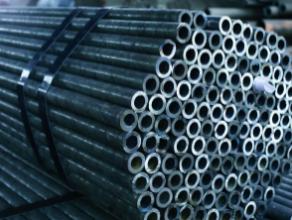
The properties of ASTM A519 Grade 1026 seamless mechanical tubing make it valuable across multiple industries. The combination of strength, dimensional precision, and reliability allows it to function in applications where failure carries serious consequences.
Automotive manufacturers use these tubes for steering columns, axle housings, and engine components. The strength-to-weight ratio contributes to both vehicle safety and fuel efficiency. Construction machinery parts, including hydraulic cylinders and structural frames, rely on the material’s durability under heavy loads. The precise bore of a hydraulic cylinder made from A519 1026 ensures efficient fluid power transmission with minimal internal leakage.
High-pressure boiler tubes and heat exchangers utilize this grade because it withstands elevated temperatures and pressures without degradation. General precision engineering tubing, agricultural machinery, and various OEM tubing solutions also benefit from its consistent quality. The versatility of ASTM A519 1026 extends to custom steel tube shapes for specialized projects, demonstrating broad applicability across sectors.
Standard tubing dimensions do not always match project requirements. Custom-shaped steel tubes from ASTM A519 Grade 1026 address this gap, including square, rectangular, and hexagonal profiles alongside other complex geometries designed for specific applications.
Advanced cold-drawing capabilities enable production of these precision profiles with tight dimensional accuracy. Customization serves industries ranging from specialized automotive components to unique structural elements in construction. All custom solutions maintain the inherent mechanical properties of Grade 1026 that make the base material valuable.
Compliance with international standards remains fundamental to quality assurance. ASTM A519 1026 products can meet not only ASTM specifications but also EN, DIN, and JIS standards when projects require them. This comprehensive adherence provides global clients with confidence in material quality and regulatory alignment. Material selection guidance helps engineers choose optimal tubing for their specific engineering projects.
Reliable suppliers for custom-shaped ASTM A519 1026 steel tubes combine manufacturing capability with quality systems that verify results. Changzhou Tenjan Steel Tube Co.,Ltd operates as a vertically integrated manufacturer with experience producing precision profiles, including square, rectangular, and hexagonal tubes.
Commitment to international standards means products comply with ASTM, EN, DIN, and JIS specifications as required. Stringent quality control measures, including PMI and NDT, ensure both material integrity and dimensional accuracy. This combination of capability and verification makes the company a practical partner for custom-shaped steel tubes.
ASTM A519 Grade 1026 seamless tubes, particularly when cold-drawn, deliver superior structural integrity and uniform wall thickness because no weld seam exists to create a potential weak point. This matters most in high-pressure, high-stress, and precision applications where consistency determines reliability. Hydraulic systems and automotive components benefit directly from these characteristics.
Changzhou Tenjan Steel Tube Co.,Ltd maintains quality control through vertically integrated manufacturing, controlling the process from raw material sourcing through finished product. ISO certification provides the framework, while Positive Material Identification (PMI) and Non-Destructive Testing (NDT) verify that all ASTM A519 1026 tubes meet specified chemical and mechanical property requirements.
ASTM A519 Grade 1026 tubing adapts well to customization. Tenjan Steel Tube produces custom-shaped steel tubes including square, rectangular, hexagonal, and other complex geometries while maintaining ASTM A519 standard compliance. Cold-drawing capabilities allow precise dimensional control and tailored solutions for OEMs and engineering projects with specific requirements.
Changzhou Tenjan Steel Tube Co.,Ltd brings nearly two decades of expertise to high-precision ASTM A519 Grade 1026 seamless mechanical tubing production. ISO-certified processes, comprehensive NDT/PMI inspections, and capability for custom geometries ensure quality and performance for demanding applications. Contact the team to discuss specific project requirements and explore how tailored solutions can address your engineering challenges.
Email: Sunny@tenjan.com | Tel:+86 51988789990 | WhatsApp:+86 13401309791| Tel:+86 51988789990 | WhatsApp:+86 13401309791


Home Product Capabilities Case Studies Blogs About Get a Quote
Pipe & Tube Manufacturing Process Shapes & Profiles Pipes & Tubes Material Standard Steel Pipes & Tube Rebar Couplers Cold Drawn Steel Profiles & Bars
Oil & Petrochemical Industry Automotive & Motorcycle Components Mechanical Engineering Components Mining Construction Support Structures High-Pressure Boiler System Construction Machinery Geological Drilling Agricultural Machinery Parts Industrial Fluid Transfer Systems


© 2024 Changzhou Tenjan Steel Tube Co., Ltd All rights reserved. Privacy StatementTerms-ConditionsSitemap
