Welcome to Changzhou Tenjan Steel Tube Co., Ltd
Sunny@tenjan.com



Choosing between hydraulic and mechanical tubing sounds straightforward until you’re staring at spec sheets for a system that needs to handle 7,500 psi while fitting into a space designed for something half its size. The wrong call here doesn’t just mean performance issues—it can mean catastrophic failure in the field. After years of working with both tube types across fluid power systems and structural assemblies, the distinctions become second nature, but they’re worth laying out clearly for anyone making these decisions for the first time.
Hydraulic tubing functions as the circulatory system of fluid power equipment. Every tube in these systems faces relentless internal pressure, cyclic stress from pulsating loads, and the constant threat of contamination-induced failure. The engineering priorities here are clear: burst strength, fatigue life, and an internal surface finish clean enough to prevent particle generation.
The internal surface matters more than most people realize. A rough bore creates turbulence, accelerates wear on seals, and introduces microscopic debris into the fluid stream. That debris eventually finds its way into valves and pumps, where it causes premature failure.
Changzhou Tenjan Steel Tube Co.,Ltd manufactures seamless hydraulic tubes specifically engineered for these high-pressure applications. Their cold drawn seamless tubing meets ASTM A519 and EN 10305-4 standards, which specify the tight tolerances and surface quality that hydraulic systems require.
| Pressure (psi) | Wall Thickness (mm) | Outer Diameter (mm) | Material Grade |
|---|---|---|---|
| 3000 | 2.0 | 10 | ST52 |
| 5000 | 3.0 | 15 | ST52 |
| 7500 | 4.0 | 20 | ST52 |
| 10000 | 5.0 | 25 | ST52 |
Mechanical tubing exists for structural support, machining stock, and load-bearing applications where the tube itself becomes part of the final assembly. The priorities shift accordingly: consistent dimensional tolerances, predictable material strength, and the ability to withstand bending, welding, and machining without cracking or distortion.
These tubes often end up as chassis components, frame members, or precision-machined parts where fit and alignment matter as much as raw strength. A tube that’s nominally the right size but varies by half a millimeter along its length creates assembly problems that compound across an entire production run.
Tenjan produces precision mechanical tubes in custom profiles including square, rectangular, and hexagonal shapes. Their cold drawn welded tube products serve automotive tubing applications and construction machinery components, manufactured to EN 10305-3 and JIS G3445 standards. The dimensional consistency these standards require ensures parts fit together without the shimming and adjustment that plague lower-quality tube stock.
!Examples of Custom-Shaped Mechanical Tubes (Square, Rectangular, Hexagonal)
## Cold Drawing Creates the Precision Both Applications Need
Cold drawing transforms raw tube stock into precision components through a deceptively simple mechanism: pulling the tube through a die at room temperature. The process refines dimensional accuracy, improves surface finish, and work-hardens the material to increase strength.
What makes cold drawing particularly valuable is the combination of effects it produces. The tube emerges with tighter tolerances than hot-finished alternatives, a smoother surface inside and out, and enhanced mechanical properties from the controlled deformation. For seamless tube manufacturing and welded tube manufacturing alike, this step often determines whether the final product meets specification or falls short.
Tenjan maintains control over the entire process chain from raw material selection through final inspection. Their ISO-certified quality control system incorporates PMI testing to verify material composition and NDT inspection to catch internal defects before tubes ship.
Hydraulic tubes typically require multiple cold drawing passes to achieve the internal surface finish and tight tolerances that fluid power systems demand. Between passes, specialized annealing processes restore ductility while preserving the dimensional gains from previous draws. The goal is an internal bore smooth enough to minimize turbulence and clean enough to prevent contamination.
Mechanical tubes follow a different optimization path. The focus shifts to consistent wall thickness across the tube length and formability characteristics that allow bending and machining without cracking. The manufacturing process for cold drawn seamless hydraulic tube prioritizes internal cleanliness in ways that mechanical tube production does not.
The numbers that matter depend entirely on what the tube will do in service. Yield strength and tensile strength indicate how much load the tube can handle before permanent deformation or failure. Burst pressure determines the maximum internal pressure before catastrophic rupture. Fatigue life predicts how many pressure cycles the tube can survive before developing cracks.
International standards codify these requirements. ASTM, EN, DIN, and JIS specifications define material compositions, testing protocols, and acceptable tolerance ranges. Tenjan manufactures to multiple standards including ASTM A519 Steel Pipe and DIN 2391 Steel Pipe, allowing engineers to specify tubes that meet their regional or customer-specific requirements.
| Metric | Hydraulic Tube (Typical) | Mechanical Tube (Typical) |
|---|---|---|
| Yield Strength | High | High |
| Tensile Strength | High | High |
| Burst Pressure | Very High | Moderate |
| Fatigue Life | Excellent | Good |
| Surface Finish | Internal: Very Smooth | External: Good |
Seamless hydraulic tubing delivers superior burst strength, better fatigue resistance, and more consistent internal surfaces than welded alternatives. The absence of a weld seam eliminates the stress concentration that can initiate cracks under cyclic loading. For applications where leakage means system failure or safety hazards, seamless precision tubing remains the preferred choice.
Material specifications do more than define chemical composition. They establish testing requirements, acceptable defect levels, and the mechanical properties the tube must demonstrate. ASTM A519 commonly governs mechanical tubing applications, while EN 10305 covers both hydraulic and mechanical grades depending on the specific part number. These standards give engineers a common language for specifying tubes that will perform as expected in their intended application.
Hydraulic tubing dominates in construction machinery hydraulics. Excavators, forklifts, and similar equipment rely on high-pressure fluid transfer to generate the forces that move heavy loads. The same tubes appear in high-pressure boilers and industrial machinery where fluid power drives critical functions.
Mechanical tubing provides the structural backbone for automotive chassis frames, agricultural machinery, and countless OEM engineering projects. The tubes become frame rails, roll cage members, and precision-machined components that must maintain dimensional accuracy through welding and assembly operations. Tenjan’s product range includes ST52 Steel Pipe and JIS G3445 Steel Pipe to support these varied applications.
!Application examples (e.g., hydraulic cylinder, car chassis frame)
 ## Finding a Supplier Who Understands Both Worlds
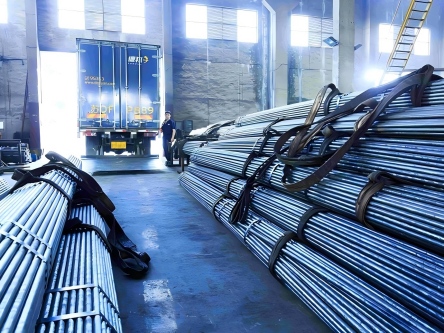
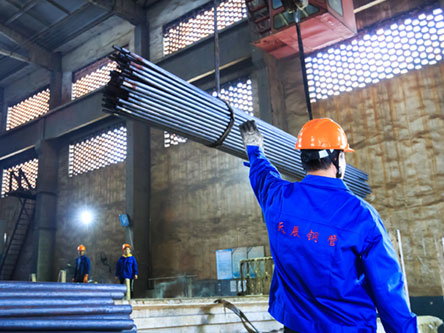
The right precision steel tubing supplier brings more than inventory to the relationship. Vertically integrated manufacturers with robust quality control can trace material from melt shop to finished tube, catching problems before they become field failures. Changzhou Tenjan Steel Tube Co.,Ltd offers this level of control along with custom solutions for applications that don’t fit standard catalog offerings. Their global supply chain capabilities support OEMs and engineering projects regardless of location.
!Tenjan factory floor or quality inspection process
## Connect with Tenjan Steel Tube Experts
For over two decades, Changzhou Tenjan Steel Tube Co.,Ltd has been the trusted partner for OEMs and engineering projects globally, delivering precision steel tubing that meets the most rigorous demands. Whether your application requires high-pressure hydraulic integrity or robust mechanical performance, our vertically integrated manufacturing, ISO-certified quality control, and commitment to custom solutions ensure unparalleled reliability. Connect with our experts today to discuss your specific tubing requirements and discover how Tenjan can elevate your next project. Email: Sunny@tenjan.com | Tel:+86 51988789990 | WhatsApp:+86 13401309791| Tel:+86 51988789990 | WhatsApp:+86 13401309791
Seamless hydraulic tubes eliminate the weld seam that acts as a stress concentrator under cyclic pressure loading. This translates to higher burst strength, longer fatigue life, and a more uniform internal surface that reduces contamination risk. For systems operating above 3,000 psi or subject to frequent pressure cycling, the performance difference justifies the cost. Tenjan’s cold-drawn seamless tubes are specifically engineered for these demanding hydraulic applications.
Cold drawing pulls the tube through a precision die at room temperature, which accomplishes several things simultaneously. The process tightens dimensional tolerances, smooths both internal and external surfaces, and work-hardens the material to increase yield and tensile strength. For hydraulic tubes, the internal surface improvement is critical for fluid flow efficiency. For mechanical tubes, the enhanced strength and dimensional consistency improve machinability and structural performance. Tenjan’s cold drawing expertise produces tubes that meet the tightest specifications across both categories.
Tenjan manufactures custom-shaped steel tubes including square, rectangular, hexagonal, and other complex geometries. The cold drawing process adapts to produce these profiles with the same dimensional precision as round tubes. This capability allows OEMs to specify tubes that match their exact design requirements rather than compromising around standard catalog shapes.


Home Product Capabilities Case Studies Blogs About Get a Quote
Pipe & Tube Manufacturing Process Shapes & Profiles Pipes & Tubes Material Standard Steel Pipes & Tube Rebar Couplers Cold Drawn Steel Profiles & Bars
Oil & Petrochemical Industry Automotive & Motorcycle Components Mechanical Engineering Components Mining Construction Support Structures High-Pressure Boiler System Construction Machinery Geological Drilling Agricultural Machinery Parts Industrial Fluid Transfer Systems


© 2024 Changzhou Tenjan Steel Tube Co., Ltd All rights reserved. Privacy StatementTerms-ConditionsSitemap
