Welcome to Changzhou Tenjan Steel Tube Co., Ltd
Sunny@tenjan.com



Selecting the right steel tube for a critical job rarely comes down to a single spec sheet. We work within overlapping global standards where strengths and trade-offs sit side by side. Experience keeps proving that matching material properties to the actual service conditions safeguards both integrity and efficiency. Here, we compare ASTM and EN standards in practice, from philosophy to chemistry, mechanics, testing, and where each is commonly adopted.
International standards shape how steel tubes are made, tested, and accepted across industries. They drive consistency, quality, and interoperability across different manufacturing bases. This common language enables global trade and trims down technical roadblocks. For material selection and project outcomes, knowing these benchmarks matters. Tenjan Steel Tube consistently meets ASTM, EN, DIN, and JIS requirements.
We see clear contrasts between ASTM and EN, rooted in how each system was built and how it operates. Those foundations influence material definitions, testing expectations, and where each standard excels. For engineers and procurement teams, understanding these differences supports better decisions.
The American Society for Testing and Materials (ASTM) is a voluntary standards body. Its consensus-based documents gained wide use in North America and, over time, far beyond due to historical reach. ASTM concentrates on defined material types and detailed testing practices.
European Norm (EN) standards are developed by CEN, the European Committee for Standardization. Within the EU, they are mandatory and they continue to gain traction globally. EN often frames requirements around performance and function rather than fixed material recipes.
ASTM and EN label and organize their documents differently. ASTM uses an alphanumeric format like A519. EN uses numeric identifiers such as EN 10305. These systems affect cross-references and the way materials are selected across regions.
For further insights into the causes and prevention of cracking in seamless steel tubes during bending and flattening, we recommend reviewing our detailed analysis.《Analysis of Key Causes and Prevention Strategies for Cracking in Seamless Steel Tubes during Bending and Flattening》
The technical gaps between ASTM and EN show up in chemistry, mechanical targets, and the tests used to validate them. Those differences influence field performance and application fit. Practical examples make the contrasts easier to spot.
Chemical composition requirements vary significantly between ASTM and EN standards. Typical ranges and specific element limits, such as Carbon, Manganese, Silicon, Sulfur, and Phosphorus, differ for equivalent steel grades. Slight variations impact weldability, heat treatment response, and overall material performance. Consider 1020 Steel Pipe (ASTM A519 Grade 1020) versus EN 10305-1 E235+C as an example.
| Element | ASTM A519 1020 (wt%) | EN 10305-1 E235+C (wt%) |
|---|---|---|
| Carbon | 0.18-0.23 | ≤ 0.17 |
| Silicon | 0.10-0.30 | ≤ 0.05 |
| Manganese | 0.30-0.60 | 0.30-0.70 |
| Phosphorus | ≤ 0.040 | ≤ 0.025 |
| Sulfur | ≤ 0.050 | ≤ 0.025 |
Mechanical properties like tensile strength, yield strength, elongation, and hardness show variations. Testing methodologies and reporting units also differ, which can make side-by-side comparisons look misaligned at first glance. For instance, ST52 Steel Pipe (EN 10297-1 E355) offers distinct properties compared to ASTM A519 grades for hydraulic cylinders.
Testing and inspection protocols vary between the two standard systems. Non-destructive testing, hydrostatic testing, flattening tests, and drift tests may have different acceptance criteria. Tenjan performs robust PMI and NDT inspections to satisfy both frameworks. We ensure that our Precision Pipe&tube meets stringent quality benchmarks.
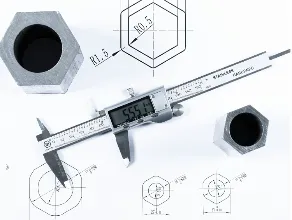
ASTM and EN hold different ground across regions and sectors. Regulation, legacy tooling, and long-standing supplier networks often guide those choices. Manufacturers like Tenjan work fluently across both systems to serve global projects. For instance, STKM11A Steel Pipes see wide use in Japanese automotive applications, while E355 Steel Pipe is common across European machinery.
ASTM standards are often seen as ‘how-to’ references for specific materials and tests, developed by industry consensus, primarily used in North America. EN standards are more performance-based and legally mandated within the European Union, with a focus on functional requirements and broad application across industries. Tenjan Steel Tube navigates both philosophies to deliver compliant products.
Direct substitution is rarely straightforward due to differences in chemical composition, mechanical properties, and testing requirements. Some grades may be functionally similar, but a full technical review and approval from the end-user or regulatory authority are usually required to confirm compliance and performance. Tenjan’s experts can assist in identifying suitable alternatives or manufacturing to dual compliance.
Changzhou Tenjan Steel Tube Co.,Ltd ensures compliance through rigorous ISO-certified quality control, full process control from raw material to finished product, and comprehensive PMI and NDT inspections. Our capability to manufacture to both sets of specifications allows us to meet diverse global project requirements.
Need expert guidance on ASTM or EN compliant steel tubes for your next project? Contact Changzhou Tenjan Steel Tube Co.,Ltd today for tailored solutions and high-precision tubing. Email us at Sunny@tenjan.com or call +86 51988789990.


Home Product Capabilities Case Studies Blogs About Get a Quote
Pipe & Tube Manufacturing Process Shapes & Profiles Pipes & Tubes Material Standard Steel Pipes & Tube Rebar Couplers Cold Drawn Steel Profiles & Bars
Oil & Petrochemical Industry Automotive & Motorcycle Components Mechanical Engineering Components Mining Construction Support Structures High-Pressure Boiler System Construction Machinery Geological Drilling Agricultural Machinery Parts Industrial Fluid Transfer Systems


© 2024 Changzhou Tenjan Steel Tube Co., Ltd All rights reserved. Privacy StatementTerms-ConditionsSitemap
