Welcome to Changzhou Tenjan Steel Tube Co., Ltd
Sunny@tenjan.com



Selecting the optimal steel pipe for any project takes more than a quick scan of specifications. Pipe material, dimensions, and manufacturing methods shape performance, safety, and cost in ways you feel over the life of the system. A systematic process that aligns product specs with application demands and established standards tends to deliver the best results. The aim here is to offer a clear framework for sound decisions so the selected pipes meet rigorous engineering requirements.
Choosing the correct pipe material is foundational for any successful engineering project. We analyze multiple factors to support performance and longevity. Our background in material science and application engineering helps make this selection process practical and reliable.
We consider several primary factors when selecting pipe materials. Operating pressure and temperature are paramount, as they dictate the required strength and thermal resistance. Fluid compatibility ensures the pipe material resists corrosion and chemical degradation from the transported medium. Environmental conditions, such as external temperatures and corrosive atmospheres, influence the choice of protective coatings or specific alloys. Mechanical stress, including tensile, compressive, and torsional forces, determines the necessary material toughness and ductility. These considerations collectively inform our initial material recommendations.
We primarily work with carbon steel and alloy steel pipes due to their versatility and performance. Carbon steel, such as 1020 Steel Pipe and 1035 Seamless Pipe, offers good weldability and formability, suitable for general structural applications. Alloy steels, including 4140 Steel Pipe, 25CrMo4 Steel Pipe, and 8620 Alloy Pipe, provide enhanced strength, toughness, and wear resistance, often through specific alloying elements like chromium and molybdenum. We evaluate properties like tensile strength, yield strength, and ductility to match the material to the application’s mechanical demands.
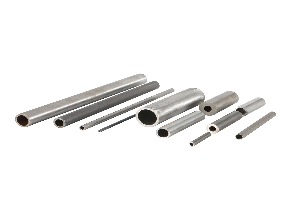
We meticulously match pipe characteristics to diverse industrial needs. The goal is consistent performance under real operating conditions, from high-pressure systems to corrosive environments.
For demanding conditions like high-pressure boilers and hydraulic systems, we specify seamless tubes with precise wall thicknesses. Materials such as ASTM A192 Steel Pipe and ASTM A106 Gr.B Steel Pipe are engineered for high-temperature service. These pipes withstand extreme pressures and temperatures, preventing failures and ensuring operational safety. Our selection process prioritizes materials with proven high-temperature strength and creep resistance.
We address corrosive or chemically aggressive environments by selecting appropriate material compositions. For instance, 09CrCuSb Steel Pipe offers atmospheric corrosion resistance due to its chromium, copper, and antimony content. We also consider surface treatments and coatings to enhance longevity. This prevents material degradation and maintains structural integrity over time.
We provide specialized tubing for various sectors. In automotive and motorcycle components, STKM11A Steel Pipes and STKM13A Steel Tubes are used for their improved mechanical properties. Construction machinery often utilizes high-strength structural steels like ST52 Steel Pipe and Q355B Steel Pipe. For fluid transport systems and high-pressure boilers, we often recommend DIN 17175 Steel Pipe and JIS G3461 Steel Pipe. We also supply custom-shaped tubes, including Oval Steel Pipes&Tubes, Hexagonal Steel Pipes&Tubes, and Special-Shaped Alloy Steel Tubes, to meet unique engineering requirements.
We prioritize adherence to international standards and robust quality assurance processes. That commitment supports reliability and compliance across precision steel tubing.
We ensure all our products comply with major international standards, including ASTM, EN, DIN, and JIS. For example, EN10305-1 Steel Pipe specifies precision cold-drawn steel pipes, while DIN 2391 Steel Pipe covers seamless precision steel tubes. These standards define material composition, dimensional tolerances, and testing methods, ensuring consistent quality and interoperability. Compliance with these standards is critical for global engineering projects.
Our ISO-certified quality control system includes rigorous inspections. We use Positive Material Identification (PMI) to verify alloy composition and Non-Destructive Testing (NDT), such as ultrasonic and eddy current inspections, to detect internal flaws. This approach ensures material integrity, dimensional accuracy, and overall product reliability. We maintain full process control from raw material sourcing to finished product delivery.
We excel in providing custom-shaped steel tubes, including square, rectangular, Octagonal Steel Pipes&Tubes, and Triangle Lemon Steel Pipes&Tubes. Our manufacturing capabilities allow us to produce complex geometries tailored to unique engineering requirements. We offer full process control, ensuring high-precision tubing for OEMs and specialized engineering projects globally. This customization capability provides design flexibility and optimized performance for specific applications.
Need expert guidance on selecting the perfect steel pipe for your next project? Contact Changzhou Tenjan Steel Tube Co.,Ltd today for tailored solutions and high-precision tubing. Email us at Sunny@tenjan.com or call +86 51988789990.
The most critical factor is the intended application and its specific requirements, including operating pressure, temperature, and the type of fluid being transported. These factors directly influence the necessary material properties and pipe design.
International standards like ASTM, EN, DIN, and JIS provide uniform guidelines for pipe manufacturing, material composition, dimensions, and testing. Adhering to these standards ensures that pipes meet specific performance criteria, are compatible with other components, and comply with safety regulations, making selection more reliable.
Seamless steel tubes offer superior strength and integrity compared to welded tubes, especially in high-pressure and high-temperature applications. The absence of a weld seam eliminates potential weak points, reducing the risk of failure and making them ideal for critical hydraulic and boiler systems.
Yes, Changzhou Tenjan Steel Tube Co.,Ltd specializes in providing custom-shaped steel tubes, including square, rectangular, hexagonal, and complex geometries. We offer full process control from raw material to finished product, ensuring high-precision solutions tailored to your specific OEM and engineering project needs.
Key quality control measures include ISO certification, Positive Material Identification (PMI) to verify alloy composition, and Non-Destructive Testing (NDT) such as ultrasonic or eddy current testing to detect internal flaws. These measures ensure material integrity, dimensional accuracy, and overall product reliability.


Home Product Capabilities Case Studies Blogs About Get a Quote
Pipe & Tube Manufacturing Process Shapes & Profiles Pipes & Tubes Material Standard Steel Pipes & Tube Rebar Couplers Cold Drawn Steel Profiles & Bars
Oil & Petrochemical Industry Automotive & Motorcycle Components Mechanical Engineering Components Mining Construction Support Structures High-Pressure Boiler System Construction Machinery Geological Drilling Agricultural Machinery Parts Industrial Fluid Transfer Systems


© 2024 Changzhou Tenjan Steel Tube Co., Ltd All rights reserved. Privacy StatementTerms-ConditionsSitemap
