Welcome to Changzhou Tenjan Steel Tube Co., Ltd
Sunny@tenjan.com



Working with precision tubing means understanding that tolerances measured in hundredths of a millimeter can determine whether a hydraulic system holds pressure or a fuel line survives ten years of thermal cycling. The material science matters, but so does knowing which standards actually apply to your specific operating conditions and what manufacturing processes deliver the properties you need. This piece walks through the major application areas where precision tubing performance is non-negotiable, covering automotive systems, high-temperature boiler environments, heavy machinery hydraulics, and the quality frameworks that separate reliable suppliers from the rest.
Automotive precision tubing operates in an unforgiving environment. Fuel lines see constant pressure fluctuations and chemical exposure. Hydraulic brake systems require absolute dimensional consistency to maintain seal integrity. Chassis structural tubes must handle fatigue cycles numbering in the millions without developing cracks.
Material selection for these applications centers on balancing strength against formability. Cold drawn tubing delivers the surface finish and dimensional accuracy that OEM specifications require, typically holding tolerances within ±0.05mm on critical dimensions. The cold drawing process work-hardens the material, increasing yield strength by 15-30% compared to hot-finished alternatives while producing the smooth internal surfaces that reduce flow resistance in fluid systems.
High strength steel grades see heavy use in structural applications where weight reduction matters. The shift toward lighter vehicles has pushed engineers toward higher-strength alloys that maintain safety margins with thinner walls. Products like STKM13A Steel Tubes and STKM11A Steel Pipes meet Japanese Industrial Standards for machine structural purposes, offering the combination of strength and machinability that automotive component manufacturers need.
Burst pressure testing reveals whether a tube will survive the pressure spikes that occur during normal operation. A hydraulic line rated for 200 bar working pressure typically needs to demonstrate burst resistance above 800 bar to provide adequate safety margin. Ductility matters because tubing often undergoes bending during installation, and brittle materials crack at bend radii that ductile grades handle without issue.
Corrosion resistance becomes critical in fuel system applications where ethanol-blended fuels create more aggressive chemical environments than traditional gasoline. Salt spray exposure from winter road treatment attacks external surfaces, making protective coatings or corrosion-resistant alloy selection essential for components with decade-long service life expectations.
Vehicle packaging constraints often demand non-circular tube profiles. Square and rectangular sections fit into tight spaces more efficiently than round tubes, and Hexagonal Steel Pipes&Tubes provide rotational indexing features useful in assembly operations. Special-Shaped Alloy Steel Tubes and Special-Shaped Carbon Steel Tubes allow designers to optimize cross-sectional geometry for specific load cases rather than accepting the compromises inherent in standard profiles.
| Standard | Description | Key Applications |
|---|---|---|
| ASTM A519 | Seamless Carbon and Alloy Steel Mechanical Tubing | Automotive components, Hydraulic cylinders |
| EN 10305 | Steel Tubes for Precision Applications | Automotive hydraulic lines, Shock absorbers |
| JIS G3445 | Carbon Steel Tubes for Machine Structural Purposes | Automotive shafts, Bushings |
Power generation boilers operate at temperatures exceeding 500°C and pressures above 200 bar. At these conditions, steel properties change significantly from room-temperature values, and creep deformation becomes a design consideration. Material selection must account for long-term behavior under sustained loading at elevated temperatures, not just short-term strength.
Seamless Carbon Steel Tubes form the backbone of many boiler systems, with alloy additions tailored to specific temperature ranges. Chromium-molybdenum grades resist oxidation and maintain strength at temperatures where plain carbon steels would soften unacceptably. The seamless construction eliminates weld seams that could become preferential failure sites under thermal cycling.
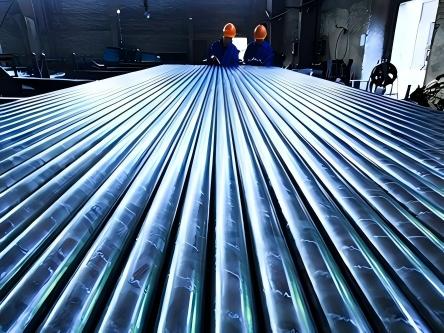
ASTM A192 Steel Pipe specifications cover seamless carbon steel tubes for high-pressure service in boilers and similar equipment. ASTM A179 Steel Pipe addresses heat exchanger and condenser tubes where thermal conductivity and corrosion resistance take priority. European specifications under EN 10216 and German DIN 17175 Steel Pipe standards provide equivalent coverage for international projects.
These standards specify not just chemical composition and mechanical properties, but also testing requirements including hydrostatic pressure testing, ultrasonic examination for internal defects, and dimensional verification. Compliance documentation becomes part of the permanent plant records, traceable back to specific material heats and manufacturing lots.
Hydraulic excavators, loaders, and cranes subject their tubing to pressure cycles that accumulate rapidly during normal operation. A single work shift might generate thousands of pressure pulses as cylinders extend and retract. The tubing must resist fatigue crack initiation at stress concentrations while maintaining the dimensional stability that keeps seals functioning properly.
ST52 Steel Pipe and S355JR Steel Pipe grades provide the strength levels that heavy equipment demands. These structural steels offer yield strengths above 350 MPa while retaining enough ductility for cold bending during fabrication. The balance between strength and formability determines whether a tube can be bent to follow equipment contours without cracking.
Hydraulic cylinder bore tubes require surface finishes smooth enough to prevent seal wear while maintaining the roundness that keeps pistons centered. Cold drawing achieves internal surface roughness values below Ra 1.6 μm, reducing friction and extending seal life. The process also improves concentricity, keeping wall thickness variation within tight limits.
Cold Drawn Pipe & Tube products meeting EN10305-1 Steel Pipe specifications deliver the dimensional precision that hydraulic system designers expect. The cold working process increases yield strength, allowing designers to specify thinner walls without sacrificing pressure ratings, reducing both weight and material cost.
OEM equipment builders benefit from tubing suppliers who can provide custom profiles matched to specific applications. Reducing secondary machining operations by supplying near-net-shape tubing cuts manufacturing costs and lead times. Hexagonal Steel Pipes&Tubes and other non-standard profiles integrate directly into assemblies that would otherwise require expensive machining from round stock.
Article Recommendation: To understand how material properties affect performance, consider reading 《Analysis of Key Causes and Prevention Strategies for Cracking in Seamless Steel Tubes during Bending and Flattening》.
Precision tubing quality depends on controlling every step from raw material through final inspection. Positive Material Identification confirms that incoming steel matches specifications before processing begins. Non-destructive testing methods including ultrasonic examination and eddy current inspection detect internal and surface defects that visual inspection would miss.
Compliance with ASTM, EN, DIN, and JIS standards requires documented procedures and calibrated equipment. ISO certification provides third-party verification that quality management systems meet international expectations. These certifications matter because they represent ongoing commitment to process control, not just a one-time audit success.
Manufacturing operations that control the entire production sequence from steel melting through finished tube inspection can guarantee traceability that fragmented supply chains cannot match. When a problem surfaces in the field, complete records allow rapid identification of affected material lots and root cause analysis that prevents recurrence.
This level of control also enables process optimization that improves consistency over time. Statistical process control data accumulated across production runs reveals trends and variation sources that targeted improvements can address.
Supplier selection involves evaluating technical capability, quality systems, and commercial factors together. A supplier with deep experience in your specific application area understands the failure modes that matter and the testing protocols that provide confidence. Certifications demonstrate baseline competence, but references from similar projects reveal actual performance.
Customization capability matters when standard products do not quite fit your requirements. The ability to adjust dimensions, specify non-standard alloys, or produce custom profiles expands design options. Global logistics capability ensures that material arrives when needed regardless of project location.
What makes steel tubing qualify as precision grade?
Precision tubing meets dimensional tolerances significantly tighter than standard commercial grades, typically within ±0.1mm on diameter and ±10% on wall thickness. Surface finish specifications control both internal and external roughness. Mechanical property consistency from lot to lot ensures predictable performance in applications like hydraulic systems, automotive components, and instrumentation where exact fit and reliable behavior matter.
Why do high-pressure systems favor cold drawn tubes?
Cold drawing improves dimensional accuracy while simultaneously increasing material strength through work hardening. The process produces smoother surfaces that reduce friction in moving seal applications and eliminates the decarburized layer present on hot-finished tubes. These combined benefits allow thinner walls at equivalent pressure ratings, reducing weight and material cost while improving fatigue resistance.
Which standards apply to international precision tubing projects?
Projects spanning multiple regions typically reference ASTM standards for North American requirements, EN specifications for European compliance, DIN standards for German engineering practices, and JIS for Japanese market access. Understanding which standards apply to your specific application and end-use location prevents specification conflicts and ensures material acceptance at project sites worldwide.
For tailored, high-precision tubing solutions that meet the most stringent industry standards, partner with Changzhou Tenjan Steel Tube Co.,Ltd. Contact us today to discuss your specific project requirements and leverage our expertise in seamless, cold-drawn, and custom-shaped steel tubes. Email: Sunny@tenjan.com | Tel: +86 51988789990 | WhatsApp: +86 13401309791| Tel: +86 51988789990 | WhatsApp: +86 13401309791


Home Product Capabilities Case Studies Blogs About Get a Quote
Pipe & Tube Manufacturing Process Shapes & Profiles Pipes & Tubes Material Standard Steel Pipes & Tube Rebar Couplers Cold Drawn Steel Profiles & Bars
Oil & Petrochemical Industry Automotive & Motorcycle Components Mechanical Engineering Components Mining Construction Support Structures High-Pressure Boiler System Construction Machinery Geological Drilling Agricultural Machinery Parts Industrial Fluid Transfer Systems


© 2024 Changzhou Tenjan Steel Tube Co., Ltd All rights reserved. Privacy StatementTerms-ConditionsSitemap
