Welcome to Changzhou Tenjan Steel Tube Co., Ltd
Sunny@tenjan.com



Steel tube selection often comes down to one question: does the application demand precision, or can it tolerate some variability? The answer shapes everything from cost to long-term performance. Cold rolled and hot rolled steel tubes serve fundamentally different purposes, and understanding where each excels prevents costly mismatches between material and application. The differences run deeper than surface finish—they affect strength, dimensional control, and how the tube behaves under stress over years of service.
The split between cold rolled and hot rolled steel tubes starts at the mill. Hot rolling works steel above its recrystallization temperature, typically over 926°C (1700°F). At these temperatures, the metal flows easily through rollers without building up internal stress. The result is a tube that forms readily but carries the characteristics of high-temperature processing—coarser grain structure, wider tolerances, and a scaled surface.
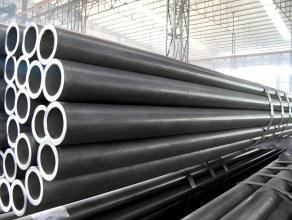
Cold rolling takes a different path. The process begins with hot rolled material, then draws or rolls it at room temperature. This cold deformation fundamentally changes the steel’s microstructure. Grains elongate and align, which increases strength but reduces ductility. Most cold rolled tubes undergo annealing afterward to relieve internal stresses and restore some workability.
The hot finished seamless tube process handles large volumes efficiently. Billets heated to extreme temperatures pass through rollers to achieve the desired shape in fewer steps. The cold drawn seamless tube process adds precision at the cost of speed—each pass through a die refines dimensions incrementally, building toward the tight tolerances that certain applications require.
Mechanical properties follow directly from how the steel was processed. Cold rolled steel tubes exhibit higher yield strength and tensile strength because strain hardening during cold working increases the material’s resistance to deformation. This also raises hardness (HRC), though it comes at the expense of ductility.
Hot rolled steel tubes take the opposite position. Lower strength, but better ductility and impact resistance. The coarser, more uniform grain structure absorbs energy differently, which matters for structural components that might see sudden loads or need to deform without fracturing.
| Property | Cold Rolled Steel Tube | Hot Rolled Steel Tube |
|---|---|---|
| Yield Strength | Higher | Lower |
| Tensile Strength | Higher | Lower |
| Hardness | Higher | Lower |
| Ductility | Lower | Higher |
| Fatigue Strength | Superior | Moderate |
| Impact Resistance | Moderate | Good |
These differences translate directly to application fit. The enhanced fatigue strength of cold rolled tubes makes them the natural choice for hydraulic systems operating under cyclic pressure. The high yield strength ensures reliable operation without permanent deformation. Hot rolled tubes serve better where the structure might absorb impact or undergo significant bending—the greater ductility prevents brittle failure.
This is where cold rolled steel tubes pull ahead decisively for precision applications. Cold working minimizes the thermal expansion and contraction effects that introduce variability in hot rolled products. We consistently achieve ±0.1mm precision tolerance on cold drawn and cold rolled products, including Precision Pipe&tube and EN10305-1 Steel Pipe.
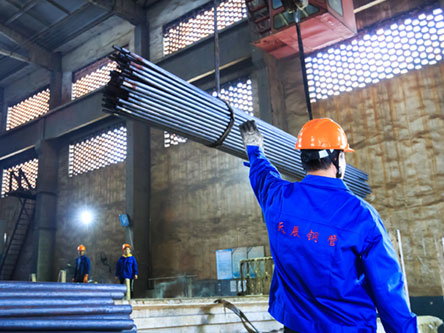
The surface finish tells a similar story. Cold rolled tubes emerge smooth and bright, free from the oxide scale that forms during high-temperature processing. Hot rolled tubes carry a rougher, scaled surface that often requires additional machining or cleaning before use.
For automotive components that must fit together within tight clearances, or medical device tubing where exact dimensions affect function and safety, cold rolled steel tubes are the only practical choice. Products like ASTM A519 Steel Pipe and DIN 2391 Steel Pipe exist specifically for these demanding uses.
Cost enters the equation once technical requirements are established. Hot rolled steel tubes cost less because the manufacturing process is simpler and handles larger volumes. They work well for general construction machinery and fluid transport systems where dimensional precision and surface finish rank lower on the priority list.
Cold rolled steel tubes justify their higher cost through performance. The precision, strength, and clean surface make them necessary for demanding applications. S355JR Steel Pipe and 4140 Steel Pipe see frequent use in automotive steel tubing applications and hydraulic cylinder tubing requirements because their mechanical properties and tight tolerances match what these systems demand. ASTM A179 Steel Pipe and ASTM A192 Steel Pipe serve high-pressure boiler tube material selection for similar reasons.
| Feature | Cold Rolled Steel Tube | Hot Rolled Steel Tube |
|---|---|---|
| Cost | Higher (due to additional processing) | Lower (simpler process) |
| Applications | Automotive, Hydraulics, Precision Machinery, Boilers | General Structural, Less Critical Components |
| Key Standards | EN 10305, ASTM A519, DIN 2391 | ASTM A500, EN 10297 |
| Surface Quality | Smooth, scale-free | Scaled, rougher |
| Precision | High | Moderate |
The decision framework is straightforward. If high strength, precise dimensions, and a clean surface are requirements rather than preferences, cold rolled steel tube is the appropriate investment. If budget constraints dominate and dimensional accuracy can flex, hot rolled steel tube delivers adequate performance at lower cost.
International quality standards provide the baseline for industrial steel tubing reliability. At Changzhou Tenjan Steel Tube Co.,Ltd, products meet ASTM, EN, DIN, and JIS specifications. JIS G3461 Steel Pipe and JIS G3445 Steel Pipe products comply with Japanese industrial standards. ST35 Seamless Pipe and St37 Steel Pipe meet DIN specifications.
Custom shaped steel tubes address engineering challenges that standard profiles cannot solve. square steel tubing, rectangular steel tubing, hexagonal steel tubing, and other complex geometries benefit from cold-drawn processing that maintains precision across non-circular cross-sections. ISO certified steel tube manufacturing includes NDT inspections and PMI testing to verify material integrity and compliance. This quality control applies equally to standard Seamless Carbon Steel Tubes and Special-Shaped Alloy Steel Tubes.
For insight into potential issues during fabrication, 《Analysis of Key Causes and Prevention Strategies for Cracking in Seamless Steel Tubes during Bending and Flattening》 covers the mechanisms and prevention strategies in detail.
As a vertically integrated manufacturer since 2004, Changzhou Tenjan Steel Tube Co.,Ltd specializes in delivering precision cold-drawn and hot-finished steel tubes tailored to the most demanding automotive, boiler, hydraulic, and construction machinery applications. Our ISO-certified quality control, comprehensive PMI and NDT inspections, and adherence to ASTM, EN, DIN, and JIS standards ensure material integrity and performance. For bespoke solutions, custom profiles, or to discuss your specific project requirements, contact our expert team today. Email: Sunny@tenjan.com | Tel:+86 51988789990 | WhatsApp:+86 13401309791| Tel:+86 51988789990 | WhatsApp:+86 13401309791
Cold drawn seamless tubes deliver tighter dimensional tolerances, smoother surfaces, and higher tensile and yield strength. The cold working process refines the tube’s dimensions incrementally while strain hardening increases mechanical properties. These characteristics matter most in automotive, hydraulic, and high-pressure boiler applications where components must fit precisely and perform reliably under sustained stress.
Quality control runs through the entire production process under ISO certification. PMI (Positive Material Identification) confirms alloy composition matches specifications. NDT (Non-Destructive Testing) detects internal defects without damaging the product. All products meet ASTM, EN, DIN, or JIS standards as applicable, with documentation tracing each tube from raw material through final inspection.
Yes. Cold-drawn processing accommodates square, rectangular, hexagonal, and other complex cross-sections while maintaining the dimensional precision that standard profiles offer. Custom-shaped steel tubes serve OEM applications and unique engineering projects where off-the-shelf profiles cannot meet design or performance specifications.


Home Product Capabilities Case Studies Blogs About Get a Quote
Pipe & Tube Manufacturing Process Shapes & Profiles Pipes & Tubes Material Standard Steel Pipes & Tube Rebar Couplers Cold Drawn Steel Profiles & Bars
Oil & Petrochemical Industry Automotive & Motorcycle Components Mechanical Engineering Components Mining Construction Support Structures High-Pressure Boiler System Construction Machinery Geological Drilling Agricultural Machinery Parts Industrial Fluid Transfer Systems


© 2024 Changzhou Tenjan Steel Tube Co., Ltd All rights reserved. Privacy StatementTerms-ConditionsSitemap
