Welcome to Changzhou Tenjan Steel Tube Co., Ltd
Sunny@tenjan.com



When you ask a steel tube supplier about MOQ, the response often feels like a brick wall. But as someone who has worked in precision tube manufacturing since 2004, I can tell you that minimum order quantity is not a fixed number—it’s a reflection of production realities that, once understood, can be negotiated. Getting from a rigid “5 tons” to a workable trial order starts with knowing what drives the mill’s constraints and where flexibility exists. This guide explains those constraints and offers practical ways to secure the quantities your project needs.
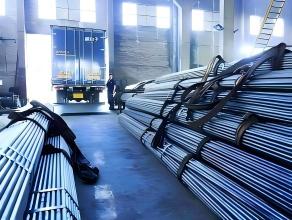
A steel tube MOQ is the smallest quantity a manufacturer is willing to produce for a single order. For a buyer, it matters because it directly influences project cost and supply chain planning. A high MOQ can tie up capital, require warehousing, and lock you into a single supplier. In precision engineering, where you might need only a few hundred pieces of a specific grade and profile, the MOQ can be a project-killer if not managed well.
The term is used interchangeably with “minimum batch size,” but there’s a subtle difference: MOQ is the commercial threshold; batch size is the production unit. Understanding this difference is the first step to negotiating.
The factory floor is where MOQ is born. In my two decades working with cold-drawing and cold-rolling lines, I’ve seen how die changes, material procurement, and batch economy dictate minimum quantities. Consider a seamless cold-drawn tube: to produce a specific size, a die set has to be mounted and calibrated. This setup takes time, and the scrap rate during the first few metres may be higher. Asking a mill to produce 100 kg of a custom tube is a bit like asking a bakery to make a single croissant in a unique shape—the setup cost overwhelms the ingredient cost.
Material availability plays a big role too. Carbon steel grades like 1020 or 1215 are usually in stock, but a more specialised alloy like 34MnB5 or 25CrMo4 may require a custom melt. When we need to order a specific heat of steel, the minimum from the steelmaker might be 20 tons—and the tubemaker passes that minimum on to you.
Another factor I hear less about is scheduling. A factory plans its production weeks ahead. A tiny order interrupts the machine rhythm, so unless it’s combined with another similar order, the cost per metre makes it uneconomical.
Not all tubes are equal when it comes to MOQ. Based on my work with standards like EN10305, ASTM A519, and DIN 2391, here are the key variables:
Production process: Cold-drawn standard sizes often have lower MOQ than hot-rolled because the dies exist and changeover is quicker. Custom-shaped profiles—hexagonal, oval, or triangle pipes—require dedicated tooling, so MOQ goes up.
Material grade: Common carbon steels (S235JR, ST37) have high availability and low MOQ. Alloy grades (4140, SCM440) or high-strength steels (Q355B) may need a special melt, raising the minimum.
Dimensions and tolerances: A thick wall, small diameter tube with tight ±0.1mm tolerance demands more process control and may need a dedicated production run. Similarly, extreme length requirements affect handling and packaging.
Surface treatment and testing: If you need normalized, annealed, or extra non-destructive testing, those processes add setup and cost, often reflected in a higher MOQ.
These factors interact, and a good supplier will explain them clearly—not hide behind a number.
| Factor | Low MOQ Scenario | High MOQ Scenario |
|---|---|---|
| Process | Cold-drawn standard round | Hot-rolled or custom profile |
| Material | Common carbon steel | Special alloy with custom melt |
| Dimensions | Common OD/WT, standard lengths | Non-standard with tight tolerances |
| Testing | Visual/PMI | UT, hardness, full MTC |
If your project involves a specialized alloy or a custom profile where the standard MOQ seems too high, it’s worth reaching out with your specifications. At Tenjan, we frequently combine small custom orders with regular production runs to keep minimums manageable. Email Sunny@tenjan.com with your drawing and quantity.
The best negotiation starts with showing the supplier you understand their constraints. Early in my career, I saw a client walk away from a 10-ton MOQ because they only needed 700 kg. They never asked why the MOQ was set at that level. Once they understood that a similar-sized order was already scheduled for the same grade and dimension, we agreed to append their quantity. The MOQ didn’t change—but we met their need.
Here are strategies I’ve seen work:
Ask about ‘piggybacking’: If a regular production run matches your spec, ask if your small quantity can be added to that batch. This is the easiest way to bypass MOQ for standard materials.
Offer schedule flexibility: When you’re not in a hurry, the factory may slot your order into a slot that would otherwise go idle, lowering the threshold.
Combine multiple items into one order: If you need different sizes or shapes, a combined order might reach a volume that justifies a production run. Tenjan’s facility often does this for OEMs needing both precision tubes and special-shaped sections.
Pay a small-order surcharge: Sometimes it’s simply a matter of offsetting the setup cost. A surcharge of 15-20% can bring the MOQ down to a level that works for both sides.
Propose a trial order with future commitment: If you have a prototype or initial batch, express a clear intention for larger volumes later. Written forecasts can help.
The factory’s sales team wants your business. They just need the numbers to add up. Approaching with transparency yields better results than demanding exceptions.
If you need a small quantity for prototyping or testing, the path is straightforward but requires preparation.
First, have your specs ready: outer diameter, wall thickness, material grade, length, tolerance, and required test certificates. This shows you’re serious and helps the factory quickly assess if a combined run is feasible.
Second, request a quote by emailing your requirements and explicitly stating “We need a trial quantity of X metres; can this be added to an existing production run?” This prompt signals you understand the process and opens the door to negotiation.
I’ve seen many buyers succeed by attaching a simple table of their target specs and asking, “What’s the smallest batch you can accommodate without custom tooling?” At Tenjan, we regularly handle trial orders for clients testing new hydraulic cylinder tube designs or verifying a specific alloy’s weldability.
When you’re clear about your objectives, the conversation shifts from “MOQ is 5 tons” to “We can do 500 kg this month because we’re running that grade next week.”
Steel tube MOQ doesn’t have to be a dealbreaker. By understanding the production logic and negotiating with information, you can almost always find a way to get the quantity your project demands.
For a standard seamless round tube in a common grade, it’s possible to order as little as 100-200 kg under the right conditions, especially if the factory has open capacity. Depending on the mill’s schedule, a small order like that can be added to an existing run for common 20-50 mm OD sizes. For alloy grades like SCM440, the absolute minimum is typically higher, around 500 kg, because these require a dedicated heat. Always discuss your timing flexibility to improve your chances.
Yes, typically a surcharge or a per-metre price adjustment covers the lower efficiency. This surcharge can be 10-30%, but it’s often less than the cost of unnecessary inventory. The exact percentage depends on how much the order deviates from the economic batch size. I’ve seen surcharges as low as 10% for a near-MOQ order and up to 30% for a very small trial run. Get a clear line item on the quote so you can compare with the cost of excess inventory.
Absolutely. Once you exceed the MOQ, the per-unit cost drops because the factory spreads fixed costs over a larger output. An order of 10 tons may carry a unit price 10% lower than a 5-ton order of the same tube. The discount structure varies by material and process, so always ask for a tiered price breakdown.
No. Seamless cold-drawn standard tubes, like those conforming to EN10305-1, often have MOQs as low as 1 ton. In contrast, a specially shaped tube with a non-standard cross-section may need a 5-10 ton minimum because of the tooling investment. A tube’s manufacturing process, material grade, and secondary operations like annealing or normalizing all push the number up. Buyers who understand these nuances get better results when they negotiate.
Look for vertically integrated mills that have their own drawing and rolling lines—they often have the flexibility to combine orders. Demonstrate that you’ve done your homework: share your specifications clearly and mention you’re willing to pay for setup if needed. If your project involves a non-standard profile or a limited quantity, it’s worth reaching out to a factory that regularly handles both standard and special-shaped tubes. At Tenjan, we frequently find ways to make small orders work by fitting them into open production slots. Share your part number and quantity at Sunny@tenjan.com or on WhatsApp at +86 13401309791, and we’ll check our schedule for a feasible slot.


Home Product Capabilities Case Studies Blogs About Get a Quote
Pipe & Tube Manufacturing Process Shapes & Profiles Pipes & Tubes Material Standard Steel Pipes & Tube Rebar Couplers Cold Drawn Steel Profiles & Bars
Oil & Petrochemical Industry Automotive & Motorcycle Components Mechanical Engineering Components Mining Construction Support Structures High-Pressure Boiler System Construction Machinery Geological Drilling Agricultural Machinery Parts Industrial Fluid Transfer Systems


© 2024 Changzhou Tenjan Steel Tube Co., Ltd All rights reserved. Privacy StatementTerms-ConditionsSitemap
