Welcome to Changzhou Tenjan Steel Tube Co., Ltd
Sunny@tenjan.com



ASTM vs JIS steel pipe comparison goes beyond chemistry tables and into the mechanics of how parts actually fit together. In two decades of supplying seamless tubes to global OEMs, I’ve seen projects stall because the dimensional tolerance of a JIS pipe didn’t match the ASTM coupling it was meant to join. Both ASTM and JIS standards can produce excellent pipe, but they are not interchangeable without careful review. This article strips away the abstract and examines the practical differences—from grade equivalents to tolerance stacks and inspection burdens—so procurement and engineering teams can make decisions that keep their assemblies, and their supply chains, running smoothly.
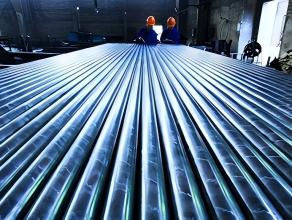
ASTM (American Society for Testing and Materials) and JIS (Japanese Industrial Standards) both offer robust specifications for steel pipe, but they come from different engineering traditions. ASTM pipe standards often rely on imperial units—inches and pounds per square inch—with metric equivalents shown in parentheses, while JIS is natively metric. That unit difference alone can throw off a team accustomed to one system.
Beyond units, the philosophies diverge in detail. ASTM tends to define performance criteria: minimum tensile strength, yield strength, elongation, and hydrostatic test pressure. JIS standards frequently go further by specifying manufacturing process requirements and more granular testing protocols. For example, JIS G3454 for pressure piping not only lists chemical and mechanical properties but also mandates specific non-destructive testing methods like ultrasonic or eddy current for certain pipe grades, whereas ASTM A106 leaves such additional tests to the purchaser’s specification.
I recall a hydraulic cylinder project where the Japanese design called for JIS G3455 STPG370, but the American contractor assumed ASTM A106 Gr.B would be an equivalent drop-in. Chemically they were close, but the JIS pipe had a tighter OD tolerance on the as-supplied size, and the ASTM pipe couldn’t be honed to the required fit without stock removal and rework. That experience taught me to check the dimensional spec before the chemistry, because the fit matters first.
Here’s a quick side-by-side look at typical differences:
| Feature | ASTM (e.g., A106) | JIS (e.g., G3454) |
|---|---|---|
| Unit system | Inch-pound (metric equivalent) | Metric |
| Wall thickness designation | Schedule (SCH) or inch | Millimeter or schedule |
| Chemical limits | C, Mn, P, S, Si | Similar but often with tighter P/S |
| Mechanical properties | Tensile, yield, elongation | Tensile, yield, elongation, sometimes impact |
| Testing requirements | Hydrostatic; NDE optional unless specified | Hydrostatic plus specific NDE methods per grade |
| Ordering language | Often English | Japanese with English translations common |
The takeaway: If your design tolerances are generous and both ends of the pipe use the same standard, either works. But mixing standards without a thorough cross-walk invites surprises.
No universal one-to-one mapping exists between ASTM and JIS grades. Still, many grades overlap enough in chemistry and strength that they can serve as functional equivalents, provided the engineer confirms the full detail. Below are some commonly paired grades, drawn from our production portfolio:
| Application | ASTM Grade | Nearest JIS Grade | Key Consideration |
|---|---|---|---|
| Pressure piping | A106 Gr.B | G3454 STPG370 | Close in chemistry; check wall thickness tolerance and hydrostatic test requirement. |
| Mechanical tubing | A519 1026 | G3445 STKM13A | Both carbon steel; heat treatment condition may differ. Verify yield strength. |
| Alloy pipe for high temp | A335 P11 | G3458 STPA23 | Similar Cr-Mo; heat treatment parameters must be compared. Impact test may differ. |
| Structural tubing | A500 Gr.B | G3466 STKR400 | Square/rectangular profiles; corner radii and dimensional tolerances often differ most. |
| Boiler tubes | A192 | G3461 STB340 | Seamless carbon steel; JIS requires ultrasonic testing for many sizes, ASTM may not. |
At Tenjan, we run both ASTM and JIS grades through the same cold-drawn and cold-rolled lines, so you can source A519 and G3445 tubes from a single supplier. Instead of maintaining two approved vendor lists and reconciling test reports, you consolidate—less administration, fewer surprises.
This is the area where I’ve seen engineers lose sleep. The answer is: sometimes, but only if you’ve verified the specific tolerance bands. Think of it like a metric bolt in an imperial-threaded nut. It might thread under light load, but you wouldn’t trust it in a safety-critical joint.
ASTM tolerances for outside diameter often allow slightly wider variation for hot-finished pipes, while cold-drawn JIS precision tubes like JIS G3445 STKM13A can hold ±0.2 mm on OD. If your assembly uses an ASTM coupling that expects a diameter within ±0.5 mm, a JIS pipe with ±0.2 mm might fit beautifully. But the reverse—an ASTM pipe with looser tolerance trying to slide into a JIS bore designed for a tight fit—can seize or create an unsealable gap.
A practical example from our shop: a customer building agricultural machinery had a mixed-standard cylinder rod-guide assembly. The rod was ASTM A519 1026, the guide bore machined to JIS G3445 nominal dimensions. The ASTM rod’s maximum OD variation of ±0.4 mm resulted in excessive clearance, causing seal leakage. The fix was to switch the guide bore to accept an ASTM tolerance stack, but that required re-engineering. A better path: if you’re forced to mix standards, talk to the manufacturer before ordering. Today we can provide pipes with tighter-than-standard tolerances, even for ASTM grades, when we know the mating part is JIS.
If your program involves mixing ASTM and JIS components, it’s worth confirming the dimensional compatibility with us before you order. Send your part drawings and we’ll run a quick tolerance analysis.
Both ASTM and JIS demand rigorous testing, but the specific requirements can trip up the unprepared. Inspectors often joke that JIS test plans read like a cooking recipe—every step prescribed, every measurement specified—while ASTM leaves more choices to the purchaser. That’s not a flaw; it’s a difference in standard philosophy.
For example, JIS G3461 for boiler tubes mandates ultrasonic testing per JIS G0582 for all tubes over a certain diameter, and often requires a separate corrosion test or flattening test. ASTM A192, the US boiler tube standard, relies primarily on hydrostatic testing unless the purchaser explicitly requests NDT. If you buy JIS tubes expecting the same paperwork as ASTM, you may get a thicker inspection report—and a longer lead time—but with a more thorough validation.
At our facility, we’ve integrated both approaches. Regardless of the standard, we run PMI (positive material identification) on each heat and offer ultrasonic, eddy current, or hydrostatic testing as needed. MTCs reference both the standard’s core requirements and any supplementary test you asked for. That means you can order ASTM A106 with JIS-level testing—or JIS G3454 with streamlined ASTM documentation—without changing suppliers. This flexibility eliminates the “which test spec do I need?” conversation that bogs down procurement.
Sourcing steel pipe for a global project often means dealing with multiple mills, each certified to a different standard. That fragmentation breeds mismatched documents, inconsistent batch quality, and scheduling headaches. When you find a manufacturer that routinely produces to both ASTM and JIS, the frictional costs disappear.
Consider a European OEM we supply that makes both ASTM and JIS variants of the same hydraulic excavator. They needed precision tubing for boom cylinders—some destined for North America (ASTM A519) and some for Japan (JIS G3445). Rather than stocking two inventories, they asked us to produce one body of cold-drawn seamless tube with controlled chemistry and dimensional consistency, then issue dually certified MTCs citing both standards. This single-source approach cut their material management overhead by nearly a third and eliminated the risk of mixing inventory.
For your next project that spans ASTM and JIS, start by sharing your spec list at Sunny@tenjan.com or calling +86 13401309791. We’ll map out which grades we can consolidate into a single production run and which may need separate heats, helping you simplify procurement without compromising compliance.
The most obvious difference is the unit system and origin: ASTM is American and often inch-based, JIS is Japanese and metric. Underneath, JIS standards tend to prescribe specific manufacturing and testing steps more explicitly, while ASTM focuses on performance thresholds and leaves test methods partly to the purchaser’s agreement. Both produce reliable pipe, but the documentation trail and tolerance details aren’t the same.
It depends on your system’s pressure rating and the dimensional fit. Chemically, they are close enough that in many non-safety-critical applications, substitution works if you verify wall thickness tolerance and test pressure. But for ASME-code-stamped equipment, using a JIS pipe directly without a formal code review can be questionable. Always get your engineer’s sign-off and the supplier’s dual certification if possible.
The standard bodies developed independently, each with their own material grading logic and industrial heritage. So some grades like A106 Gr.B and STPG370 are close cousins, but others, like alloy grades, differ in heat treatment specifics or mandatory impact testing. A direct substitution without a side-by-side comparison can miss a critical detail, which is why working with a supplier who understands both is invaluable.
The manufacturer must perform comparative testing against both standards and issue a mill test certificate showing compliance to each. In our plant, we often produce pipes that satisfy the tighter of the two standards and then issue dual-stamped certificates. If your project requires conformance to both, ask your supplier for this dual marking upfront.
In my experience, if the end user is in Japan or a JIS-oriented market, specifying JIS simplifies local validation. For most other regions, ASTM is more widely recognized. However, the smartest move is to specify a pipe that meets both, eliminating re-certification when shipping to multiple destinations. Share your requirements at Sunny@tenjan.com and we’ll help you craft a material spec that covers all your targeted markets.


Home Product Capabilities Case Studies Blogs About Get a Quote
Pipe & Tube Manufacturing Process Shapes & Profiles Pipes & Tubes Material Standard Steel Pipes & Tube Rebar Couplers Cold Drawn Steel Profiles & Bars
Oil & Petrochemical Industry Automotive & Motorcycle Components Mechanical Engineering Components Mining Construction Support Structures High-Pressure Boiler System Construction Machinery Geological Drilling Agricultural Machinery Parts Industrial Fluid Transfer Systems


© 2024 Changzhou Tenjan Steel Tube Co., Ltd All rights reserved. Privacy StatementTerms-ConditionsSitemap
