Welcome to Changzhou Tenjan Steel Tube Co., Ltd
Sunny@tenjan.com



Steel tube price factors go beyond the cost of raw steel. The price you pay reflects a chain of decisions: the grade of alloy, the manufacturing precision, the quantity you order, and the standards you require. I’ve spent two decades inside a precision tube mill, and I can tell you that two seemingly identical 50mm OD, 5mm wall tubes can vary in price by 30% or more, simply because one demands a tighter tolerance or a rare alloy certification. Understanding where that money goes is the first step to budgeting accurately and avoiding overruns.
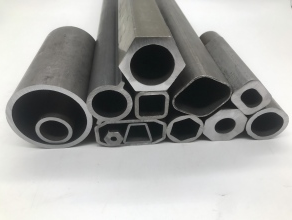
Steel grade is rarely just a line item. A 1020 carbon steel tube costs far less than a 4140 chromium-molybdenum alloy tube, but the difference isn’t just the base metal. Alloy surcharges for elements like chromium, molybdenum, and vanadium fluctuate monthly, tied to global commodity markets. In my experience, I’ve seen a molybdenum price spike add 15% to a 4130 tube order within a quarter. If your design calls for a specific alloy, budget with the understanding that surcharges can move independently of the tube mill’s base price.
Beyond the alloy content, the starting form matters. Seamless tube generally commands a premium over welded tube because of the more complex piercing and elongation process. But that doesn’t mean welded is always cheaper. Cold-drawn welded (CDW) tube, when processed to the same precision and mechanical properties, can close the gap. The key is whether the application truly requires seamless integrity.
Every step after the mill adds cost, and that cost is often proportional to the tightness of your specifications. Hot-rolled tube is the most economical starting point because it involves minimal additional processing. But for mechanical applications requiring precise dimensions and improved surface finish, cold drawing or cold rolling are necessary. Cold drawing alone can increase the per-meter cost by 20 to 40 percent over hot-rolled stock, depending on the number of passes and the amount of cross-section reduction.
Heat treatment is another multiplier. Normalizing, annealing, quench and tempering—each cycle consumes energy, time, and furnace capacity. For a production run of 500 pieces, the heat treatment cost might be a few cents per kilogram; for a prototype order of ten pieces, the per-unit cost skyrockets because the furnace doesn’t care about quantity.
| Process Step | Approximate Cost Impact | Notes |
|---|---|---|
| Hot Rolled to Cold Drawn | +20-40% | Depends on passes and reduction |
| Adding Annealing | +5-15% | Energy and time intensive |
| Quench & Temper | +10-25% | Requires alloy compatibility |
| Surface Grinding/Polishing | +10-30% | Adds labor and material loss |
Small orders are the enemy of low unit cost. Every production run requires setup: loading the die, adjusting the draw bench, running test pieces. Those fixed costs distribute over the total quantity. Ordering 50 meters of a custom hexagonal tube might cost twice as much per meter as ordering 2000 meters, simply because the setup time is the same.
Minimum order quantities (MOQs) aren’t arbitrary; they represent the break-even point for the mill to run a specific setup. If your annual volume can’t meet the MOQ, consider whether a slight modification to your design—like switching from an obscure alloy to a more common grade—can bring you into standard production runs and lower the per-unit cost.
If your program involves irregular dimensions or a blend of shapes, we recommend bundling them into a single order to share setup overhead. Reach out to our team at Sunny@tenjan.com with your full part list to explore consolidated production options.
This is where I’ve watched budgets unravel. A standard cold-drawn tube might ship with a plus or minus 0.1 mm wall thickness tolerance. Requesting plus or minus 0.05 mm will likely trigger additional sizing passes or honing, potentially doubling the labor cost for that dimension. I recall a hydraulic cylinder manufacturer that insisted on plus or minus 0.03 mm on the ID across a 2-meter length. The necessary honing and straightening pushed the tube cost to nearly three times that of the standard tolerance version. We later discovered that the piston seal design could accommodate plus or minus 0.08 mm without performance loss. Aligning your tolerance requirement with the seal supplier’s actual specification can save a fortune.
Testing requirements compound the issue. Ultrasonic flaw detection, eddy current testing, and PMI (Positive Material Identification) are crucial for safety-critical applications, but they add inspection time and certification overhead. A tube that must ship with a full NDT report and a 3.1 material certificate will always cost more than one for general mechanical use. For a deeper look at how material integrity affects performance, see our analysis of cracking in seamless tubes during bending and flattening. The question you need to ask is whether your application genuinely requires every test, or if you are paying for paperwork you won’t use.
Raw steel prices set the floor, but transportation, tariffs, and regional energy costs can reshape a quote, especially for international buyers. Freight from a Chinese mill to a European distributor might add 8 to 15 percent to the landed cost, depending on container rates. Similarly, anti-dumping duties or import tariffs can layer on costs that have nothing to do with the tube itself. A vertically integrated supplier that handles export documentation and consolidation can often mitigate some of these, but the buyer should always clarify whether a quote is FOB or CIF.
Energy cost fluctuations are less visible but real. Cold drawing and heat treatment consume significant electricity and natural gas. In markets where energy prices spike, mills may add a surcharge. A multi-year contract with a price adjustment clause tied to a steel index can help both parties manage volatility.
The cheapest tube is often the one that was designed for the process, not the other way around. I encourage engineers to involve the tube mill during the design phase. Simple adjustments—rounding up to the next standard OD, relaxing a non-critical tolerance, or selecting a readily available steel grade—can drop the cost by 10 to 20 percent without affecting performance.
Building a relationship with a manufacturer that controls the full process, from raw billet to final inspection, eliminates middleman markups and speeds up feedback on cost-saving alternatives. At Tenjan, we frequently review customer drawings and suggest alternative standards or slight profile changes that achieve the same function at a lower cost, something a reseller cannot do.
Navigating steel tube pricing doesn’t have to be a guessing game. When you work with a mill that handles everything from raw material to final inspection, you gain transparency into where your money goes. At Tenjan Steel Tube, we’ve been manufacturing precision tubes since 2004, serving industries from automotive to high-pressure boilers, all backed by ISO-certified quality and full process traceability.
Instead of juggling multiple suppliers for different sizes and standards, send us your bill of materials and tolerance requirements. We’ll review your needs and return a detailed quote that breaks down the cost drivers, so you can make informed budget decisions. Reach us at Sunny@tenjan.com, call +86 13401309791, or WhatsApp at the same number. A single email can replace hours of guesswork.
Does a higher grade number always mean a higher price?
Not necessarily. A common grade like 1020 is inexpensive due to volume and availability. 4140 costs more because of alloy content, but a rare grade like 8620 might be even pricier due to low production volume. However, sometimes a high-strength microalloyed steel can outperform a standard grade at a similar cost because it achieves strength through grain refinement rather than expensive alloy additions. Always ask the mill for cost-comparison tables across equivalent grades.
Why is the per-meter price so high for small sample orders?
Because the mill must allocate the same setup time, die changeover, and testing to a 10-meter order as it would to a 1000-meter order. The fixed costs do not scale down. If you need prototypes, consider ordering from stock sizes that approximate your needs rather than asking for a custom size. Many mills, including ours, maintain stock of common diameters and grades that can be cut to length at lower cost.
How much more expensive is seamless compared to welded?
Seamless tubing generally runs 20 to 50 percent more than electric resistance welded (ERW) tubing of the same dimensions and grade, largely because of the hot-forming process and yield loss. But cold-drawn welded tube (DOM) can close that gap for hydraulic cylinder applications, offering a seamless-like internal surface without the full cost. The decision should hinge on your pressure rating and fatigue life requirements, where seamless may still be necessary.
Can testing requirements be relaxed to save money?
Often yes, but only after a careful review of the application. I’ve worked with customers who initially specified full ultrasonic and PMI testing for a simple structural tube that only needed tensile and dimensional checks. Changing the specification saved 12 percent without compromising safety. However, for pressure-containing or critical rotating parts, skip the shortcuts. The key is to align testing with actual risk. If you are unsure, share your part’s service conditions and we can help determine the necessary certification level at no charge.


Home Product Capabilities Case Studies Blogs About Get a Quote
Pipe & Tube Manufacturing Process Shapes & Profiles Pipes & Tubes Material Standard Steel Pipes & Tube Rebar Couplers Cold Drawn Steel Profiles & Bars
Oil & Petrochemical Industry Automotive & Motorcycle Components Mechanical Engineering Components Mining Construction Support Structures High-Pressure Boiler System Construction Machinery Geological Drilling Agricultural Machinery Parts Industrial Fluid Transfer Systems


© 2024 Changzhou Tenjan Steel Tube Co., Ltd All rights reserved. Privacy StatementTerms-ConditionsSitemap
