Welcome to Changzhou Tenjan Steel Tube Co., Ltd
Sunny@tenjan.com



Selecting steel tubes for structural applications involves more than matching a standard to a drawing. In 20 years of precision steel pipe manufacturing, I have watched engineers specify the right grade on paper only to discover on site that dimensional tolerance or fitment issues created problems nobody anticipated. The difference between a trouble free structural installation and costly rework often comes down to decisions made long before welding begins: material grade selection, manufacturing process, and how tightly the tube actually conforms to its nominal dimensions. Understanding these factors narrows the gap between specification sheets and real world performance.
A structural steel tube earns its name by carrying loads predictably. Unlike fluid transport tubes that contain pressure, or mechanical tubes that transmit motion, structural tubes resist bending moments, axial compression, and buckling in static applications. The demands are straightforward but unforgiving: consistent wall thickness around the entire cross section, reliable mechanical properties from batch to batch, and dimensional accuracy that keeps connections aligned.
Three characteristics matter most. First, yield strength determines the load at which permanent deformation begins. A structural engineer calculates this value assuming the tube meets its minimum specified yield. If the actual material falls short, the safety margin shrinks. Second, ductility lets the tube deform slightly under overload without fracturing. This is why structural standards require minimum elongation values, often 20 percent or higher for carbon steel grades. Third, weldability affects everything from fabrication cost to connection integrity. Most structural tubes get welded on site or in the fabrication shop. A grade that requires preheating or special filler metal adds cost that can exceed the tube price itself.
The manufacturing process also shapes structural suitability. Hot finished tubes carry fewer residual stresses from forming. Cold formed tubes, while more precise dimensionally, may retain stresses that relax during welding or service. Either can work, but the specification should match the fabrication sequence. I have seen projects where cold formed rectangular hollow sections were specified for a welded frame, only to have the corners distort during welding because the residual stress pattern had not been accounted for in the joint design.
Structural tube standards vary by region, but the core requirements overlap more than first impressions suggest. Understanding the landscape helps when sourcing across borders or reconciling specifications from different design offices.
| Standard | Region | Common Grades | Key Characteristics |
|---|---|---|---|
| ASTM A500 | North America | Grade B, Grade C | Cold formed welded and seamless; 46 to 62 ksi yield |
| EN 10210 | Europe | S235JRH to S460NH | Hot finished structural hollow sections |
| EN 10219 | Europe | S235JRH to S460MH | Cold formed welded structural hollow sections |
| JIS G3466 | Japan | STKR400, STKR490 | Carbon steel square and rectangular tubes for structures |
| GB/T 6728 | China | Q235, Q355 | Cold formed steel hollow sections for structures |
ASTM A500 Grade C and EN 10210 S355J2H, for example, both deliver minimum yield strengths around 50 ksi or 355 MPa. The chemical compositions differ slightly, reflecting regional steelmaking practices, but a structure designed to one standard can often accept the other after an engineering review. The practical difference shows up in tolerances. EN 10210 permits slightly tighter wall thickness variation than ASTM A500 for hot finished products. When your connection design depends on a specific wall thickness, that tolerance band matters.
For projects that cross regulatory boundaries, I typically recommend specifying the stricter standard as the baseline. It costs little to tighten a tolerance during ordering, but replacing fabricated assemblies built around out of tolerance tubes is expensive. We have supplied structural tubes to European projects that used ASTM A500 as the base standard and EN 10210 as the supplementary requirement. The mill adjusted the production process slightly, and the tubes satisfied both.
Structural tube grades form a hierarchy of strength, toughness, and weldability. Choosing the right grade means understanding what each number actually delivers beyond the data sheet.
S235 and S355 grades dominate European structural work. S235 offers a minimum yield of 235 MPa, good weldability, and lower cost. S355 raises the yield to 355 MPa, allowing thinner walls for the same load, which reduces weight and material cost. The tradeoff is formability: S355 resists cold bending more than S235, so tighter radius bends may require hot forming or larger bend radii. In North America, ASTM A500 Grade B at 46 ksi and Grade C at 50 ksi follow a similar logic. Grade C gives more strength per pound. Grade B offers easier fabrication.
Moving up the strength ladder, S460 grades under EN 10210 push yield to 460 MPa. These tubes support lighter structures but demand more attention to welding procedure. Preheating may be required above certain wall thicknesses. The fatigue behavior also changes: high strength steels are more notch sensitive, meaning surface defects or geometric stress concentrations matter more.
A practical tip: when comparing grades across standards, look at the yield to tensile ratio, not just the yield strength. A grade with a yield strength of 355 MPa and a tensile strength of 470 MPa has a ratio of 0.76. A different grade also at 355 MPa yield but with 510 MPa tensile has a ratio of 0.70. The lower ratio gives more reserve capacity between the onset of yielding and ultimate failure. For seismic or impact loaded structures, that reserve matters.
If your design conditions push the limits of standard material grades, confirming the actual yield to tensile ratio of the production batch before welding procedures are finalized can prevent over engineering. Send your grade requirements to Sunny@tenjan.com and we can share typical production data from recent heats.
Structural tubes do not need the micron level tolerances of hydraulic cylinder tubing, but they do need consistency. A tube that varies in wall thickness around its circumference introduces eccentricity into the structural member. The load path shifts from the centroid, creating a bending moment the design may not have accounted for.
Cold drawn structural tubes, produced by drawing a hot rolled hollow through a die and over a mandrel, achieve wall thickness tolerances within plus or minus 0.1 mm at diameters up to 108 mm. That level of precision means the structural engineer can count on the section properties matching the calculated values. It also means connections fit the first time. We have supplied cold drawn S355JR tubes for modular building frames where bolt holes had to align across multiple stories. The accumulated tolerance stack would have been unmanageable with as rolled tube dimensions.
Straightness is another precision factor that affects structural assembly. A tube with more than 1 mm per meter of bow creates alignment problems in multi member structures. Cold straightening after the final heat treatment corrects this, but only if the manufacturer includes it in the process specification. When ordering structural tubes in longer lengths, specify the straightness tolerance explicitly. The standard maximum deviation in most structural tube specifications is 0.2 percent of the length, which translates to 12 mm over a 6 meter piece. For welded frames with tight fit up requirements, tighter tolerances are available from precision manufacturers but must be requested.
Surface condition rounds out the precision picture. Mill scale on hot finished tubes can interfere with welding and paint adhesion. Cold drawn or cold rolled tubes arrive with a clean, scale free surface that accepts coatings without additional blasting. For architecturally exposed structural steel, that surface quality eliminates a fabrication step. For buried or submerged structures, a clean surface reduces the risk of coating failure that leads to corrosion.
Writing a tube specification that produces the right product, at the right price, delivered on time, requires balancing technical requirements against supply chain realities. Over specifying drives up cost and lead time. Under specifying invites nonconformance and rework.
Start with the structural design requirements. What minimum yield strength does the calculation demand? What wall thickness does the section need? Once those are fixed, look at the standards landscape. If your project is in North America, ASTM A500 is the default. In Europe, EN 10210 or EN 10219. In Asia, JIS G3466 or GB/T 6728. If your fabricator is in a different region than the project site, consider dual certifying to both the project standard and the fabricator’s familiar standard. The mill may already meet both requirements without process changes.
For complex geometries that may benefit from high precision tolerances, or when working across multiple standard frameworks, a quick material availability check before locking the bill of materials can save weeks of redesign later. Send your part numbers and quantities to Sunny@tenjan.com or call +86 13401309791 for a dimensional capability confirmation and current lead time estimate.
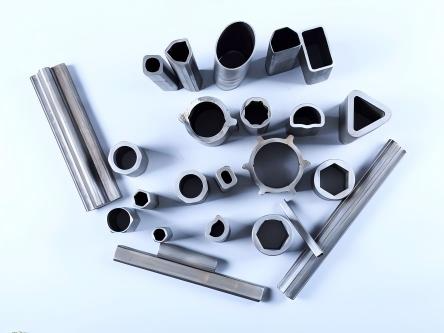
For custom shapes, hexagonal, oval, or complex profiles for structural connections, engage the tube manufacturer early. Special shaped tubes require dedicated tooling. The tooling cost amortizes over the order quantity, so early discussions determine whether the custom shape justifies its cost or whether a standard section with minor fabrication modifications works better. I have seen projects where a custom hexagonal tube connector simplified assembly enough to pay back the tooling cost within the first production run. I have also seen projects where the tooling cost exceeded the entire frame budget. The difference was whether the conversation happened before or after the design was locked.
Quality documentation matters as much as the tube itself. Request mill test certificates that show the actual chemical composition and mechanical test results for each heat, not just the generic grade values. For critical structural applications, specify additional testing: ultrasonic or eddy current inspection to verify wall thickness consistency, or PMI to confirm alloy grade. These tests add cost and lead time, so reserve them for structures where failure carries safety or business continuity consequences.
Yes, and in many cases cold drawn structural tubes offer advantages over hot finished alternatives. The cold drawing process improves dimensional accuracy and surface finish while increasing yield strength through work hardening. For structural applications where precise fit up matters, such as modular construction or bolted connections, cold drawn tubes reduce on site rework. The tradeoff is that the work hardening reduces ductility slightly. If your design relies on plastic deformation capacity, such as in seismic resisting frames, check that the elongation values still meet the structural code minimums. In our experience, cold drawn S355JR and Q355B tubes consistently achieve elongation above 20 percent, which satisfies most structural ductility requirements, but always verify against the specific project standard.
Many procurement specifications treat these as interchangeable, but they come from different manufacturing routes and tolerance philosophies. ASTM A500 covers cold formed welded and seamless carbon steel structural tubing, commonly specified in the US and markets that follow American practice. EN 10210 covers hot finished structural hollow sections and is the European counterpart. The practical differences show up in tolerances and chemical composition. EN 10210 typically permits tighter wall thickness tolerances for hot finished products. ASTM A500 Grade C at 50 ksi yield and EN 10210 S355J2H at 355 MPa yield are functionally equivalent in strength, but the chemistry differs. For projects where both standards are accepted, I recommend specifying both and letting the manufacturer confirm which production route delivers the better cost and delivery outcome. Most manufacturers familiar with both standards can guide this decision early in the inquiry stage.
Three levels of verification apply, depending on the criticality of the structure. The baseline is the mill test certificate, also called a material test report. This document shows the actual chemical composition from the ladle analysis and the mechanical test results from specimens taken from the same heat. Review the MTC against the purchase specification before accepting the shipment. The second level is independent third party inspection, where an inspector witnesses the testing at the mill or samples tubes from the shipment for retesting at an independent laboratory. The third level is receiving inspection at your facility, which might include PMI testing with a handheld spectrometer to confirm alloy grade, dimensional checks on a sample of tubes, and possibly a flattening or bend test on a coupon. For most structural applications, the MTC coupled with dimensional spot checks gives adequate assurance. Share your requirements and we will confirm what verification documentation is available for your specific order.
Standard grade structural tubes in common sizes, S235, S355, ASTM A500 Grade B or C, in round, square, or rectangular sections, typically ship within 3 to 6 weeks from order confirmation if the mill has the starting hollows in stock. Custom shapes, non standard sizes, or alloy grades like S460 add tooling or sourcing time, extending lead time to 8 to 12 weeks or longer. The single biggest factor in lead time is whether the required tube size and grade are in a manufacturer’s standard production program. Dimensions outside the standard range for a given mill may require a custom hollow production run, which adds weeks. This is why early engagement with the tube supplier, during the design phase rather than after the order is placed, often shortens the overall project schedule more than any other single action.
Structural tube and mechanical tube serve different engineering purposes, and using one in place of the other creates problems. Structural tube standards, such as ASTM A500 or EN 10210, focus on properties relevant to static load bearing: yield strength, tensile strength, elongation, and weldability. The tolerances are set for fabrication and erection of building type structures. Mechanical tube standards, such as ASTM A519 or EN 10305, prioritize properties for machined components and dynamic systems: tighter dimensional tolerances, specific hardness ranges, and surface finish grades. Mechanical tubes often have tighter tolerances but may not carry the same minimum elongation or impact toughness guarantees that structural codes require. If your application involves static loads in a building or infrastructure context, specify tubes to a structural standard. If it involves machined parts, rotating components, or hydraulic cylinders, specify to a mechanical standard. When a component serves both functions, a structural member that also acts as a hydraulic reservoir for example, engage the manufacturer to determine whether dual certification is possible. Send your part drawings and performance requirements to Sunny@tenjan.com and we will confirm whether a single tube grade can satisfy both sets of requirements.


Home Product Capabilities Case Studies Blogs About Get a Quote
Pipe & Tube Manufacturing Process Shapes & Profiles Pipes & Tubes Material Standard Steel Pipes & Tube Rebar Couplers Cold Drawn Steel Profiles & Bars
Oil & Petrochemical Industry Automotive & Motorcycle Components Mechanical Engineering Components Mining Construction Support Structures High-Pressure Boiler System Construction Machinery Geological Drilling Agricultural Machinery Parts Industrial Fluid Transfer Systems


© 2024 Changzhou Tenjan Steel Tube Co., Ltd All rights reserved. Privacy StatementTerms-ConditionsSitemap
