Welcome to Changzhou Tenjan Steel Tube Co., Ltd
Sunny@tenjan.com



In 2007, an automotive tier‑1 supplier sent us a drawing for a hollow stabilizer bar. The tube had to be 34mm OD, 4mm wall, with a wall thickness variation under ±0.08mm along a 2‑meter length, heat‑treated to a specific yield strength, and delivered in an oval‑round‑oval profile that no standard mill carried. The drawing referenced three different standards in the notes: EN 10305‑1 for the base tube, ASTM A519 for the mechanical properties, and an internal norm for the end‑form. That project taught me something most generic “how steel tubes are made” articles never cover — real OEM steel tube manufacturing isn’t about running a catalog item. It’s about translating a multi‑standard specification into a repeatable process, from the moment the steel billet arrives until the last tube leaves final inspection.
What separates an OEM‑ready tube manufacturer from a commodity mill comes down to process ownership, not machine list. When a buyer specs a DIN 2391 precision tube but quotes a tensile requirement straight out of ASTM A519, the factory has to synthesize two frameworks into one production path. That means controlling the steel chemistry at the melt stage, designing the cold‑draw pass schedule to hit both dimensional tolerance and mechanical property windows, and building a quality plan that satisfies both normative references — before the first billet is heated. I’ve seen enough RFQs with conflicting clauses to know that the ability to flag a standard mismatch in the quoting stage, and propose a resolution, is more valuable to an OEM than a lower per‑kg price.
An OEM doesn’t buy a pipe — it buys a performance‑critical component whose dimensional and mechanical conformance directly determines whether a hydraulic cylinder passes its burst test or a boiler tube survives a pressure cycle. So the first question isn’t “what’s your weekly output?” but “how do you translate a design intent into process parameters?”
Most external tube buyers never see the internal workflow, but every OEM‑qualified mill operates on a principle we jokingly call “don’t trust the spec, test the outcome.” It means for every new part number, we build a control plan that ties each customer requirement — wall thickness, yield strength, surface roughness, straightness, end‑form — to a specific inline check. That plan might specify that between the third and fourth cold pass, a random sample is cut and measured, not merely at the ends but in the middle, because cold‑drawn tubes have a tendency to spring‑back differently along the length. This level of paranoia isn’t excess; it’s what turns a generic seamless tube into an OEM part.
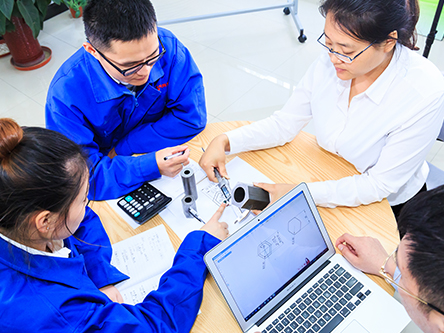
OEM tube quality is pre‑determined before a single draw. The incoming round billet — typically continuous‑cast and then hot‑rolled into round bars — must have a controlled macro‑structure free from center porosity, segregation, and surface cracks. For alloy grades like 25CrMo4 (similar to AISI 4130) or 34MnB5, we specify a hydrogen‑relief slow‑cool cycle after casting to prevent internal hairline cracks that only reveal themselves after cold drawing, when the material work‑hardens and the flaw propagates into a visible split. A general‑purpose mill might accept a billet on chemistry alone; an OEM‑oriented mill rejects on internal quality, because no downstream process fixes a cast‑in defect.
The billet is heated to roughly 1,200 °C and fed into a piercing mill, where a rotating plug forces the center open. This Mantra‑process shell inherits the metal flow patterns of the original billet; uneven wall thickness at this stage must be corrected within the first two hot‑rolling passes, otherwise the final cold‑drawn tube will exhibit a spiral thickness variation that no subsequent light pass can fully remove. I’ve traced a persistent OD ovality issue back to a worn piercing plug — the shell’s eccentricity was only 0.3mm, but by the time it reached the customer’s honing operation, that translated into a 0.05mm residual ovality that caused a mismatch with the piston seal.
The hot‑rolled shell is pickled, phosphated, and then drawn through a carbide die on a drawbench. This is where tube becomes product. The reduction in cross‑section per pass — typically 15–25% — controls not only the OD and wall but also the yield strength, because cold work induces dislocation entanglement. For an OEM part like a DIN 2391 St52 precision tube with a specified yield between 355 and 500 MPa, the pass schedule is engineered backward: you start from the required final mechanicals, estimate the work‑hardening response of the specific heat, and then design the reduction per pass to land inside the window, leaving enough ductility for any subsequent bending or flaring operation the customer will perform.
Between passes, intermediate heat treatment — normalization or stress‑relief annealing — resets the grain structure. A common mistake in less‑mature operations is to skip an annealing step to save cost, resulting in excessive springback and out‑of‑spec hardness, which the OEM’s machining center then complains about. Our policy: when in doubt, anneal and re‑test, because the cost of a rejected shipment far outweighs the furnace time.
A single OEM order might require chemistry to EN 10297‑1, ultrasonic testing per ASTM E213, surface condition to DIN 2391, and packaging to the buyer’s own spec. So the production floor doesn’t run “an EN tube” or “an ASTM tube” — it runs a tube according to a job‑specific quality plan that cross‑references each requirement to the test standard and acceptance criteria the buyer actually cares about.
Here’s a fast comparison of the standards most commonly cited in OEM inquiries:
| Standard | Primary Focus | Typical Tolerance Class | Typical Testing |
|---|---|---|---|
| EN 10305‑1 | Cold‑drawn seamless precision tubes | ±0.08mm on OD for mid‑range | Eddy current or ultrasonic, optional tensile |
| DIN 2391 | Precision seamless tubes (withdrawn but still referenced) | ±0.08mm on OD | Visual, dimensional, optional mechanical |
| ASTM A519 | Mechanical tubing for general engineering | Not as tight as EN; often ±10% on wall | Eddy current, tensile, hardness |
| JIS G3445 | Carbon steel tubes for machine structural use | JIS B 0405 tolerances | Tensile, flattening, bend |
| EN 10297‑1 | Seamless circular steel tubes for mechanical and general engineering | Buyer‑specified | Based on material grade and application |
The real challenge isn’t knowing the standard — it’s handling the areas where standards are silent. EN 10305‑1 doesn’t define straightness; a customer might add “max 1mm/meter bow.” JIS G3445 doesn’t prescribe surface roughness; an OEM may demand Ra ≤ 3.2 µm. So the production control plan is a living document. We maintain a library of “standard + customer overlay” specifications, built from two decades of projects, that allows us to anticipate where a non‑standard requirement will create a process bottleneck — before we commit to a delivery date.
Not every OEM application fits a circular cross‑section. Hydraulic manifolds, automotive seat structures, and linear guide rails sometimes need hexagonal, rectangular, or even double‑finned profiles. Cold‑drawing a shape requires a custom‑ground die set and a plug (or mandrel) that holds the internal geometry during drawing. The draw‑stress isn’t uniform around the perimeter, so the design phase involves finite‑element modeling to ensure the wall doesn’t collapse or thin excessively at the corners.
Tolerance on a shaped tube is a different animal. For a 20mm hexagonal tube, the across‑flats dimension might be specified as +0/‑0.05 mm. That’s tighter than many turned components. Achieving it means the die must be compensated for wear — we track the dimension history of every die and plan re‑grinding at a predicted cycle, not when a part goes out of spec. This is where the “OEM” in OEM manufacturing stops being a label and becomes a discipline: you don’t inspect quality in at the end; you maintain the process at the point of creation.
From two decades of manufacturing precision tubes for hydraulic cylinders, boiler systems, and automotive chassis components, I can say with confidence that the fastest way from an idea to a production‑ready quote is a drawing — however rough — and a short note about the application environment. Even a simple sketch with the OD, wall thickness, material grade, and the standard you’re targeting is enough to begin a serious technical discussion. From there we can recommend a process route (cold‑drawn vs. cold‑rolled, annealed vs. stress‑relieved), flag any tolerance conflicts between standards, and propose a sampling plan that aligns with your incoming inspection protocol.
If your project requires a tube that isn’t in any catalog — a custom profile, an odd size, a combination of international standards — send the part number and a brief application description to Sunny@tenjan.com or reach us by phone or WhatsApp at +86 13401309791. We’ll confirm the feasibility and give you a ballpark lead time, not a generic response.
A high‑precision tube always comes with a price premium — but where exactly does the extra cost come from?
The cost driver isn’t the material; it’s the number of intermediate processing steps. To hold ±0.05mm on OD, a tube might need an extra cold‑draw pass, an intermediate anneal to relieve work‑hardening, and possibly a straightening operation. Each step adds handling time, energy, and scrap risk. If your application can tolerate ±0.10mm, you can often save 10–15% by skipping a pass — but that decision has to be made at the design stage, not after quoting.
We see “eddy current” and “ultrasonic” testing on certificates — which one should we require?
It depends on the defect you fear most. Eddy current testing is fast and sensitive to surface and near‑surface discontinuities, so it’s standard for high‑pressure tubing. Ultrasonic testing probes the full wall volume and is better at detecting internal laminations or mid‑wall inclusions. For a boiler tube under cyclic thermal stress, ultrasonic is non‑negotiable; for a mechanical guide tube, eddy current is usually sufficient. If your spec is silent, ask the mill to recommend based on the failure consequence.
Can a seamless tube factory also supply cold‑drawn welded tube — and does it matter?
Yes, many precision tube mills (ours included) run both seamless and cold‑drawn welded lines. The cold‑drawing process refines the weld zone grain structure to the point where, for low‑pressure or mechanical applications, the difference is virtually undetectable in service. The key is the ratio of wall reduction during drawing: if the cold work on the weld area exceeds 20% reduction, the microstructure recrystallizes during subsequent annealing, and the welded tube behaves like a seamless product in terms of ductility and burst pressure. Specify your application and let the supplier propose the most cost‑effective process route.
How do you verify that every tube in a lot meets tolerance, or are they relying on statistical sampling?
For critical OEM dimensions — especially OD for cylinder tubes or wall thickness for pressure‑retaining parts — we 100% inline test with laser micrometers after the final straightening pass. Every tube gets scanned helically along its length, and measurements are recorded in a digital log that becomes part of the shipment documentation. Sampling is used for destructive tests like tensile and flattening. If your quality agreement demands full‑length dimensional records, just say so; the equipment is already in place.
We are designing a new part and aren’t sure which standard to reference — can you help with that?
Absolutely. This is one of the most productive conversations we have with OEM engineers. The choice between EN 10305‑1, ASTM A519, or JIS G3445 often comes down to the material grade’s availability in your region and the acceptance testing your end‑customer expects. Share your part’s function, a rough working stress, and the geographical market it will be sold into, and we can recommend a standard that minimizes compliance friction — it might save you re‑qualification later.


Home Product Capabilities Case Studies Blogs About Get a Quote
Pipe & Tube Manufacturing Process Shapes & Profiles Pipes & Tubes Material Standard Steel Pipes & Tube Rebar Couplers Cold Drawn Steel Profiles & Bars
Oil & Petrochemical Industry Automotive & Motorcycle Components Mechanical Engineering Components Mining Construction Support Structures High-Pressure Boiler System Construction Machinery Geological Drilling Agricultural Machinery Parts Industrial Fluid Transfer Systems


© 2024 Changzhou Tenjan Steel Tube Co., Ltd All rights reserved. Privacy StatementTerms-ConditionsSitemap
