Welcome to Changzhou Tenjan Steel Tube Co., Ltd
Sunny@tenjan.com



Pneumatic cylinder tube systems turn compressed air into steady linear motion, and the small tolerances inside them decide how well they run, how long they last, and how much maintenance they need. We lean on proven materials, cold drawing, and tight compliance with ASTM, EN, DIN, and JIS to keep friction low, seals tight, and performance consistent across manufacturing, packaging, and specialized machinery. That same focus drives our OEM customization, testing, and process control, so the tubing fits the job without surprises.
Pneumatic cylinder tube systems sit at the core of automated machinery. Compressed air generates force that drives a piston inside a cylinder, converting pneumatic energy into mechanical linear motion for a wide range of industrial tasks. Their reach spans manufacturing, material handling, and specialized equipment, favored for simplicity, reliability, and cost-effectiveness.
Pneumatic actuation depends on components working together with precision. A compressor supplies pressurized air, which moves through control valves that direct flow into the cylinder. Inside, the air acts on a piston and produces linear movement. That motion delivers work by pushing, pulling, lifting, or clamping. Adjusting air pressure and flow sets piston speed and force. This mechanism supports everything from basic pick-and-place tasks to complex assembly lines. Engineers pay close attention to design robustness and material selection to maintain consistent, repeatable performance in demanding environments.
The cylinder tube does more than surround the piston. Its inner surface provides the sealing and guiding path the piston depends on. Dimensional accuracy, surface finish, and material properties directly affect efficiency and service life. Imperfections cause air leakage, add friction, and speed up wear of seals and piston rods. The tube must resist internal pressures, external loads, and repetitive motion without deforming or degrading. Precision manufacturing keeps the cylinder running smoothly and reliably.
Precision steel tubing is the unseen core of high-performance pneumatic cylinders. Its characteristics shape efficiency, durability, and reliability. We see firsthand how superior tubing lowers friction, prevents leakage, and extends service life in demanding automation environments. That focus on precision translates to stable functionality for our clients.
The choice of steel material sets the groundwork for pneumatic cylinder tubes. Different applications call for specific properties that balance strength, wear resistance, and corrosion resistance. Carbon steel, such as 1020 Steel Pipe or 1035 Seamless Pipe, provides good weldability and formability for general-purpose cylinders. For higher strength and toughness, alloy steels like 4140 Steel Pipe or 25CrMo4 Steel Pipe are preferred, bringing enhanced mechanical properties for high-pressure or heavy-duty work. We also supply S355JR Steel Pipe and ST52 Steel Pipe, European standard structural steels valued for weldability and mechanical strength. For specific needs, Seamless Carbon Steel Tubes and Seamless Alloy Steel Tubes support material integrity and consistent performance.
| Material Type | Key Characteristics | Common Applications |
| Carbon Steel | Good weldability, formability | General purpose, lower pressure |
| Alloy Steel | High strength, toughness, wear resistance | High pressure, heavy-duty, demanding environments |
| S355JR | European standard, good weldability | Structural, general engineering |
| 4140 Steel | Chromium-molybdenum alloy, excellent strength | Automotive, high-stress components |
| ST52 Steel | High-strength structural, excellent weldability | Construction machinery, fluid systems |
Cold drawing delivers the precision that pneumatic cylinder tubes require. Tubes are pulled through a die at room temperature to reduce diameter and wall thickness. The process refines grain structure and boosts tensile strength and hardness. It holds tight tolerances on outer and inner diameters and produces a superior internal surface finish, which is vital for sealing and for lowering friction between the piston and tube wall. Our Precision Pipe&tube and Cold Drawn Pipe&Tube reflect this commitment to accuracy.
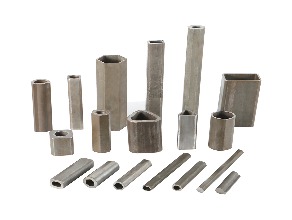
Tube quality sets the performance envelope for a pneumatic system. A smooth, dimensionally accurate inner surface is required for proper sealing. Irregularities or rough finishes cause air leakage, cutting efficiency and raising energy use. They also increase friction, accelerating seal wear and demanding more force to move. Added friction generates heat that degrades seals and lubricants. High-quality tubing keeps sealing consistent, reduces friction, and extends the operating life of the cylinder. Maintenance drops, and reliability improves. If you’re interested, check 《Analysis of Key Causes and Prevention Strategies for Cracking in Seamless Steel Tubes during Bending and Flattening》.
Pneumatic cylinder tube systems underpin a wide spread of automation tasks. Their versatility and robust nature make them a fixture across many sectors. We see their impact in boosting efficiency and reliability across varied operating conditions.
On manufacturing and assembly lines, pneumatic cylinders handle rapid, repeatable linear motion. They position parts with robotic arms, clamp components during processing, and eject finished pieces. Speed and simplicity enable high throughput in modern production. In automated welding cells, STKM11A Steel Pipes and STKM13A Steel Tubes serve in machine structural components so cylinders can endure repetitive stress. Consistent force and quick cycling lift productivity and stabilize quality.
Packaging and material handling rely on cylinders for reliable, swift movement. They open conveyor gates, lift and lower packages, and actuate grippers for sorting and stacking. These dynamic settings put cylinders under constant operation and variable loads. Our ST35 Seamless Pipe and S235JR Seamless Pipe provide the formability and weldability needed for robust handling equipment. Precision tubes keep motion smooth, reduce jams, and raise throughput on automated packaging lines.
Pneumatic cylinder tube systems support specialized machinery, including Automotive and Motorcycle Components and Construction Machinery. In automotive manufacturing, they control assembly jigs, press components, and operate robotic tools. In heavy construction equipment, cylinders manage safety mechanisms and assist material flow. These tasks often call for high-strength alloy steels like 41Cr4 Alloy Pipe or 8620 Alloy Pipe, valued for hardenability and mechanical strength. We also provide Special-Shaped Alloy Steel Tubes and Special-Shaped Carbon Steel Tubes to match unique design requirements.
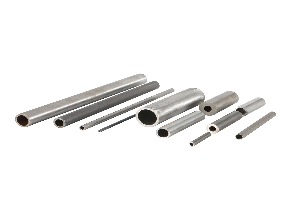
Excellence in pneumatic cylinder tubes rests on strict standards and the room to customize. We emphasize both, from material selection through final inspection, to meet the demands of industrial automation.
Compliance with international standards is non-negotiable. These frameworks ensure material consistency, dimensional accuracy, and performance across markets. We manufacture to ASTM, EN, DIN, and JIS specifications. For example, DIN 17175 Steel Pipe targets high-temperature service, and DIN 2391 Steel Pipe covers precision seamless cold-drawn tubes. JIS G3445 Steel Pipe and JIS G3441 Steel Pipe meet Japanese standards for machine structural use. Following these standards, including ASTM A179 Steel Pipe for heat exchangers and ASTM A192 Steel Pipe for high-pressure boilers, helps our products integrate smoothly into engineering projects worldwide.
Our vertically integrated process benefits Original Equipment Manufacturers (OEMs) by keeping every stage under one roof, from raw material to finished product. Full process control supports consistent quality, traceability, and exact specifications. PMI (Positive Material Identification) and NDT (Non-Destructive Testing) are built into our ISO-certified quality system to verify material integrity and find potential flaws. This end to end approach enables tailored, high-precision tubing, shorter lead times, and dependable performance in critical OEM applications.
Changzhou Tenjan Steel Tube Co.,Ltd manufactures precision steel tubing through a vertically integrated setup, including seamless and cold-drawn profiles. The tubes deliver superior dimensional accuracy, excellent surface finish, and solid material integrity, which are key for reliable operation and longer service life in pneumatic cylinders. We comply with international standards like ASTM, EN, DIN, and JIS.
Yes. We offer custom-shaped steel tubes, including square, rectangular, hexagonal, and complex geometries. Cold drawing and cold rolling allow high precision and tailored dimensions for your pneumatic cylinder designs and automation projects. This includes products like Special-Shaped Alloy Steel Tubes and Hexagonal Steel Pipes&Tubes.
Cold drawing raises dimensional accuracy, surface finish, and mechanical properties. For pneumatic cylinders, that means tighter tolerances, lower friction during piston movement, improved sealing efficiency, and stronger wear resistance. The result is higher performance and longer system life. Our Cold Drawn Pipe&Tube is purpose-built for these precision demands.
Changzhou Tenjan Steel Tube Co.,Ltd operates ISO-certified quality control systems. We use thorough inspections, including PMI (Positive Material Identification) and NDT (Non-Destructive Testing), to confirm material integrity and adherence to specifications across all steel tubes. Full process control, from raw material to finished product, supports reliability in critical applications like pneumatic cylinders.
Ready to optimize your automation systems with superior pneumatic cylinder tubes? Contact Changzhou Tenjan Steel Tube Co.,Ltd today for custom solutions and expert consultation. Email us at Sunny@tenjan.com or call +86 51988789990.


Home Product Capabilities Case Studies Blogs About Get a Quote
Pipe & Tube Manufacturing Process Shapes & Profiles Pipes & Tubes Material Standard Steel Pipes & Tube Rebar Couplers Cold Drawn Steel Profiles & Bars
Oil & Petrochemical Industry Automotive & Motorcycle Components Mechanical Engineering Components Mining Construction Support Structures High-Pressure Boiler System Construction Machinery Geological Drilling Agricultural Machinery Parts Industrial Fluid Transfer Systems


© 2024 Changzhou Tenjan Steel Tube Co., Ltd All rights reserved. Privacy StatementTerms-ConditionsSitemap
