Welcome to Changzhou Tenjan Steel Tube Co., Ltd
Sunny@tenjan.com



The choice between seamless and welded steel pipe shapes everything downstream—pressure capacity, maintenance intervals, even how confidently you can sign off on a critical system. I’ve watched procurement teams agonize over this decision, and the ones who get it right usually understand one thing clearly: the manufacturing method isn’t just a production detail. It determines the pipe’s fundamental behavior under stress. What follows breaks down the real differences, where each type excels, and how to match the right pipe to your actual operating conditions.
The split between seamless and welded steel pipe starts at the production floor. Seamless pipes begin as solid billets. Welded pipes start as flat steel that gets shaped and joined. That origin story explains most of the performance differences you’ll encounter later.
Seamless steel pipe manufacturing relies on two main approaches: hot rolling and cold drawing.
Hot rolling heats a solid steel billet to temperatures where the metal becomes workable. A piercing operation creates the initial hollow form, and subsequent rolling stretches this shell to target dimensions. The result is a robust, continuous structure with no joints or seams. Products like ST35 Seamless Pipe and S235JR Seamless Pipe come from this process, and their strength reflects that uninterrupted grain flow.
Cold drawing takes things further. Starting with a hot-rolled tube or smaller billet, the process pulls the material through precision dies. Each pass reduces diameter and wall thickness while improving surface finish and dimensional control. EN10305-1 Steel Pipe specifications exist precisely because cold drawing can hit the tight tolerances that precision applications demand.
Welded steel pipe production follows a different logic. Electric Resistance Welding (ERW) forms steel strip into a cylinder, then uses electrical current to heat the edges until they fuse under pressure. No filler metal enters the joint. The process runs efficiently and produces consistent outside diameters.
Submerged Arc Welding (SAW) handles larger diameters and heavier walls. Steel plates roll into cylinders, and a welding arc buried under protective flux creates the longitudinal seam. The resulting weld is strong and well-protected during formation, making SAW pipes common in structural work.
Both ERW and SAW leave a seam running the pipe’s length. That seam is the defining feature separating welded from seamless—and the source of most performance trade-offs.
Manufacturing method directly controls how a steel pipe performs when pressure, temperature, or cyclic loading enter the picture. Seamless steel pipe carries an inherent advantage here: no weld seam means no weak point in the material structure.
The grain structure in seamless pipe flows continuously around the circumference. This uniformity translates to higher pressure ratings and more predictable behavior under stress. Seamless Carbon Steel Tubes and Seamless Alloy Steel Tubes dominate critical applications precisely because their homogeneous structure eliminates the stress concentrations that can initiate fatigue cracks.
Welded pipe performance depends heavily on weld quality and post-processing. The seam represents a metallurgical discontinuity—heat-affected zones, potential inclusions, and slightly different mechanical properties compared to the parent metal. Modern welding technology has narrowed this gap considerably. Cold drawing after welding, for instance, works the entire cross-section uniformly and can produce welded tubes with excellent dimensional accuracy and surface quality.
Wall thickness uniformity matters more than many engineers initially realize. Seamless production inherently produces more consistent wall thickness around the circumference. This consistency means the pipe responds predictably to internal pressure—no thin spots that see higher stress than calculations assume.
Corrosion behavior ties primarily to alloy composition, but the weld seam in welded pipe can create localized conditions where corrosion initiates faster. The heat-affected zone may have slightly different electrochemical properties than surrounding metal. In aggressive environments, this difference occasionally matters.
Seamless steel pipe eliminates the weld seam entirely, creating a uniform structure with no inherent weak points. This matters most in high-pressure boiler applications where the pipe must handle extreme temperatures and pressures continuously. The homogeneous grain structure distributes stress evenly, reducing fatigue crack initiation sites. Wall thickness consistency also improves pressure calculations—you can trust that the rated capacity applies around the entire circumference.
Seamless steel pipe costs more per meter than welded pipe of equivalent size and material. The manufacturing process explains why: creating a pipe from solid billet requires more energy, more specialized equipment, and more processing steps than forming and welding flat steel.
| Feature | Seamless Pipe | Welded Pipe |
|---|---|---|
| Initial Cost | Higher | Lower |
| Manufacturing Complexity | High | Moderate |
| Pressure Rating | Higher | Moderate |
| Wall Thickness Uniformity | Excellent | Good (post-treatment) |
| Material Waste | Lower | Higher (trimming) |
The purchase price tells only part of the story. Total cost of ownership includes maintenance frequency, repair likelihood, and how long the pipe actually lasts in service. In systems where failure creates serious consequences—injury risk, environmental release, production shutdown—the premium for seamless pipe often looks different when spread across a 20-year service life.
Welded pipe makes economic sense when the application doesn’t push material limits. Lower pressure systems, structural applications, and situations where the pipe can be inspected and replaced without major disruption favor the cost efficiency of welded production.
Pricing varies with material grade, dimensions, and standards compliance. A 4140 Steel Pipe costs more than standard carbon steel regardless of manufacturing method. Larger diameters and heavier walls increase cost for both types. Certification to specific standards (ASTM, EN, DIN, JIS) adds testing and documentation costs that reflect in final pricing.
Seamless production—hot rolling followed by cold drawing—creates pipes with uniform strength throughout the cross-section. No weld means no metallurgical discontinuity. This integrity comes at higher manufacturing cost due to the energy and equipment required to pierce and form solid billets. Welded production runs more efficiently, keeping costs lower, but introduces a seam that requires quality control attention. Advanced post-weld treatments like cold drawing significantly improve welded tube integrity, but the fundamental trade-off between manufacturing cost and inherent uniformity remains.
The right choice depends entirely on what the pipe needs to do. Each type has applications where it clearly outperforms the alternative.
Seamless steel pipe belongs in applications where failure consequences are severe or operating conditions push material limits:
High-pressure hydraulic systems rely on seamless pipe because pressure spikes and cyclic loading would eventually find any weakness in a weld seam. Construction machinery hydraulics, industrial presses, and similar systems need the uniform strength seamless pipe provides.
Boiler and heat exchanger service combines high temperature with high pressure—conditions that amplify any material inconsistency. ASTM A192 Steel Pipe and DIN 17175 Steel Pipe specifications exist specifically for these demanding thermal applications.
Automotive structural and safety components increasingly use precision seamless tubes where crash performance or fatigue life matters. The automotive industry’s move toward higher-strength, lighter-weight designs makes seamless pipe’s consistent properties more valuable.
Oil and gas drilling and production exposes pipe to corrosive fluids, high pressures, and mechanical stress simultaneously. 4140 Steel Pipe and 25CrMo4 Steel Pipe handle these combined demands because their alloy content and seamless structure work together.
Welded steel pipe serves well when cost efficiency matters and operating conditions stay within moderate limits:
Structural applications like building frames, supports, and general fabrication use welded pipe extensively. St37 Steel Pipe and Q355B Steel Pipe offer good mechanical properties and excellent weldability at competitive prices.
Lower-pressure fluid systems don’t need seamless pipe’s extra margin. Water distribution, HVAC piping, and similar services work fine with quality welded pipe.
Agricultural and general machinery often uses welded tubing for frames, guards, and non-critical components. The cost savings add up across large equipment fleets.
Welded steel pipe makes sense when your operating pressures stay moderate, structural demands don’t approach material limits, and budget constraints matter. Modern cold-drawn welded tubes achieve dimensional accuracy and surface quality that satisfy many demanding applications. General manufacturing, automotive components that don’t carry crash loads, and agricultural equipment frames all benefit from welded pipe’s cost advantage. The key is matching the pipe’s actual capabilities to your actual requirements—not over-specifying when the application doesn’t demand it.
Material integrity requires more than good intentions. At Tenjan Steel Tube, quality control spans every production stage because we know our customers stake their projects on the pipe performing as specified. We manufacture to global standards including ASTM, EN, DIN, and JIS. Our JIS G3445 Steel Pipe and JIS G3461 Steel Pipe meet Japanese industrial requirements, while EN 10297-1 Steel Pipe satisfies European mechanical and engineering specifications.
Vertical integration gives us control from raw material through finished product. That control matters because quality problems often originate early in the supply chain.
Positive Material Identification (PMI) confirms alloy composition matches specifications. This isn’t paperwork—it’s actual measurement that catches material mix-ups before they become field failures.
Non-Destructive Testing (NDT) finds flaws without destroying the product. Eddy current testing detects surface and near-surface defects. Ultrasonic testing finds internal discontinuities. These methods verify that the pipe leaving our facility has the integrity the specifications require.
Dimensional inspection uses precision instruments to confirm that outside diameter, wall thickness, and length meet tolerances. For Precision Pipe&tube applications, these measurements determine whether the pipe fits its intended assembly.
Mechanical testing—tensile strength, yield strength, hardness—confirms the material behaves as expected under load. Heat treatment records trace the thermal processing that developed those properties.
Our ISO-certified quality management system governs all these activities. The system ensures consistency: the same standards apply to every order, every shift, every product line. That consistency is what makes our Cold Finished (Hard) Pipe & Tube reliable across diverse industrial applications.
Standard round pipe handles most applications, but some designs need something different. Tenjan Steel Tube manufactures custom-shaped steel tubes for projects where standard products don’t fit.
Our cold-drawn profiles include Hexagonal Steel Pipes&Tubes, Oval Steel Pipes&Tubes, Octagonal Steel Pipes&Tubes, and specialized shapes like Triangle Lemon Steel Pipes&Tubes. These profiles serve applications where the shape itself provides function—tool sockets, rotating shafts that need anti-rotation features, or structural members that must nest or interlock.
Cold drawing produces these shapes with dimensional accuracy that machining from round stock can’t match economically. The process work-hardens the material, improving strength while maintaining the precise cross-section geometry.
We control the complete manufacturing sequence: raw material selection, forming, heat treatment, and final inspection. This control lets us tailor mechanical properties to specific requirements. An OEM client needing a custom profile for automotive components gets material optimized for their loading conditions, not generic properties from a catalog.
Whether the application involves construction machinery frames, specialized fluid transport, or precision mechanical assemblies, custom-shaped alloy and carbon steel tubes often solve problems that standard products can’t address.
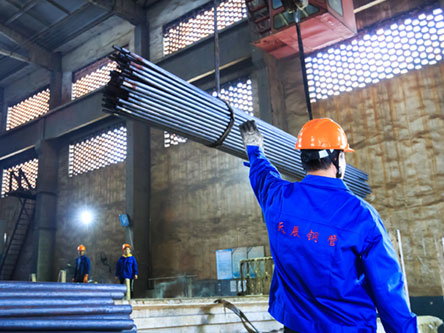
At Changzhou Tenjan Steel Tube Co.,Ltd, we leverage decades of expertise in vertically integrated manufacturing to deliver superior seamless and cold-drawn welded steel tubing. Our commitment to ISO-certified quality, stringent PMI and NDT inspections, and adherence to global standards (ASTM, EN, DIN, JIS) ensures material integrity for even the most critical applications. Whether your project demands high-pressure seamless tubes for automotive or hydraulics, or custom-shaped profiles for construction machinery, trust Tenjan to provide tailored, high-precision solutions. Contact us today to discuss your specific requirements and benefit from our full process control and global engineering support. Email: Sunny@tenjan.com Tel:+86 51988789990 Phone:+86 13401309791 WhatsApp:+86 13401309791
Seamless steel pipe forms from solid billet without any welding, creating uniform material properties throughout the cross-section. High-pressure boilers operate under conditions that would eventually exploit any weakness—elevated temperatures reduce material strength while internal pressure creates continuous hoop stress. The absence of a weld seam eliminates the most likely failure initiation point. Wall thickness consistency also matters: seamless production yields more uniform walls, so pressure calculations based on minimum wall thickness actually reflect the pipe’s weakest point rather than an optimistic average.
Quality welded tubes absolutely meet ASTM, EN, DIN, and JIS specifications when manufactured properly. The standards define required properties—they don’t mandate a specific manufacturing method. Cold-drawn welded tubes undergo dimensional refinement and work hardening that improve their properties significantly beyond the as-welded condition. At Tenjan Steel Tube, our NDT inspection protocols verify that welded tubes achieve the mechanical properties and dimensional accuracy these standards require. For automotive components where seamless pipe’s extra margin isn’t necessary, properly manufactured welded tubes deliver the required performance at lower cost.
Start by selecting a manufacturer with demonstrated capability in precision steel tubing and a quality system that covers the full production sequence. Specify compliance with relevant standards—ASTM A519 for seamless mechanical tubing, EN 10305 for precision tubes, or equivalent specifications that match your application. Require Positive Material Identification (PMI) to verify alloy composition, not just mill certifications. Insist on Non-Destructive Testing: eddy current testing catches surface defects, ultrasonic testing finds internal flaws. Review the manufacturer’s quality management certification and ask about their process controls. Vertically integrated manufacturers like Tenjan Steel Tube control every production stage, which reduces the quality variability that can occur when multiple suppliers handle different process steps.


Home Product Capabilities Case Studies Blogs About Get a Quote
Pipe & Tube Manufacturing Process Shapes & Profiles Pipes & Tubes Material Standard Steel Pipes & Tube Rebar Couplers Cold Drawn Steel Profiles & Bars
Oil & Petrochemical Industry Automotive & Motorcycle Components Mechanical Engineering Components Mining Construction Support Structures High-Pressure Boiler System Construction Machinery Geological Drilling Agricultural Machinery Parts Industrial Fluid Transfer Systems


© 2024 Changzhou Tenjan Steel Tube Co., Ltd All rights reserved. Privacy StatementTerms-ConditionsSitemap
