Welcome to Changzhou Tenjan Steel Tube Co., Ltd
Sunny@tenjan.com



Picking between stainless steel and carbon steel pipes comes down to understanding what each material actually does well and where it falls short. I’ve seen projects go sideways because someone assumed cheaper upfront meant cheaper overall, or because the corrosion resistance claims on a spec sheet didn’t match real-world conditions. The differences between these two materials run deeper than most comparison charts suggest, and getting this decision wrong shows up in maintenance costs, unexpected failures, and replacement cycles that eat into budgets for years.
Both stainless steel and carbon steel pipes start with iron as their base, but what gets added to that iron changes everything about how they behave. Carbon steel keeps things relatively simple: iron combined with carbon content ranging from 0.05% to 2.1% by weight, plus small amounts of manganese and silicon. That carbon is what gives the material its strength and hardness characteristics.
Stainless steel takes a different approach. The defining feature is chromium content of at least 10.5%, which triggers something genuinely useful at the molecular level. That chromium reacts with oxygen to form a thin, transparent oxide layer on the surface. This passive layer is self-healing, meaning if you scratch it, the chromium reacts with oxygen again and repairs the barrier. Other alloying elements like nickel, molybdenum, and titanium get added to create different material grades with specific property combinations.
We manufacture both seamless carbon steel tubes and seamless alloy steel tubes, which gives us direct control over these compositions and the resulting performance characteristics.
| Feature | Stainless Steel Pipe | Carbon Steel Pipe |
|---|---|---|
| Primary Elements | Iron, Chromium (min. 10.5%), Nickel, Molybdenum | Iron, Carbon (0.05-2.1%), Manganese, Silicon |
| Corrosion Resist. | Excellent (due to passive chromium oxide layer) | Poor (susceptible to rust without protection) |
| Cost (Initial) | Higher | Lower |
| Appearance | Shiny, often polished | Dull, prone to rust |
| Magnetic | Varies (some grades non-magnetic) | Generally magnetic |
The way these materials respond to stress, impact, and deformation determines where each one makes sense. Carbon steel generally delivers high tensile strength and yield strength, especially in grades with more carbon like S45C Steel Tubes or 1035 Seamless Pipe. These work well for structural applications where you need serious load-bearing capacity. The tradeoff is lower ductility. Carbon steel tends to be less forgiving before it fractures.
Stainless steel mechanical properties vary more widely depending on the grade. Austenitic stainless steels stretch and bend more easily before breaking, which matters for applications involving forming operations or cryogenic temperatures where brittleness becomes a concern. Martensitic and duplex stainless steels push tensile strength and hardness higher, sometimes matching or exceeding carbon steel grades. A chromium-molybdenum alloy like 4140 Steel Pipe demonstrates this, delivering strength and toughness for demanding service conditions.
Our cold drawn and cold rolled processes for tubes like STKM13A Steel Tubes ensure the mechanical properties meet specification requirements consistently.
| Property | Stainless Steel Pipe (Typical Range) | Carbon Steel Pipe (Typical Range) |
|---|---|---|
| Tensile Strength | 515-860 MPa | 400-700 MPa |
| Yield Strength | 205-550 MPa | 250-450 MPa |
| Ductility | High (e.g., 30-60% elongation) | Moderate (e.g., 10-30% elongation) |
| Hardness | Moderate to High (150-300 HB) | Moderate to High (120-250 HB) |
| Fatigue Strength | Good | Good |
| Temperature Limits | Higher (up to 1000°C) | Lower (up to 400°C) |
That chromium oxide layer on stainless steel does more than resist rust. It stands up to acidic environments, alkaline solutions, and prolonged atmospheric exposure without degrading. Grades containing molybdenum add resistance to pitting corrosion and crevice corrosion, which becomes critical in marine settings or chemical processing where localized attack can cause failures even when the bulk material looks fine.
Carbon steel has no such protection. Expose it to moisture and oxygen, and oxidation starts immediately. Protective coatings, galvanization, or cathodic protection systems can extend its service life, but these add cost and require ongoing maintenance. For dry environments without corrosive agents, carbon steel works fine and costs less. The 09CrCuSb Steel Pipe offers atmospheric corrosion resistance as a middle-ground option.
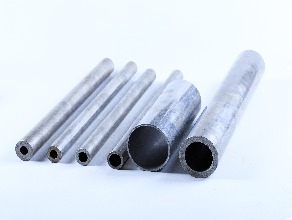
Weldability differences between stainless steel and carbon steel pipes affect both project timelines and budgets. Carbon steel welds more easily using standard techniques. Heat treatment requirements are generally less demanding, though high-carbon grades may need preheating and post-weld treatments to prevent cracking.
Stainless steel, particularly austenitic grades, requires more attention. Carbide precipitation can occur in the heat-affected zone, reducing corrosion resistance right where you welded. Distortion from thermal expansion differences needs accounting for in design. Proper filler metals and controlled heat input matter. Post-weld treatment may be necessary to restore the passive layer. Cutting methods and forming techniques often need specialized tooling to avoid contamination that could compromise the surface.
These complexities push installation costs higher for stainless steel. Whether that matters depends on how long the system needs to last and what the maintenance access looks like.
Initial material pricing tells only part of the story. Carbon steel pipes cost less to purchase because raw materials are cheaper and manufacturing is simpler. That lower number on the quote looks attractive.
The lifecycle cost calculation often reverses this advantage. Stainless steel pipes require less maintenance, fewer inspections, and far fewer replacements in corrosive or high-temperature service. A ST35 Seamless Pipe might make sense for a short-term installation or benign environment. For anything involving corrosive fluids or outdoor exposure, the stainless option typically delivers better ROI when you factor in the full operational timeline.
Application requirements drive material selection more than any general rule.
Carbon steel pipes like S355JR Steel Pipe or St37 Steel Pipe fit structural applications, fluid transport for non-corrosive media, and situations where strength and cost matter most. Construction machinery, automotive components that stay protected from the elements, and certain high-pressure boiler applications meeting standards like ASTM A192 Steel Pipe all use carbon steel effectively.
Stainless steel pipes earn their premium in food and beverage processing, chemical handling, water treatment, and pharmaceutical manufacturing. The combination of corrosion resistance, cleanability, and high-temperature capability justifies the cost. Our seamless alloy steel tubes, including grades like 25CrMo4 Steel Pipe, serve critical applications where performance cannot be compromised.
| Industry Sector | Optimal Pipe Material | Key Considerations |
|---|---|---|
| Oil and Gas | Stainless Steel | Corrosion, high pressure, temperature |
| Chemical Processing | Stainless Steel | Chemical compatibility, corrosion |
| Water Treatment | Stainless Steel | Corrosion, hygiene |
| Automotive Industry | Carbon Steel | Cost, strength (for non-exposed parts) |
| High-Pressure Boilers | Both (specific grades) | Temperature, pressure, material integrity |
| Structural Applications | Carbon Steel | Strength, cost, weldability |
Material selection involves tradeoffs that shift depending on your specific conditions. Having a manufacturing partner who works with both carbon steel and stainless steel means getting recommendations based on actual performance data rather than what happens to be in stock.
Changzhou Tenjan Steel Tube Co.,Ltd has manufactured precision steel tubing since 2004, specializing in seamless, cold-drawn, and custom-shaped steel tubes that meet ASTM, EN, DIN, and JIS standards. Our work in alloy and carbon steel tubes supports automotive, high-pressure boiler, and hydraulic applications, all backed by ISO-certified quality control. Full process control from raw material to finished product means consistent quality and reliable delivery worldwide.
Email: Sunny@tenjan.com | Tel:+86 51988789990 | Phone/WhatsApp:+86 13401309791| Tel:+86 51988789990 | Phone/WhatsApp:+86 13401309791
Carbon steel pipes typically cost 30-50% less than comparable stainless steel pipes at purchase. However, lifecycle costs often favor stainless steel in corrosive environments because maintenance, coating renewal, and replacement expenses accumulate over time. Specific grades, order volumes, and current market conditions all affect the actual numbers for any given project.
Stainless steel pipes handle both conditions better due to the chromium oxide passive layer that resists chemical attack and maintains integrity at elevated temperatures. Grades like 316L add molybdenum for enhanced pitting and crevice corrosion resistance. Carbon steel can receive protective coatings, but these require maintenance and cannot match the inherent protection stainless steel provides.
Surface treatments like galvanization, epoxy coatings, or cathodic protection improve carbon steel corrosion resistance, but they cannot replicate what stainless steel does at the metallurgical level. The self-healing chromium oxide layer that forms on stainless steel cannot be added to carbon steel through any coating process. Treated carbon steel needs regular inspection and maintenance to catch coating failures before corrosion takes hold.


Home Product Capabilities Case Studies Blogs About Get a Quote
Pipe & Tube Manufacturing Process Shapes & Profiles Pipes & Tubes Material Standard Steel Pipes & Tube Rebar Couplers Cold Drawn Steel Profiles & Bars
Oil & Petrochemical Industry Automotive & Motorcycle Components Mechanical Engineering Components Mining Construction Support Structures High-Pressure Boiler System Construction Machinery Geological Drilling Agricultural Machinery Parts Industrial Fluid Transfer Systems


© 2024 Changzhou Tenjan Steel Tube Co., Ltd All rights reserved. Privacy StatementTerms-ConditionsSitemap
