Welcome to Changzhou Tenjan Steel Tube Co., Ltd
Sunny@tenjan.com



Steel tubes in energy systems face conditions that would compromise lesser materials within months. Extreme pressures, temperature swings from cryogenic to superheated, and corrosive media all test material limits simultaneously. The tubes running through power plants, offshore platforms, and pipeline networks carry not just fluids but operational risk. When these components fail, the consequences extend far beyond equipment replacement costs.
Choosing the right steel grade for energy applications involves balancing multiple competing demands. A tube that handles pressure well might corrode prematurely in certain chemical environments. One that resists corrosion might lack the strength for high-pressure service.
Carbon steel tubes like ASTM A106 Gr.B Steel Pipe and JIS G3461 Steel Pipe remain workhorses for fluid transport and boiler systems. Their strength-to-cost ratio makes sense for applications where temperatures stay within moderate ranges and corrosive exposure remains limited. These grades handle the bulk of standard service conditions reliably.
When conditions intensify, alloy steels become necessary. Grades like 4130 Seamless Pipe, 4140 Steel Pipe, and 25CrMo4 Steel Pipe incorporate chromium and molybdenum into their composition. The chromium forms a protective oxide layer that resists corrosion, while molybdenum improves high-temperature strength and prevents certain types of pitting. This metallurgical combination extends service life in environments that would degrade carbon steel within years.
| Steel Grade | Material Type | Key Properties | Common Applications |
|---|---|---|---|
| ASTM A106 Gr.B | Carbon Steel | High-temp service, weldable | High-pressure fluid lines, power generation |
| API 5L (various) | Carbon/Alloy Steel | High strength, sour service options | Oil and gas pipelines |
| EN 10216 (various) | Carbon/Alloy Steel | Seamless, pressure applications | Boilers, heat exchangers |
| 4130 Seamless Pipe | Alloy Steel | High strength, good weldability | Hydraulic systems, aerospace |
| 25CrMo4 Steel Pipe | Alloy Steel | High temperature strength, hardenability | High-pressure boilers, automotive |
Standard tube manufacturing produces acceptable results for many applications. Energy systems often require more. Cold drawing takes tubes through a die at room temperature, reducing diameter and wall thickness while fundamentally changing the material’s internal structure.
The process compresses and elongates the steel’s grain structure. This refinement increases tensile strength and fatigue resistance compared to hot-finished tubes of identical composition. The surface finish improves dramatically as well. Internal bore surfaces become smoother, reducing turbulence in fluid flow and minimizing wear from particulate matter.
Dimensional accuracy tightens considerably through cold drawing. Wall thickness variations that might be acceptable in structural applications create problems in precision hydraulic systems or heat exchangers where consistent flow characteristics matter. Our cold drawn welded tube products achieve tolerances that standard welded tubes cannot match.
Custom shaping extends these benefits to non-circular geometries. Specialized energy equipment often requires tubes that fit specific spatial constraints or flow requirements that round tubes cannot satisfy.
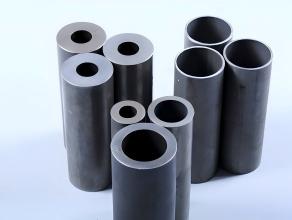
Cold-drawn steel tubes deliver measurable advantages in hydraulic applications. The grain refinement from cold working increases tensile strength and fatigue resistance, allowing thinner walls at equivalent pressure ratings. The smoother internal bore reduces friction losses, maintaining hydraulic efficiency over longer runs. Tighter dimensional tolerances ensure consistent sealing at connections and predictable flow rates. These factors combine to extend equipment life and reduce maintenance intervals in demanding energy service.
Material failures in energy systems rarely announce themselves gradually. A tube that passes visual inspection might contain internal flaws that propagate under cyclic loading until sudden failure occurs. Verification processes must catch these defects before tubes enter service.
Positive Material Identification confirms that delivered tubes actually contain the specified alloy composition. Mix-ups happen in supply chains. A carbon steel tube installed where alloy steel was specified might function initially, then fail catastrophically when exposed to conditions it was never designed to handle.
Non-Destructive Testing methods like ultrasonic and eddy current inspection detect internal voids, inclusions, and cracks without damaging the material. These techniques reveal defects that surface inspection cannot find. A tube might look perfect externally while containing laminations or porosity that compromise its pressure rating.
Full process control maintains traceability from raw material through finished product. When a tube enters an energy system, its complete manufacturing history should be documentable. This traceability becomes critical if problems emerge years later during service.
Compliance with ASTM, EN, DIN, and JIS standards provides baseline assurance that tubes meet established performance criteria. These standards represent accumulated industry experience with what works and what fails.
Standards like ASTM and API codify requirements that prevent common failure modes. They specify material composition ranges that ensure consistent properties. They establish mechanical testing protocols that verify strength and ductility. They define dimensional tolerances that ensure proper fit with mating components. API 5L, for instance, includes provisions for sour service environments where hydrogen sulfide can cause cracking in susceptible materials. ASTM A106 specifies testing requirements for high-temperature service. Adherence to these standards means tubes have passed verification processes developed from decades of field experience.
The energy sector encompasses vastly different operating environments, each placing distinct demands on steel tubes.
Oil and gas pipelines transport hydrocarbons under pressures that can exceed 1,500 psi over distances spanning hundreds of miles. The tubes must maintain integrity through temperature variations, ground movement, and exposure to corrosive compounds within the transported fluids. Offshore installations add saltwater corrosion and the mechanical stresses of wave action.
Power generation systems subject tubes to different challenges. Boiler tubes experience internal pressures while their external surfaces contact combustion gases at temperatures exceeding 1,000°F. Superheater tubes operate at even higher temperatures where creep becomes a concern. Heat exchanger tubes must transfer thermal energy efficiently while resisting both internal and external corrosion.
Renewable energy applications present emerging requirements. Geothermal systems expose tubes to mineral-laden fluids at elevated temperatures. Solar thermal installations require tubes that maintain reflectivity and structural integrity through daily thermal cycling. Wind turbine structures incorporate tubes that must withstand fatigue loading from constant vibration.
Our Seamless Pipe&Tube and Seamless Carbon Steel Tubes serve across these applications, with grade selection matched to specific operating conditions.
Offshore platforms demand tubes that handle multiple simultaneous challenges. High-strength low-alloy steels provide the mechanical properties needed for structural components and risers operating under significant pressure differentials. Seamless construction eliminates weld seams as potential failure initiation points. Corrosion protection typically involves coatings, cladding, or cathodic protection systems since even corrosion-resistant alloys benefit from additional protection in continuous saltwater exposure. The specific grade selection depends on whether the tube will contact produced fluids, seawater, or serve purely structural functions.
Standard round tubes work for most applications. Some equipment designs require different approaches.
Hexagonal Steel Pipes&Tubes provide better packing density in certain heat exchanger configurations. Oval Steel Pipes&Tubes fit into spaces where round tubes would not, or provide directional flow characteristics that round tubes cannot achieve. Other custom geometries address specific mechanical or thermal requirements.
OEM partnerships work best when collaboration begins early in the design process. A tube geometry that seems optimal from a thermal standpoint might create manufacturing difficulties that increase cost or lead time. Early engineering input can identify alternatives that achieve performance goals while remaining practical to produce.
This collaborative approach has solved problems ranging from weight reduction in mobile equipment to improved heat transfer in compact exchangers. The solutions rarely involve exotic materials or revolutionary processes. More often, they combine established manufacturing capabilities in ways that address specific design constraints.
The energy transition is reshaping what steel tubes must accomplish. Hydrogen transport presents challenges that natural gas pipelines do not face. Hydrogen molecules are small enough to diffuse into steel, causing embrittlement that reduces ductility and promotes cracking. Tubes for hydrogen service require either resistant alloy compositions or internal barriers that prevent hydrogen contact with susceptible steel.
Carbon capture systems involve handling carbon dioxide at pressures and temperatures where it behaves differently than in atmospheric conditions. The corrosion mechanisms in these systems differ from traditional hydrocarbon service.
Advanced nuclear reactor designs operate at higher temperatures than current light water reactors, requiring tubes that maintain strength and resist neutron damage over extended service periods.
These emerging applications drive development of new alloy compositions and manufacturing processes. The tubes that serve tomorrow’s energy systems will differ from those serving today’s, though the fundamental requirements of strength, corrosion resistance, and dimensional precision remain constant.
Changzhou Tenjan Steel Tube Co.,Ltd has delivered precision steel tubing since 2004. Our ISO-certified, vertically integrated operations produce Seamless Pipe&Tube and custom-shaped tubes compliant with ASTM, EN, DIN, and JIS standards. From material selection through final inspection, we control the processes that determine tube performance in demanding energy applications.
Contact us to discuss your specific requirements. Email: Sunny@tenjan.com | Tel: +86 51988789990 | WhatsApp: +86 13401309791| Tel: +86 51988789990 | WhatsApp: +86 13401309791
Seamless tubes lack the weld seam that represents a potential weak point in welded construction. The material properties remain uniform around the entire circumference, with no heat-affected zone where microstructure differs from the parent material. This uniformity matters most in high-pressure service where stress concentrations at weld seams could initiate fatigue cracks. Seamless construction also allows higher pressure ratings at equivalent wall thickness since design calculations need not account for weld efficiency factors.
Our quality system begins with raw material verification and continues through every manufacturing step. Positive Material Identification confirms alloy composition matches specifications. Non-Destructive Testing detects internal and surface defects that visual inspection would miss. Dimensional inspection verifies tolerances meet requirements. Documentation maintains traceability from heat number through finished product. ISO certification provides external verification that our quality management system meets international standards. Compliance with ASTM, EN, DIN, and JIS specifications ensures our tubes meet the performance criteria these standards establish.
We produce custom geometries including square, rectangular, hexagonal, oval, and other profiles that standard tube mills do not offer. Our precision manufacturing capabilities achieve tight tolerances on these non-circular shapes. Engineering support helps optimize designs for both performance and manufacturability. Whether the application requires a specific flow characteristic, spatial constraint accommodation, or mechanical property optimization, we work with OEM engineering teams to develop solutions that meet the actual requirements rather than forcing designs to accommodate available standard products.


Home Product Capabilities Case Studies Blogs About Get a Quote
Pipe & Tube Manufacturing Process Shapes & Profiles Pipes & Tubes Material Standard Steel Pipes & Tube Rebar Couplers Cold Drawn Steel Profiles & Bars
Oil & Petrochemical Industry Automotive & Motorcycle Components Mechanical Engineering Components Mining Construction Support Structures High-Pressure Boiler System Construction Machinery Geological Drilling Agricultural Machinery Parts Industrial Fluid Transfer Systems


© 2024 Changzhou Tenjan Steel Tube Co., Ltd All rights reserved. Privacy StatementTerms-ConditionsSitemap
