Welcome to Changzhou Tenjan Steel Tube Co., Ltd
Sunny@tenjan.com



When you spend enough time working with precision components, you start to notice things that specification sheets don’t always capture. A tube that looks perfectly fine can cause problems the moment it’s installed in a hydraulic system. The piston binds. Seals wear faster than they should. These issues often trace back to two properties that don’t get enough attention outside of engineering circles: steel pipe straightness and steel tube roundness. These aren’t abstract quality metrics. They determine whether components fit together properly, whether systems operate smoothly under load, and whether equipment lasts as long as it should. Getting them right requires understanding what causes deviations and how to control them throughout manufacturing.
Steel pipe straightness measures how much a pipe deviates from a perfectly straight line along its length. The deviation might seem minor on paper, but in practice, it creates real problems.
Camber is one common form of deviation. It’s a gentle curve in a single plane, like a bow that’s been slightly bent. Sweep is more complex, forming an S-shaped curve that’s harder to correct. Both types of straightness deviation cause headaches during installation. Misaligned components don’t seat properly. Moving parts experience increased friction. In structural applications, even small bends can compromise load distribution.
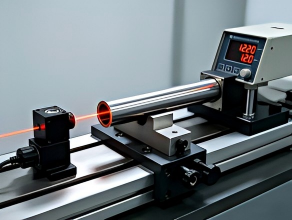
Seamless tubes and welded tubes both face these challenges. The difference lies in where the deviations originate and how they’re addressed. Straightness measurement methods have become increasingly sophisticated, using laser systems that can detect deviations invisible to the naked eye. This level of precision matters because material stress accumulates at points where geometry deviates from the design intent.
Manufacturing introduces plenty of opportunities for straightness problems to develop. Understanding these causes helps explain why some suppliers consistently deliver straighter tubes than others.
Uneven cooling ranks among the most common culprits. After hot rolling or heat treatment, different sections of the pipe cool at different rates. The resulting thermal gradients create residual stresses that pull the material out of alignment. A tube might leave the furnace looking fine, only to warp as it reaches ambient temperature.
Rolling mill setup matters enormously. Worn tooling or improper alignment causes inconsistent material flow during forming. The pipe essentially gets pushed harder on one side than the other, introducing curvature that persists through subsequent processing.
Cold drawing presents its own challenges. The process improves dimensional accuracy overall, but it can amplify existing deviations if the setup isn’t precisely calibrated. Material properties add another variable. Variations in alloy composition or grain structure affect how the steel responds to mechanical processing. Two pipes from different heats might behave differently through the same equipment.
Minimizing pipe distortion requires attention at every stage. Each manufacturing technique leaves its mark on the final product’s geometry.
Steel pipe roundness describes how closely a tube’s cross-section matches a perfect circle. This seems straightforward until you realize that “round” is a spectrum, not a binary condition.
Ovality occurs when the cross-section becomes elliptical rather than circular. Measuring it involves comparing the maximum and minimum outside diameters at any given point along the tube. True circularity would show zero difference between these measurements. Real-world tubes always show some variation.
The consequences of ovality depend heavily on the application. Hydraulic systems are particularly unforgiving. An oval tube causes the piston to bind against the cylinder wall at certain points while leaving gaps at others. Seals wear unevenly and fail prematurely. Fluid flow becomes turbulent where it should be smooth.
Boiler tubes face different but equally serious issues. Ovality creates stress concentrations under internal pressure. The tube wall experiences higher loading at the flattened sections, potentially leading to fatigue cracking over time. Cold drawn tube roundness receives particular attention in precision applications because the cold drawing process offers the best opportunity to correct ovality before the tube reaches its final form.
!Steel pipe
### Measuring Roundness and Ovality in Practice
Quality assurance for steel tube roundness relies on measurement methods that have evolved significantly over the past few decades. Basic tools still have their place, but they tell only part of the story.
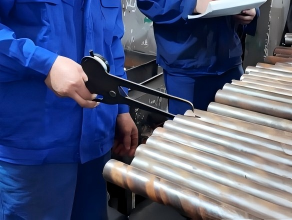
Micrometers and calipers provide point measurements of diameter. For ovality assessment, multiple measurements around the circumference are necessary. This approach works for basic checks but becomes time-consuming for thorough inspection.
Laser scanners have transformed roundness measurement. These systems capture thousands of data points in seconds, building a complete 3D profile of the tube’s cross-section. Deviations that would escape manual measurement become immediately visible.
Coordinate Measuring Machines offer the highest accuracy for critical applications. These contact-based systems excel at complex geometries and situations where measurement uncertainty must be minimized. NDT for pipe roundness has become standard practice in precision manufacturing, allowing comprehensive inspection without damaging the product.
These steel pipe inspection methods apply across product lines, from Focus on Seamless Pipe&Tube to Focus on Precision Pipe&tube. The goal is catching ovality defects in pipes before they reach customers.
International standards provide the framework for specifying and verifying straightness and roundness. Without these benchmarks, suppliers and customers would struggle to communicate requirements clearly.
Focus on ASTM A519 Steel Pipe covers seamless carbon and alloy steel mechanical tubing. The standard includes straightness tolerances relevant to hydraulic applications, where even small deviations affect system performance.
Focus on EN10305-1 Steel Pipe addresses precision cold-drawn seamless tubes. Applications like shock absorbers demand tight roundness control, and this standard reflects those requirements.
Focus on DIN 2391 Steel Pipe specifies seamless precision steel tubes with detailed dimensional accuracy and surface quality parameters. The standard influences material selection decisions across European markets.
These standards matter because they translate performance requirements into measurable specifications. Boiler tube roundness requirements and hydraulic cylinder tubing straightness both trace back to standards that codify industry experience.
The following table summarizes the major standards governing geometric tolerances in steel tubing:
| Standard | Description | Typical Straightness Tolerance | Typical Roundness Tolerance (Ovality) |
|---|---|---|---|
| ASTM A519 | Seamless Carbon and Alloy Steel Mechanical Tubing | 1/8 inch in any 5 feet (approx. 3.2mm per 1.5m) | Varies, often 1% of OD |
| EN 10305-1 | Precision Cold Drawn Seamless Steel Tubes | 1mm per 1000mm length | 0.5% of OD |
| DIN 2391 | Seamless Precision Steel Tubes | 1mm per 1000mm length | 0.5% of OD |
| JIS G3445 | Carbon Steel Tubes for Machine Structural Purposes | 1mm per 1000mm length | 1% of OD |
These specifications provide practical guidance for compliance. Meeting them consistently requires process control throughout manufacturing.
Every step in steel tube production influences the final product’s straightness and roundness. Understanding these relationships helps explain why process control matters so much.
Hot rolling creates the initial tube form but introduces significant geometric variation. Temperature gradients, roll wear, and material flow patterns all contribute to deviations that must be corrected later.
The cold drawing process steel tube undergoes represents the primary opportunity for dimensional improvement. As the tube passes through a die and over a mandrel, its diameter and wall thickness decrease while straightness and roundness improve. The mechanical action of cold drawing physically corrects deviations present in the hot-rolled material.
Dedicated straightening processes address any remaining curvature. Multi-roll rotary straighteners apply controlled pressure from multiple angles, gradually bringing the tube into alignment. The process requires careful calibration to avoid introducing new stresses.
Heat treatments like annealing or normalizing relieve internal stresses accumulated during forming. Temperature control is critical here. Improper heat treatment can cause new distortions rather than eliminating existing ones.
Seamless tube manufacturing and cold drawn welded tube production both benefit from integrated process control. Even custom shaped steel tube straightness can meet exacting standards when each manufacturing stage receives appropriate attention.
Verifying that steel tubes meet geometric specifications requires systematic inspection throughout production. Spot checks at the end of the line catch some problems, but comprehensive quality control identifies issues before they propagate.
Non-destructive testing for pipe straightness and roundness has become increasingly sophisticated. Laser profilometry systems scan tubes continuously, flagging deviations in real time. Ultrasonic testing detects internal anomalies that might affect dimensional stability.
Positive Material Identification confirms alloy composition, which indirectly affects geometric properties. Different alloys respond differently to processing, and material substitution can lead to unexpected dimensional variations.
ISO-certified quality control systems mandate documentation and traceability at every stage. This systematic approach ensures that products like Focus on 4140 Steel Pipe and Focus on S355JR Steel Pipe consistently meet specifications. The ±0.1mm precision tolerance on wall thickness reflects the level of control achievable with proper systems in place.
!Steel pipe
## Applications Where Geometric Precision Determines Success
Superior steel pipe straightness and steel tube roundness aren’t luxury features. They’re functional requirements in applications where failure carries serious consequences.
Hydraulic cylinder tubing straightness directly affects system performance. The piston must travel smoothly through the cylinder bore without binding or excessive clearance. Straightness deviations cause uneven wear patterns and accelerate seal degradation. In mobile equipment, these failures can occur far from maintenance facilities.
Boiler tube roundness requirements exist because pressure vessels operate under demanding conditions. Tubes must fit precisely into tube sheets, and their geometry must remain stable under thermal cycling. Ovality creates stress concentrations that can initiate fatigue cracks over thousands of operating hours.
Automotive exhaust pipe straightness and roundness affect both manufacturing efficiency and vehicle performance. Assembly line robots expect consistent geometry. Exhaust flow characteristics depend on smooth internal surfaces and uniform cross-sections.
Construction machinery tube tolerances reflect the structural demands placed on heavy equipment. Components must withstand dynamic loads while maintaining alignment over years of service.
Industries including automotive, hydraulics, and high-pressure boiler systems specify products like Focus on 25CrMo4 Steel Pipe and Focus on ST52 Steel Pipe precisely because these materials can be manufactured to tight geometric tolerances.
Changzhou Tenjan Steel Tube Co., Ltd has spent over two decades developing the capabilities needed to deliver consistent geometric accuracy. Vertically integrated manufacturing provides control over every process stage. ISO-certified quality systems ensure that specifications translate into actual product performance.
Custom shapes and specialized alloys present additional challenges that require deep process knowledge. Meeting the most stringent straightness and roundness specifications globally demands both equipment capability and accumulated expertise.
Contact us to discuss specific project requirements:
– Email: Sunny@tenjan.com
– Tel: +86 51988789990
– WhatsApp: +86 13401309791
Hydraulic cylinder tubes typically require straightness tolerances of 1mm per meter or tighter, depending on cylinder length and operating pressure. Standards like Focus on ASTM A519 Steel Pipe and Focus on EN10305-1 Steel Pipe provide specific guidance. Tighter tolerances prevent piston binding and extend seal life. The appropriate specification depends on the cylinder’s stroke length and the precision required by the application.
Cold drawing improves both properties through mechanical action. As the tube passes through a die and over a mandrel, the tooling physically reshapes the cross-section toward true circularity while the longitudinal pulling action tends to straighten the tube. The process also improves surface finish and increases material strength through work hardening. The improvement over hot-finished tubes is substantial, which is why cold drawing is standard for precision applications.
Ovality in boiler tubes creates several operational risks. Tube-to-tubesheet joints may not seal properly, potentially allowing leakage. Under internal pressure, oval cross-sections experience higher stress at the flattened portions than round tubes would. Thermal cycling can exacerbate these stress concentrations over time. The result may be premature fatigue cracking, reduced efficiency, or in severe cases, tube failure. Strict roundness control during manufacturing prevents these issues.


Home Product Capabilities Case Studies Blogs About Get a Quote
Pipe & Tube Manufacturing Process Shapes & Profiles Pipes & Tubes Material Standard Steel Pipes & Tube Rebar Couplers Cold Drawn Steel Profiles & Bars
Oil & Petrochemical Industry Automotive & Motorcycle Components Mechanical Engineering Components Mining Construction Support Structures High-Pressure Boiler System Construction Machinery Geological Drilling Agricultural Machinery Parts Industrial Fluid Transfer Systems


© 2024 Changzhou Tenjan Steel Tube Co., Ltd All rights reserved. Privacy StatementTerms-ConditionsSitemap
