Welcome to Changzhou Tenjan Steel Tube Co., Ltd
Sunny@tenjan.com



Getting steel tubing costs right matters more than most people realize. A number that looks solid on paper can shift dramatically once you factor in material grades, manufacturing methods, and the specific tolerances your project demands. This piece breaks down what actually drives steel tube pricing so you can work with cost calculators more effectively and make procurement decisions that hold up when the invoices arrive.
Steel tubing pricing never sits still. It moves based on a web of factors that interact in ways that can surprise even experienced buyers. Material grade sits at the top of that list since different alloys and carbon levels create real gaps in raw material expenses. Manufacturing methods add another layer. Cold drawing, specialized heat treatments, and other processing steps each carry their own cost signatures. Then there are the specifications themselves. Outer diameter, wall thickness, and how tight your tolerances need to be all affect production time and material consumption.
Think about how different applications pull in different directions. S355JR Steel Pipe delivers solid mechanical properties for structural work, while 4140 Steel Pipe brings the strength and wear resistance that demanding automotive components need. JIS G3461 Steel Pipe serves boilers and heat exchangers, which means specific property requirements that show up in the pricing. Each application creates its own material and processing demands. Knowing these patterns makes estimation more reliable and procurement decisions sharper.
| Common Steel Grades | Primary Characteristics | Typical Cost Impact (Relative) |
|---|---|---|
| Carbon Steel (e.g., 1020) | Basic, good weldability | Low |
| Medium Carbon (e.g., 1035) | Balanced strength/ductility | Medium |
| Alloy Steel (e.g., 4140) | High strength, wear resistance | High |
| Stainless Steel (e.g., 304) | Corrosion resistance | Very High |
| Specialty Alloys | Extreme performance | Premium |
Material specifications do the heavy lifting when it comes to tube manufacturing costs, especially for specialized applications. Alloy composition matters. Chromium, molybdenum, nickel and other elements directly influence what the material can do and what it costs. Carbon content plays its own role. Higher carbon often means greater strength but can push processing costs up. International standards like ASTM, EN, DIN, and JIS add another dimension. They specify chemical composition, mechanical properties, and testing requirements. Meeting those standards sometimes means more expensive raw materials or additional production steps.
Seamless Carbon Steel Tubes generally cost less than Seamless Alloy Steel Tubes because the alloying elements themselves carry higher price tags. Tubes like ASTM A179 Steel Pipe and ASTM A192 Steel Pipe serve heat exchangers and high-pressure boilers respectively, and their precise material compositions affect what you pay. EN10305-1 Steel Pipe and DIN 2391 Steel Pipe are precision cold-drawn tubes with exceptional dimensional accuracy. The stringent manufacturing requirements behind that accuracy show up in the pricing. Our range includes materials like S45C Steel Tubes and STKM13A Steel Tubes, each with distinct cost profiles tied to their specific properties and compliance requirements.
Cold drawn and custom profile steel tubes carry economics shaped by the specialized processes involved. Cold drawing improves dimensional accuracy, surface finish, and mechanical properties. That added value comes with added cost. Custom shapes like square, rectangular, hexagonal, and more complex geometries such as Oval Steel Pipes&Tubes or Hexagonal Steel Pipes&Tubes require specialized tooling and more intricate manufacturing steps. This directly affects precision tube manufacturing cost. Even Cold-Drawn Welded Tube goes through additional cold drawing after welding to achieve superior precision and surface quality, which contributes to overall pricing. Tenjan handles these advanced processes and offers solutions for unique engineering challenges.
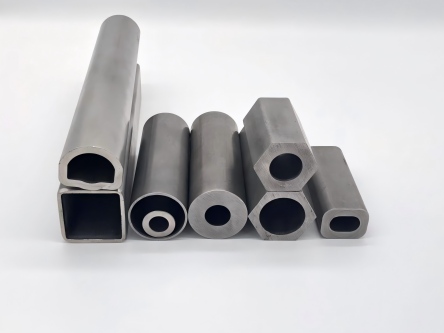
Several factors come together to determine custom steel tubing costs. Tooling for unique profiles or complex geometries represents a significant piece. Setup costs for specialized production runs add up, particularly for smaller batches. Geometry complexity matters too. Tight tolerances or intricate internal features increase manufacturing difficulty and time, which shows up in pricing. Material choice, heat treatment requirements, and surface finish specifications all refine the final number.
Tenjan Steel Tube’s vertically integrated manufacturing approach delivers real cost benefits while maintaining quality assurance. Controlling the full process from raw material sourcing to finished product minimizes external dependencies and reduces supply chain complexity. This integrated model allows for optimized production costs and more competitive pricing. Our ISO-certified quality control system, combined with PMI and NDT inspections, ensures material integrity and reduces defect risk, which prevents costly project delays.
This comprehensive control means consistent production of high-precision seamless steel pipes and custom-shaped tubes. Products like Precision Pipe&tube benefit directly from this approach, ensuring superior dimensional accuracy. Managing every production stage translates into tangible savings and enhanced reliability for partners. This strategic advantage works particularly well for OEMs and engineering projects that need consistent quality and predictable costs.
| Cost Element | Traditional Supply Chain | Tenjan’s Vertical Integration |
|---|---|---|
| Raw Material | Multiple suppliers, variable pricing | Direct sourcing, stable pricing |
| Processing | Outsourced steps, markups | In-house, cost-controlled |
| Quality Control | Fragmented, potential for errors | Integrated, continuous monitoring |
| Lead Times | Longer, less predictable | Shorter, highly predictable |
| Risk | Higher due to external factors | Lower, greater control |
Smart steel tube procurement can meaningfully improve project ROI. Precise cost estimates enable better project budgeting and more effective risk management. Understanding the cost benefits of precision tubing, especially for critical applications in automotive or high-pressure systems, ensures long-term value. Large order steel tube pricing often benefits from economies of scale, leading to more favorable rates. This strategic procurement approach proves vital for OEM and engineering projects where both initial cost and long-term performance matter.
Selecting the appropriate Seamless Pipe&Tube can significantly impact overall project budget. We also offer specialized options like Cold Rolled Pipe&Tube for superior dimensional accuracy and surface finish. Depending on the application, ST35 Seamless Pipe or St37 Steel Pipe might fit general purposes, while 25CrMo4 Steel Pipe or 41Cr4 Alloy Pipe serve higher strength requirements.
Material specifications affect large order pricing through economies of scale and bulk material discounts. Larger volumes allow more efficient raw material procurement, reducing per-unit costs. Consistent quality across large batches matters because deviations can lead to costly rework or rejections. Suppliers like Tenjan can offer more competitive volume pricing when material specifications are clearly defined and consistent. This ensures predictable costs and quality for extensive projects.
Vertically integrated steel tube manufacturing offers several distinct cost benefits. Reduced lead times stand out since internal control over production eliminates delays from external suppliers. Improved quality control throughout every manufacturing stage minimizes waste and rework, leading to direct cost savings. This integrated model also allows greater flexibility and responsiveness to project changes, further optimizing overall project costs.
For precise steel tubing cost estimates tailored to your specific project requirements, leverage Changzhou Tenjan Steel Tube Co.,Ltd’s expertise. Contact us today for a detailed consultation and discover the Tenjan advantage in precision manufacturing and competitive pricing. Email: Sunny@tenjan.com | Tel:+86 51988789990 | Phone/WhatsApp:+86 13401309791| Tel:+86 51988789990 | Phone/WhatsApp:+86 13401309791
Tenjan’s vertical integration, from raw material to finished product, streamlines the manufacturing process, reduces external dependencies, and enables tighter quality control. This results in optimized production costs and more competitive pricing for clients, directly influencing your steel tubing cost estimate positively. Our integrated approach ensures efficiency and cost-effectiveness across all stages.
Absolutely. Tenjan specializes in custom-shaped steel tubes, including square, rectangular, hexagonal, and other complex geometries. Our team can provide a detailed cost estimate by analyzing your specific design, material requirements, and production volume, ensuring accuracy for even the most intricate projects. We handle unique specifications with precision.
When comparing steel tubing cost estimates, look beyond unit price. Consider material grade consistency, manufacturing tolerances, quality certifications like ISO, inspection protocols such as PMI and NDT, lead times, and the supplier’s experience in your specific application. Tenjan offers transparent pricing alongside guaranteed quality and reliability, providing comprehensive value beyond just the initial cost.


Home Product Capabilities Case Studies Blogs About Get a Quote
Pipe & Tube Manufacturing Process Shapes & Profiles Pipes & Tubes Material Standard Steel Pipes & Tube Rebar Couplers Cold Drawn Steel Profiles & Bars
Oil & Petrochemical Industry Automotive & Motorcycle Components Mechanical Engineering Components Mining Construction Support Structures High-Pressure Boiler System Construction Machinery Geological Drilling Agricultural Machinery Parts Industrial Fluid Transfer Systems


© 2024 Changzhou Tenjan Steel Tube Co., Ltd All rights reserved. Privacy StatementTerms-ConditionsSitemap
