Welcome to Changzhou Tenjan Steel Tube Co., Ltd
Sunny@tenjan.com



Industrial operations across Denver run on steel pipes that hold pressure, resist wear, and fit tolerances measured in thousandths of an inch. The wrong specification means failed inspections, delayed timelines, or worse—system failures under load. What separates reliable supply from costly mistakes often comes down to understanding which standards apply, how manufacturing processes affect performance, and whether your supplier can actually verify what they ship. This piece covers the technical ground that matters for construction, automotive, and high-pressure work in the Denver market.
Picking the right steel pipe means matching material properties to application demands, and that starts with knowing which standards govern what. ASTM, EN, DIN, and JIS specifications each address different performance requirements—material composition, dimensional tolerances, mechanical properties—and mixing them up creates problems downstream. A pipe rated for mechanical tubing won’t necessarily handle high-temperature service, even if the dimensions look identical on paper.
| Standard | Description | Key Applications |
|---|---|---|
| ASTM A519 | Seamless Carbon and Alloy Steel Mechanical Tubing | Mechanical manufacturing, Automotive |
| EN10305-1 | Precision Cold-Drawn Seamless Steel Tubes | Hydraulic systems, Automotive components |
| DIN 2391 | Seamless Precision Steel Tubes | Automotive, Hydraulic and pneumatic cylinders |
| JIS G3445 | Carbon Steel Tubes for Machine Structural Purposes | General machinery components |
| ASTM A106 Gr.B | Seamless Carbon Steel Pipe for High-Temperature Service | High-temperature fluid transport systems |
The distinctions matter because each standard specifies different testing protocols and acceptance criteria. ASTM A106 Gr.B, for instance, requires hydrostatic testing and specific heat treatment procedures that ASTM A519 doesn’t mandate. Using the wrong standard for high-temperature fluid transport isn’t just a compliance issue—it’s a safety problem waiting to happen.
Seamless and cold-drawn steel tubes handle high-pressure work best because they lack the weld seam that creates a potential failure point. Products like Seamless Pipe&Tube and 25CrMo4 Steel Pipe deliver uniform wall thickness throughout the circumference, which matters when internal pressure tries to find weak spots. Hydraulic systems, high-pressure boilers, and critical fluid transport all benefit from this manufacturing approach. The cold-drawing process compresses the grain structure, adding strength without increasing wall thickness.
Cold drawing does more than shape metal—it fundamentally alters the material’s characteristics. The process pulls steel through a die at room temperature, which refines the grain structure and increases tensile strength. Surface finish improves dramatically, and dimensional accuracy tightens to levels hot-rolled products can’t match. For Denver’s automotive, construction machinery, and hydraulic sectors, this translates to parts that fit without modification and perform under stress.
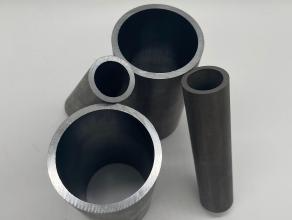
Products like Precision Pipe&tube and Cold Drawn Pipe & Tube come out of this process with concentricity that hot-formed tubes simply can’t achieve. Wall thickness variations shrink to minimal levels, which matters enormously for applications where uneven stress distribution causes premature failure. Custom shapes including square steel tubing Denver and hexagonal steel tube benefit from the same precision advantages.
The mechanical improvements from cold drawing are measurable and significant. Tensile strength increases because the drawing process work-hardens the steel while refining its grain structure. Concentricity improves because the die forces uniform deformation around the entire circumference. Wall thickness variations decrease because the process eliminates the inconsistencies that form during hot rolling. These aren’t marginal gains—they’re the difference between components that meet OEM specifications and ones that get rejected at incoming inspection.
Material certificates tell part of the story, but verification testing tells the rest. Positive Material Identification confirms that the steel actually contains the alloy elements the paperwork claims. Non-Destructive Testing catches internal flaws, surface cracks, and wall thickness variations that visual inspection misses. Both matter for Denver steel pipe supply because substituted materials and hidden defects cause failures that trace back to inadequate quality control.
ISO-certified processes build these inspections into production rather than treating them as afterthoughts. PMI happens at multiple stages—incoming raw material, in-process checks, and final verification—because material mix-ups can occur at any point. NDT methods like ultrasonic testing and eddy current inspection detect subsurface defects that would otherwise ship unnoticed. The cost of this testing is trivial compared to the cost of a field failure.
Denver’s industrial base spans construction machinery, automotive manufacturing, and hydraulic systems—each with distinct requirements. Standard catalog products work for some applications, but many projects need tubes with specific dimensions, alloy compositions, or shapes that off-the-shelf options don’t cover. Products like ST52 Steel Pipe serve structural applications where strength-to-weight ratio matters, while 4140 Steel Pipe handles high-stress components that need both hardness and toughness.
Custom-shaped tubes including Special-Shaped Alloy Steel Tubes and Special-Shaped Carbon Steel Tubes address applications where round profiles don’t fit the design. OEM support means working from customer drawings rather than forcing designs to match available inventory. This flexibility matters most when standard products would require secondary machining that adds cost and lead time.
Supply chain control affects quality in ways that aren’t obvious until something goes wrong. A vertically integrated manufacturer handles raw material sourcing, tube forming, heat treatment, and finishing under one quality system. This matters because each handoff between suppliers creates opportunities for material substitution, documentation errors, and quality variations. When problems surface, tracing them back to root cause is straightforward rather than finger-pointing between multiple vendors.
For Denver-based clients, this integration also means faster response to specification changes and more reliable delivery schedules. A manufacturer who controls their own processes can adjust production priorities without negotiating with outside suppliers. Material integrity stays consistent because the same quality standards apply from billet to finished tube.
For over two decades, Changzhou Tenjan Steel Tube Co.,Ltd has delivered unparalleled precision and quality in steel tubing for global industries. If your Denver project demands ASTM-compliant, custom-shaped, or high-pressure steel pipes with guaranteed material integrity, our vertically integrated manufacturing ensures your success. Contact us today to discuss your specific requirements and receive a tailored solution from our expert team. Email: Sunny@tenjan.com | Tel:+86 51988789990 | WhatsApp:+86 13401309791| Tel:+86 51988789990 | WhatsApp:+86 13401309791
Changzhou Tenjan Steel Tube Co.,Ltd manufactures precision steel tubing that meets ASTM, EN, DIN, and JIS standards. Our products undergo PMI and NDT verification to confirm compliance before shipment. For Denver projects requiring documented material certification and traceable quality records, we provide the technical documentation that inspectors and engineers expect.
Seamless steel tubes show up wherever pressure, temperature, or mechanical stress exceeds what welded tubes can handle reliably. Hydraulic cylinders, high-pressure boilers, automotive drivetrain components, and construction equipment all use seamless tubes because the absence of a weld seam eliminates the most common failure point. Applications requiring tight dimensional tolerances also favor seamless construction because the manufacturing process produces more consistent wall thickness.
ISO certification indicates that a manufacturer has documented quality procedures and follows them consistently. For steel pipe buyers, this means incoming material gets verified, production processes stay controlled, and finished products get inspected before shipping. Changzhou Tenjan Steel Tube Co.,Ltd maintains ISO certification as part of our commitment to quality control that includes PMI testing and NDT inspection on steel pipes destined for critical applications.


Home Product Capabilities Case Studies Blogs About Get a Quote
Pipe & Tube Manufacturing Process Shapes & Profiles Pipes & Tubes Material Standard Steel Pipes & Tube Rebar Couplers Cold Drawn Steel Profiles & Bars
Oil & Petrochemical Industry Automotive & Motorcycle Components Mechanical Engineering Components Mining Construction Support Structures High-Pressure Boiler System Construction Machinery Geological Drilling Agricultural Machinery Parts Industrial Fluid Transfer Systems


© 2024 Changzhou Tenjan Steel Tube Co., Ltd All rights reserved. Privacy StatementTerms-ConditionsSitemap
