Welcome to Changzhou Tenjan Steel Tube Co., Ltd
Sunny@tenjan.com



EN10216 has been one of those standards I keep returning to, not because it’s glamorous, but because it quietly governs so much of what keeps pressure systems running safely. When you’re specifying seamless steel tubes for boilers, hydraulic lines, or cryogenic equipment, this European standard is often the baseline that separates a reliable installation from a potential failure point. The five-part structure covers everything from room-temperature carbon steel to stainless grades designed for corrosive environments, and each part carries its own set of chemical, mechanical, and testing requirements. Getting familiar with these details matters if you’re selecting materials for systems where the stakes are high.
EN10216 seamless steel tubes exist specifically for pressure applications where structural integrity cannot be compromised. The standard lays out technical delivery conditions for seamless circular tubes, and it gets granular about what matters: chemical composition, mechanical properties, dimensional tolerances, and surface conditions.
The chemical composition requirements aren’t arbitrary. They dictate how the steel responds to heat treatment and how well it welds, which directly affects fabrication options in the field. Mechanical properties like tensile strength and yield strength determine whether a tube can handle the operational stresses it will face. These specifications exist because industries like power generation, petrochemicals, and hydraulic systems cannot afford failures.
At Changzhou Tenjan Steel Tube Co.,Ltd, manufacturing these tubes means holding tight to every requirement in the standard. There’s no room for interpretation when the application involves extreme pressures and temperatures.
| EN10216 Part | Description | Primary Material Type |
|---|---|---|
| Part 1 | Non-alloy steel tubes with specified room temperature properties | Non-alloy steel |
| Part 2 | Non-alloy and alloy steel tubes with specified elevated temperature properties | Non-alloy and alloy steel |
| Part 3 | Alloy fine grain steel tubes | Alloy fine grain steel |
| Part 4 | Non-alloy and alloy steel tubes with specified low temperature properties | Non-alloy and alloy steel (low temperature applications) |
| Part 5 | Stainless steel tubes | Stainless steel |
The EN10216 standard splits into five parts, and each one targets a specific set of materials and operating conditions.
EN10216-1 handles non-alloy steel tubes with room temperature properties. These work well for general pressure purposes where extreme heat or cold isn’t a factor. EN10216-2 steps into elevated temperature territory, covering non-alloy and alloy steel tubes for boilers and heat exchangers. This part gets into creep rupture strength and oxidation resistance because those properties matter when metal sits at high temperatures for extended periods.
EN10216-3 focuses on alloy fine grain steel tubes. The fine grain structure improves toughness and weldability, which makes these grades useful for structural components that need to absorb impact or undergo extensive welding during fabrication. EN10216-4 addresses low temperature applications, specifying materials that maintain ductility in cryogenic conditions where ordinary steel would turn brittle.
EN10216-5 covers stainless steel tubes, providing corrosion resistance for aggressive chemical environments. Each part includes precise requirements for chemical composition, heat treatment protocols, and mechanical testing. Seamless Carbon Steel Tubes often fall under EN10216-1 when the application calls for a balance of strength and formability without exotic alloying.
These tubes show up across industries where failure isn’t an option. Automotive hydraulic systems rely on them for the combination of strength and precision that keeps braking and steering components functioning under pressure. Energy sector applications include boiler steel tubes and heat exchangers, where the material must handle sustained high temperatures without degrading.
Construction machinery uses EN10216 tubes for hydraulic lines and structural elements that operate under heavy, cyclic loads. Fluid transport systems in chemical processing plants depend on the dimensional consistency and material integrity these standards guarantee.
Meeting EN10216 requirements demands manufacturing processes that deliver consistent results. Cold drawing is central to achieving the dimensional accuracy and surface quality the standard requires.
The process works by pulling a seamless steel tube through a die, which reduces both diameter and wall thickness. This mechanical working refines the tube’s dimensions to tighter tolerances than hot finishing alone can achieve. It also improves the surface finish, which matters for applications where flow characteristics or sealing surfaces are critical.
Cold drawing does more than shape the tube. It changes the mechanical properties of the steel, increasing tensile strength and hardness while preserving enough ductility for the tube to perform under stress. At Changzhou Tenjan Steel Tube Co.,Ltd, we use advanced cold drawing techniques to produce Precision Pipe&tube that meet EN10216 specifications consistently. The process also allows us to create custom profiles including square, rectangular, and hexagonal shapes for specialized engineering applications.
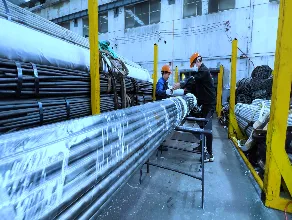
Material integrity verification starts with raw material selection and continues through every stage of production. The testing requirements in EN10216 exist because pressure applications leave no margin for defective material.
Non-destructive testing methods like ultrasonic and eddy current inspections detect internal flaws and surface defects without damaging the tube. Positive Material Identification using X-ray fluorescence confirms that the chemical composition matches the specified grade. This step catches mix-ups before they become problems in the field.
Changzhou Tenjan Steel Tube Co.,Ltd operates under ISO 9001 certification, which formalizes the quality management systems that keep production consistent. Full process control from melting to final inspection ensures that every EN10216 tube leaving our facility meets the mechanical and chemical requirements the standard demands.
The standards use a layered approach to ensure material integrity. Chemical composition limits control the amounts of elements like carbon, manganese, and chromium, which directly affect strength, hardness, and corrosion resistance. Mechanical testing verifies tensile strength, yield strength, and elongation to confirm the tube can handle operational stresses.
Non-destructive testing and hydrostatic tests confirm structural soundness and leak resistance. This combination of chemical, mechanical, and physical verification creates confidence that EN10216 pipes will perform reliably in pressure service.
Sourcing EN10216 steel tubes internationally requires a manufacturer that understands both the standard and the practical realities of global supply chains. Different projects carry different requirements, and flexibility matters.
At Changzhou Tenjan Steel Tube Co.,Ltd, we produce tubing that meets EN10216 along with other international standards including ASTM, DIN, and JIS. Our capabilities as an OEM steel tube supplier extend to custom-shaped tubes in square, rectangular, and hexagonal profiles engineered for specific applications. Vertically integrated manufacturing, established in 2004, gives us control over every step from raw material through finished product.
Whether the application involves automotive components, construction machinery, or high-pressure systems, our global export experience supports complex engineering projects with reliable delivery.
Evaluating potential suppliers means looking beyond price to capabilities and certifications. ISO certification indicates formalized quality management. A track record in cold drawn precision tubes demonstrates the manufacturing expertise EN10216 compliance requires. The ability to produce custom shapes and material grades shows flexibility for specialized applications.
Vertically integrated manufacturers with full process control offer advantages in consistency and traceability that distributed supply chains cannot match.
EN10216-2 covers seamless tubes designed for elevated temperature service, with properties optimized for sustained heat exposure in pressure equipment. EN10216-3 specifies alloy fine grain steel tubes that prioritize toughness and weldability. The fine grain structure in Part 3 materials provides better fatigue resistance and impact absorption. Both serve pressure equipment, but Part 2 targets high-temperature performance while Part 3 emphasizes mechanical robustness and fabrication characteristics.
Cold drawing refines dimensional accuracy, improves surface finish, and enhances mechanical properties including tensile and yield strength. The process creates a more uniform grain structure and reduces wall thickness variations. Tighter tolerances result from the mechanical working, which matters for hydraulic systems, automotive components, and high-pressure applications where EN10216 seamless tubes must perform precisely. Changzhou Tenjan Steel Tube Co.,Ltd uses advanced cold drawing techniques to achieve these results consistently.
Comparable grades exist across standards, but direct equivalence is uncommon. Certain EN10216 grades have close counterparts in ASTM A106 Gr.B Steel Pipe or DIN 2391 Steel Pipe, though differences in testing protocols, chemical limits, and mechanical property ranges prevent simple substitution. Projects requiring multiple standard compliance need careful cross-referencing. Experienced manufacturers like Changzhou Tenjan Steel Tube Co.,Ltd can help navigate these comparisons and ensure proper specification for your application.
As a vertically integrated manufacturer since 2004, Changzhou Tenjan Steel Tube Co.,Ltd specializes in delivering high-precision EN10216 compliant seamless and cold-drawn steel tubes for critical applications worldwide. With ISO-certified quality control, advanced NDT, and a commitment to custom solutions, we ensure unparalleled material integrity and performance. Partner with Tenjan for tailored tubing that meets your most demanding engineering specifications. Contact us today to discuss your project requirements and discover our full process control capabilities at Sunny@tenjan.com or call us at +86 51988789990 (Phone: +86 13401309791, WhatsApp: +86 13401309791).


Home Product Capabilities Case Studies Blogs About Get a Quote
Pipe & Tube Manufacturing Process Shapes & Profiles Pipes & Tubes Material Standard Steel Pipes & Tube Rebar Couplers Cold Drawn Steel Profiles & Bars
Oil & Petrochemical Industry Automotive & Motorcycle Components Mechanical Engineering Components Mining Construction Support Structures High-Pressure Boiler System Construction Machinery Geological Drilling Agricultural Machinery Parts Industrial Fluid Transfer Systems


© 2024 Changzhou Tenjan Steel Tube Co., Ltd All rights reserved. Privacy StatementTerms-ConditionsSitemap
