Welcome to Changzhou Tenjan Steel Tube Co., Ltd
Sunny@tenjan.com



Working with steel tubes long enough, you start to notice which standards actually hold up under real conditions and which ones just look good on paper. EN10297 falls into the first category. It’s a European specification for seamless tubes used in mechanical and general engineering applications, and the reason it matters is straightforward: these tubes need to perform under stress, resist fatigue, and maintain dimensional stability over time. The standard covers both non-alloy and alloy steels, which means it applies to everything from hydraulic cylinders to automotive suspension components. Getting the material right at this level isn’t about checking a compliance box. It’s about whether the part does its job five years from now.
EN 10297-1 lays out the technical delivery conditions for seamless circular steel tubes intended for mechanical and general engineering purposes. The standard applies to both non-alloy steel tubes and alloy steel tubes, creating a unified framework for material selection across European engineering applications. When engineers specify EN10297 steel tubes, they’re calling for tubes manufactured with controlled chemical compositions and verified mechanical properties. The standard exists because mechanical tubing needs to behave predictably under load, and that predictability comes from tight process control during manufacturing.
| Aspect | Description |
|---|---|
| Scope | Seamless circular tubes for mechanical and general engineering. |
| Materials | Covers non-alloy and alloy steels. |
| Delivery | Specifies technical delivery conditions. |
| Purpose | Ensures material integrity and performance. |
| Compliance | Adherence to European steel tube standards for critical applications. |
The mechanical behavior of EN10297 tubes traces directly back to their chemical composition and the heat treatments applied during production. Carbon content drives tensile strength, though pushing it too high sacrifices ductility. Alloy additions like chromium and molybdenum improve hardenability and high-temperature strength, which explains why certain grades show up repeatedly in demanding thermal environments. These aren’t arbitrary choices. Each element in the composition serves a specific metallurgical function.
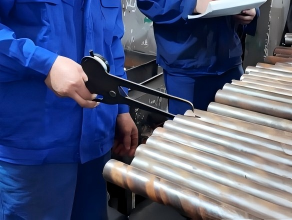
Heat treatment options expand the performance envelope further. Normalized steel undergoes controlled cooling that refines grain structure, improving toughness and creating more uniform properties throughout the tube wall. Quenched and tempered steel takes a different path, using rapid cooling followed by controlled reheating to achieve higher strength and hardness. The right combination of chemistry and thermal processing determines whether an EN10297 steel tube can handle the stresses your application will throw at it.
| Common EN10297 Steel Grade | Material Type | Key Properties | Typical Applications |
|---|---|---|---|
| E355 | Non-alloy steel | Good weldability, high tensile strength | General structural, hydraulic systems |
| 25CrMo4 | Alloy steel | Excellent hardenability, high-temperature strength | Automotive, high-pressure components |
| 41Cr4 | Chromium alloy | High mechanical strength, good hardenability | High-strength component manufacturing |
| 16MnCr5 | Case-hardening steel | Excellent wear resistance, core toughness | Gears, shafts, automotive parts |
| 34MnB5 | Boron alloy steel | Exceptional hardenability, high strength | Heavy machinery, agricultural equipment |
Both EN10297-1 and ASTM A519 cover seamless steel mechanical tubing, but they come from different standardization traditions. EN10297-1 reflects European practice and sees heavy use in EU projects, while ASTM A519 dominates North American specifications. The differences go beyond geography. Chemical composition limits vary between equivalent grades, and testing methodologies don’t always align. An ASTM A519 Steel Pipe might specify slightly different manganese or silicon ranges compared to a comparable EN grade, which can affect processing behavior or final mechanical properties. When sourcing internationally, understanding these standardization differences prevents specification mismatches.
The manufacturing route chosen for EN10297 tubes shapes their final characteristics in ways that matter for end-use performance. Hot finished tubes EN10297 are rolled at elevated temperatures, which allows for thicker walls and larger diameters at lower cost. The process works well for general structural applications where tight dimensional control isn’t the primary concern. Cold drawn tubes EN10297 take a different approach, pulling the tube through a die at room temperature. This strain-hardening process produces precision steel tubing with tighter dimensional tolerances, smoother surface finish, and improved mechanical properties.
The choice between cold drawing and hot finishing creates measurable differences in the finished EN10297 steel tube. Cold drawing increases strength through work hardening and delivers surface quality that hot processing can’t match. These cold drawn tubes suit applications requiring exact dimensions and smooth internal surfaces. Hot finished tubes offer good ductility and cost advantages, though with less precise dimensions and rougher surfaces. The decision comes down to what the application actually requires. Paying for cold drawn precision makes sense for hydraulic components. It makes less sense for structural members where tolerances are generous.
EN10297 tubes show up in applications where failure isn’t an option. Hydraulic systems tubing operates under repeated pressure cycles, demanding tubes that resist fatigue and maintain seal integrity. Automotive components like axles and suspension parts experience dynamic loads throughout their service life. Construction machinery parts need structural integrity under harsh operating conditions. These pressure applications steel tubes must perform consistently, which is why the EN10297 specification exists in the first place.
A ST52 Steel Pipe often gets specified for heavy structural components because it combines high strength with good weldability. For automotive and aerospace applications requiring superior hardenability and elevated temperature performance, a 25CrMo4 Steel Pipe becomes the logical choice. Custom steel tube profiles can be engineered to meet the exact specifications these demanding uses require.
High-pressure hydraulic applications place specific demands on tube material. The tube needs adequate yield strength to resist permanent deformation under operating pressure, fatigue resistance to survive millions of pressure cycles, and sufficient burst pressure margin for safety. E355 delivers high yield strength and good weldability, making it a solid choice for hydraulic cylinders and lines. 25CrMo4 adds enhanced hardenability and high-temperature strength for more extreme hydraulic systems. These EN10297 grades for hydraulics provide the reliability that hydraulic equipment designers need.
Quality assurance for EN10297 steel tubes requires more than paperwork. Non-destructive testing steel tubes using ultrasonic and eddy current methods detects internal and surface flaws without damaging the product. Positive material identification confirms that the tube chemistry matches the specification, preventing material mix-ups that could lead to field failures. ISO-certified quality control systems provide the framework, but the actual value comes from applying these methods consistently throughout production.
Dimensional verification matters just as much as material testing. Outer diameter, wall thickness, and straightness all need to fall within specified tolerances. For precision applications, even small deviations can cause assembly problems or performance issues. Full process control from raw material through finished product ensures that quality assurance steel tubes actually delivers the reliability the standard promises.
Standard round tubes don’t fit every engineering problem. Square steel tubes, rectangular steel tubes, and hexagonal steel tubes each serve specific design requirements. Complex geometries steel can integrate more effectively into certain assemblies or provide better load distribution for particular applications. OEM steel tube supply often involves developing custom-shaped steel tubes that match exactly what the design calls for.
Working with engineers on tailored EN10297 tubes means understanding both the specification requirements and the practical constraints of the application. The goal is producing high-precision tubing that performs as intended, whether that means a bespoke automotive component or a specialized construction element.
EN10297 seamless steel tubes ship in several delivery conditions EN10297, each optimized for different end uses. Normalized condition improves toughness and creates uniform properties throughout the tube. Annealed condition maximizes ductility for applications requiring significant forming. Cold finished/hard provides high strength and dimensional stability, while cold finished/soft offers excellent plasticity for subsequent processing. The heat treatment options available allow matching the tube properties to the application requirements.
Dimensional accuracy EN10297 and surface finish requirements get verified through multiple checkpoints during production. Cold drawn precision manufacturing inherently produces tighter tolerances and smoother surfaces than hot processing. Advanced measurement equipment monitors critical dimensions throughout the process. Quality control steel tubes protocols backed by ISO certification ensure consistent results. NDT inspections verify both surface integrity and internal soundness, confirming that the finished product meets the specification.
Custom-shaped steel tubes beyond standard circular profiles are entirely feasible. Square steel tubes, rectangular steel tubes, and hexagonal steel tubes get produced regularly for applications requiring specific cross-sections. Complex geometries steel can be manufactured to meet unique design requirements. OEM steel tube supply capabilities support specialized engineering projects where standard shapes won’t work. The key is matching the manufacturing process to the geometry and tolerance requirements of the application.
For over two decades, Changzhou Tenjan Steel Tube Co.,Ltd has been the trusted partner for precision steel tubing. Our vertically integrated manufacturing, ISO-certified quality control, and expertise in EN10297 standards ensure unparalleled material integrity and performance for your most critical applications. Partner with Tenjan for tailored, high-precision solutions that elevate your engineering projects. Contact us today for a consultation or to discuss your specific EN10297 steel tube requirements. Email: Sunny@tenjan.com | Tel:+86 51988789990| Tel:+86 51988789990


Home Product Capabilities Case Studies Blogs About Get a Quote
Pipe & Tube Manufacturing Process Shapes & Profiles Pipes & Tubes Material Standard Steel Pipes & Tube Rebar Couplers Cold Drawn Steel Profiles & Bars
Oil & Petrochemical Industry Automotive & Motorcycle Components Mechanical Engineering Components Mining Construction Support Structures High-Pressure Boiler System Construction Machinery Geological Drilling Agricultural Machinery Parts Industrial Fluid Transfer Systems


© 2024 Changzhou Tenjan Steel Tube Co., Ltd All rights reserved. Privacy StatementTerms-ConditionsSitemap
