Welcome to Changzhou Tenjan Steel Tube Co., Ltd
Sunny@tenjan.com



Cold drawn precision tubes built to GB/T 3639 show up in places where even small dimensional errors create real problems. Hydraulic cylinders that leak under pressure, fuel lines that fail vibration testing, boiler components that distort at temperature—these failures often trace back to tubes that looked acceptable but fell outside the tight tolerances this standard demands. The specification exists because precision manufacturing at this level requires documented boundaries, not just good intentions.
GB/T 3639 functions as China’s national standard governing cold drawn precision seamless steel tubes. The document addresses tubes destined for applications where dimensional accuracy and surface condition directly affect performance outcomes.
The standard establishes specific ranges for outer diameter, wall thickness, and ovality. These dimensional tolerances matter because precision tubes often serve as mating components—a tube that measures slightly oversize won’t seat properly in its housing, while one that runs undersize may allow unwanted movement or leakage paths. Surface finish requirements appear throughout the specification, targeting smoothness levels that prevent stress concentrations and reduce friction in dynamic applications.
Mechanical property requirements cover tensile strength, yield strength, and elongation values. These numbers reflect what the material can withstand before permanent deformation or failure occurs. Chemical composition limits for various material grades ensure the steel behaves predictably during fabrication and in service. Carbon steel and alloy steel grades each carry their own composition windows, matched to different performance demands.
| Requirement | Description |
|---|---|
| Dimensional Tolerances | Strict limits on outer diameter, wall thickness, and ovality |
| Surface Finish | Smoothness requirements, absence of defects like cracks or inclusions |
| Mechanical Properties | Minimum tensile strength, yield strength, and elongation values |
| Material Grades | Specifications for various carbon and alloy steel compositions |
| Testing | Non-destructive testing (NDT) and mechanical property tests are mandatory |
Meeting GB/T 3639 requirements goes beyond paperwork. The standard exists because precision cold drawn tubes perform differently than tubes made to looser specifications. The cold drawing process itself work-hardens the steel, improving fatigue resistance. Tighter dimensional control means better pressure containment because wall thickness remains consistent around the circumference.
Hydraulic systems illustrate this well. The smooth internal surfaces specified by GB/T 3639 reduce turbulence and friction losses during fluid flow. Consistent bore dimensions maintain predictable pressure drops across system components. When tolerances drift, seals wear unevenly, efficiency drops, and leak paths develop.
Automotive fuel lines and structural tubes face similar demands. Vibration, thermal cycling, and occasional impact loading all stress these components. Tubes that meet GB/T 3639 specifications start with known properties—there’s less guesswork about how they’ll behave over thousands of operating hours. High-pressure boilers and heat exchangers push materials toward their limits, where the difference between specified minimum wall thickness and actual wall thickness determines whether a component survives its design life. Construction machinery and heavy equipment tubing face shock loads and abrasive environments that expose any weakness in material consistency. Our Seamless Pipe&Tube products address these demanding environments specifically. Adhering to documented performance standards protects equipment investments and the people working around them.
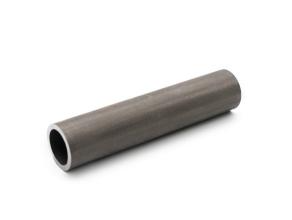
International projects and global supply chains require understanding how GB/T 3639 relates to standards from other regions. The Chinese standard shares conceptual ground with ASTM, EN, and JIS specifications, though specific details differ in ways that matter during specification and procurement.
ASTM A519 covers seamless mechanical tubing for North American applications. EN 10305 addresses steel tubes for precision applications across European markets, with particularly tight dimensional requirements. JIS G3445 and JIS G3441 serve Japanese industry for carbon and alloy steel mechanical tubing respectively.
The differences often appear in chemical composition ranges, heat treatment specifications, and testing protocols. A steel grade that meets GB/T 3639 requirements may need verification against the specific composition limits of an equivalent ASTM or EN grade. Manufacturers experienced with multiple standards, like Changzhou Tenjan Steel Tube Co.,Ltd, can cross-reference requirements and confirm compliance. Whether a project calls for ASTM A519 Steel Pipe or EN10305-1 Steel Pipe, the ability to navigate between standards enables participation in diverse engineering projects worldwide.
| Feature | GB/T 3639 | ASTM A519 | EN 10305 | JIS G3445 |
|---|---|---|---|---|
| Scope | Precision cold drawn seamless steel tubes | Seamless mechanical tubing | Steel tubes for precision applications | Carbon steel tubes for machine structural use |
| Primary Market | China | North America | Europe | Japan |
| Dimensional Accuracy | High | High | Very High | High |
| Material Grades | Specific Chinese grades | Various carbon and alloy steel grades | Non-alloy and alloy steel grades | Carbon steel grades |
| Key Focus | Precision, surface finish, mechanical properties | Mechanical properties, dimensional accuracy | Dimensional accuracy, surface quality, mechanical properties | Mechanical properties, structural integrity |
The precision levels GB/T 3639 demands don’t happen by accident. Cold drawing serves as the primary forming method—pulling tube through a die reduces diameter and wall thickness while the metal remains at ambient temperature. This cold working process increases strength through strain hardening and produces the smooth surfaces the standard requires.
Heat treatment follows drawing operations when material properties need adjustment. Annealing softens work-hardened material for further processing or to achieve specific ductility requirements. Normalizing refines grain structure and improves uniformity of mechanical properties throughout the tube cross-section.
Quality systems tie everything together. ISO certification establishes documented procedures for process control, ensuring each production run follows the same steps that produced acceptable results previously. Non-destructive testing methods—eddy current inspection for surface and near-surface flaws, ultrasonic testing for internal discontinuities—examine tubes without destroying them. Positive material identification confirms the chemical composition matches what the specification requires, catching material mix-ups before they become installed problems. This systematic approach to verification produces the material integrity that critical applications demand.
Standard catalog dimensions don’t always match what a specific application needs. OEM equipment and custom engineering projects frequently require tubes with particular combinations of diameter, wall thickness, length, or material grade that fall outside normal production runs.
Custom manufacturing to GB/T 3639 extends beyond round tubes. Cold drawn profiles include square steel tubes and rectangular steel tubes for structural applications where flat bearing surfaces matter. More complex geometries like hexagonal steel pipes&tubes serve specialized mechanical applications.
Material selection adds another dimension to customization. Projects may specify particular alloy grades like 4140 Steel Pipe for its combination of strength and toughness, or S355JR Steel Pipe for structural applications requiring good weldability. Working from detailed customer specifications, engineering teams develop production approaches that deliver compliant finished products ready for integration into larger assemblies.
For over two decades, Changzhou Tenjan Steel Tube Co.,Ltd has operated as a vertically integrated manufacturer delivering GB/T 3639 compliant precision steel tubes for demanding applications. ISO-certified quality systems, comprehensive testing capabilities, and custom manufacturing flexibility combine to provide superior material integrity and performance. Contact us today to discuss your specific precision tubing requirements and discover tailored solutions. Email: Sunny@tenjan.com | Tel: +86 51988789990 | WhatsApp: +86 13401309791| Tel: +86 51988789990 | WhatsApp: +86 13401309791
GB/T 3639 sets requirements across several categories for cold drawn precision seamless steel tubes. Dimensional tolerances cover diameter, wall thickness, and ovality. Surface quality specifications address smoothness and prohibit defects like cracks or inclusions. Mechanical property minimums include tensile strength, yield strength, and elongation. Material composition limits ensure consistency within designated steel grades. Mandatory testing includes both non-destructive examination and mechanical property verification.
GB/T 3639 shares the same general objectives as ASTM A519 and EN 10305—producing precision tubes with controlled properties—but differs in specific details. Dimensional tolerance ranges, testing protocols, and material grade designations reflect Chinese industrial practice rather than North American or European conventions. Manufacturers serving global markets maintain familiarity with multiple standards and can verify compliance across different specification systems.
Reliable sourcing requires evaluating manufacturer capabilities beyond basic claims. ISO certification indicates documented quality management systems. In-house testing capabilities—particularly non-destructive testing and positive material identification—demonstrate commitment to verification rather than assumption. Track record matters: suppliers with experience serving automotive, hydraulic, and high-pressure applications have faced the scrutiny that comes with critical component supply. Changzhou Tenjan Steel Tube Co.,Ltd maintains these capabilities across its precision tube production.


Home Product Capabilities Case Studies Blogs About Get a Quote
Pipe & Tube Manufacturing Process Shapes & Profiles Pipes & Tubes Material Standard Steel Pipes & Tube Rebar Couplers Cold Drawn Steel Profiles & Bars
Oil & Petrochemical Industry Automotive & Motorcycle Components Mechanical Engineering Components Mining Construction Support Structures High-Pressure Boiler System Construction Machinery Geological Drilling Agricultural Machinery Parts Industrial Fluid Transfer Systems


© 2024 Changzhou Tenjan Steel Tube Co., Ltd All rights reserved. Privacy StatementTerms-ConditionsSitemap
