Welcome to Changzhou Tenjan Steel Tube Co., Ltd
Sunny@tenjan.com



The surface finish of a steel tube determines far more than how it looks. It shapes how the tube performs under stress, how long it resists corrosion, and whether it meets the demands of hydraulic systems, boiler applications, or precision machinery. After years of working with tubes across dozens of industrial applications, I’ve seen how the right finish extends service life by years while the wrong one leads to premature failure. At Tenjan Steel Tube, optimizing steel tube surface quality is central to everything we manufacture.
The microscopic topography of a steel tube’s surface determines how it interacts with its environment and handles operational stresses. A smooth internal surface reduces fluid friction, which matters enormously in fluid transport systems where efficiency translates directly to energy savings. A rougher surface, on the other hand, provides better paint adhesion or mechanical grip when that’s what the application requires.
Surface finish affects several critical operational parameters simultaneously. Corrosion resistance depends on surface integrity and the quality of protective coatings. Any compromise in the surface creates initiation sites for rust and chemical degradation. Fatigue life under cyclic loading is heavily influenced by surface condition because micro-cracks and imperfections act as stress concentrators that trigger premature failure. Tribological properties like friction and wear are dictated by surface texture, directly affecting component lifespan.
We control these factors carefully to ensure our tubes meet stringent performance criteria. Our S355JR Steel Pipe and 4140 Steel Pipe are often used in applications where surface quality directly impacts structural integrity and operational efficiency.
| Performance Indicator | Enhanced by Smooth Finish | Enhanced by Specific Coatings | Reduced by Poor Finish |
|---|---|---|---|
| Corrosion Resistance | Yes | Yes | Yes |
| Fatigue Life | Yes | Yes | Yes |
| Fluid Dynamics | Yes | No | Yes |
| Wear Resistance | Varies (depends on coating) | Yes | Yes |
| Adhesion (Paint/Bond) | No | Yes | No |
Achieving the desired surface characteristics requires a range of mechanical and chemical processes. These methods form the foundation for producing the diverse array of steel tube finishes that modern industry demands. Our expertise in these processes allows us to tailor products like Precision Pipe&tube and Seamless Pipe&Tube to exact specifications.
Mechanical methods physically alter the surface. Cold drawing pulls steel tubes through a die at room temperature, refining the grain structure, improving dimensional accuracy, and significantly enhancing surface smoothness. Our Cold Drawn Pipe & Tube products demonstrate these benefits. Mechanical polishing takes surface refinement further, achieving mirror-like finishes essential for aesthetic applications or situations requiring minimal friction. Shot blasting creates a uniform, slightly roughened profile that improves paint adhesion or prepares surfaces for subsequent coatings.
Chemical methods modify the surface through chemical reactions. Pickling removes scale and impurities using acid solutions, leaving a clean, uniform surface. This is typically followed by oiling to provide temporary corrosion protection. These processes are critical for preparing tubes for further treatment or direct use in less aggressive environments. We apply these methods to products including ASTM A179 Steel Pipe and DIN 2391 Steel Pipe to ensure optimal surface quality.
| Method | Type | Primary Effect | Typical Application |
|---|---|---|---|
| Cold Drawing | Mechanical | Smoothness, Dimensional Acc. | Hydraulic cylinders, Precision parts |
| Pickling & Oiling | Chemical | Scale Removal, Corrosion Prot. | General industrial, Pre-coating |
| Mechanical Polishing | Mechanical | High Luster, Smoothness | Decorative, Low friction |
| Shot Blasting | Mechanical | Surface Roughening | Paint adhesion, Surface prep |
Applications facing extreme conditions require specialized coatings and treatments that go beyond basic finishes. These advanced techniques provide enhanced durability, corrosion resistance, and specific functional properties. We use these treatments to supply tubes that perform reliably in harsh environments, including those made from 41Cr4 Alloy Pipe and 25CrMo4 Steel Pipe.
Galvanizing coats steel with a layer of zinc that provides sacrificial corrosion protection. The zinc corrodes preferentially, protecting the underlying steel even if the coating is scratched. This makes galvanizing particularly effective in outdoor or marine environments. Powder coating applies a dry powder that cures under heat to form a hard, protective layer that resists chipping and provides aesthetic flexibility.
For stainless steel, passivation removes free iron from the surface through a chemical treatment, enhancing the native chromium oxide layer and significantly boosting corrosion resistance. Electropolishing smooths and brightens the surface through an electrochemical process, creating finishes suitable for medical or food-grade applications where hygiene and cleanability are priorities.
Surface hardening treatments like carburizing and nitriding alter the microstructure of the steel’s surface, increasing hardness and wear resistance while preserving core toughness. Our 8620 Alloy Pipe is often carburized to achieve a hard, wear-resistant surface for components exposed to abrasive conditions or high contact stresses.
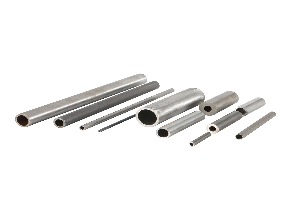
Selecting the correct surface finish requires balancing performance requirements, cost, and manufacturing feasibility. Each application presents unique challenges that demand a tailored approach. Our experience with materials like ST52 Steel Pipe and E355 Steel Pipe allows us to guide clients through these decisions effectively.
Hydraulic cylinders demand smooth, low-friction internal surfaces. This minimizes seal wear, reduces energy loss, and ensures precise movement. Automotive components often require a balance of corrosion resistance, fatigue strength, and visual appeal, leading to finishes ranging from painted surfaces to specialized coatings. Boiler tubes operating under high pressure and temperature need impeccable internal and external surface integrity to prevent stress corrosion cracking and ensure safe, efficient heat transfer.
Compliance with international standards including ASTM, EN, DIN, and JIS is non-negotiable. These standards specify acceptable surface roughness values, coating thicknesses, and inspection criteria. We work with clients to understand their specific application, operating conditions, and regulatory requirements, then recommend the most suitable surface finish. This often involves custom steel tube finishes designed to meet unique project specifications.
For hydraulic systems, precision cold-drawn tubes with very smooth internal surfaces work best. Skiving or roller burnishing typically achieves the required finish. This minimizes friction, reduces seal wear, and ensures optimal fluid flow and system efficiency. Internal surface roughness values are often specified below 0.4 µm Ra to prevent cavitation and extend component life.
Cold drawing refines surface finish significantly. As the tube passes through a die smaller than its original diameter, the metal undergoes plastic deformation that produces a smoother surface, tighter dimensional tolerances, and increased hardness. The process reduces surface roughness, removes minor imperfections, and enhances overall surface integrity.
Ensuring the integrity and performance of steel tube surface finishes requires rigorous quality control and advanced inspection techniques. Our ISO-certified quality control system integrates comprehensive checks throughout manufacturing, from raw material to finished product. This commitment to precision is vital for products like JIS G3445 Steel Pipe and ASTM A519 Steel Pipe.
We use multiple inspection methods to detect surface defects and verify compliance with specifications. Visual inspection identifies obvious flaws as the first line of defense. Advanced techniques including eddy current testing, ultrasonic testing, and magnetic particle inspection detect subsurface and surface discontinuities invisible to the naked eye. Positive Material Identification confirms correct material composition, which affects coating adhesion and corrosion resistance.
Profilometers measure surface roughness precisely, providing quantitative data on texture and topography. Coating thickness gauges verify the uniformity and adequacy of protective layers. These inspections guarantee that every tube leaving our facility meets the highest standards for surface quality and performance.
Surface integrity in high-pressure boiler tubes prevents catastrophic failures. Pitting, cracks, or excessive roughness act as stress concentrators that can initiate stress corrosion cracking or fatigue cracks under combined high temperature, pressure, and corrosive boiler water. Maintaining a pristine surface ensures long-term reliability, prevents costly downtime, and safeguards against hazardous ruptures.
For over two decades, Changzhou Tenjan Steel Tube Co.,Ltd has delivered high-precision, custom-engineered steel tubing solutions. Our vertically integrated manufacturing, ISO-certified quality control, and expertise across a spectrum of surface finishes ensure your critical applications meet the highest standards. Contact us today to discuss your specific project requirements and discover how our tailored tubing solutions can enhance your product’s performance and durability. Email: Sunny@tenjan.com | Tel:+86 51988789990| Tel:+86 51988789990
Common surface defects include scale, pitting, scratches, and cracks, often resulting from manufacturing processes or improper handling. Prevention involves rigorous quality control at every stage, from raw material selection to precision cold drawing, pickling, and final inspection using NDT methods. Full process control ensures minimal defects and superior surface quality.
Surface finish complexity significantly affects both cost and lead time. Basic finishes like cold drawn or pickled are generally more economical and faster to produce. Specialized treatments such as electropolishing, galvanizing, or custom coatings require additional processes, materials, and time, increasing expenses and extending delivery schedules. Balancing performance requirements with budget and schedule is important during specification.
Yes, Changzhou Tenjan Steel Tube Co.,Ltd specializes in tailored, high-precision tubing, including custom surface finishes. We work with OEMs and engineering projects globally to meet unique specifications, drawing on our expertise in cold drawing, various treatments, and adherence to international standards like ASTM, EN, DIN, and JIS. Contact us to discuss your specific custom finish requirements.


Home Product Capabilities Case Studies Blogs About Get a Quote
Pipe & Tube Manufacturing Process Shapes & Profiles Pipes & Tubes Material Standard Steel Pipes & Tube Rebar Couplers Cold Drawn Steel Profiles & Bars
Oil & Petrochemical Industry Automotive & Motorcycle Components Mechanical Engineering Components Mining Construction Support Structures High-Pressure Boiler System Construction Machinery Geological Drilling Agricultural Machinery Parts Industrial Fluid Transfer Systems


© 2024 Changzhou Tenjan Steel Tube Co., Ltd All rights reserved. Privacy StatementTerms-ConditionsSitemap
