Welcome to Changzhou Tenjan Steel Tube Co., Ltd
Sunny@tenjan.com



Picking the right wall thickness for steel tubing sounds straightforward until you’re staring at spec sheets and realizing that a few millimeters can mean the difference between a system that performs for decades and one that fails under pressure. The choice ripples through everything: how much load the tube can handle, what it weighs, how it welds, and what it costs. Changzhou Tenjan Steel Tube Co.,Ltd works with clients across industries to match wall thickness to actual operating conditions, drawing on experience with both alloy steel tubes and carbon steel tubes.
Wall thickness doesn’t just scale strength linearly. A thicker wall increases the cross-sectional area of material resisting stress, which raises load-bearing capacity and rigidity. But that extra material adds weight and cost. A thick-walled alloy steel tube like 4140 Steel Pipe handles heavy-duty applications where failure isn’t an option. A thin-walled carbon steel tube works where structural demands are moderate and weight matters more.
The mechanical properties shift too. Yield strength, tensile strength, and impact resistance all respond to wall thickness, though the relationship depends on the steel grade. ASTM standards and EN standards define these properties for specific applications.
| Feature | Thick Wall Steel Tube | Thin Wall Steel Tube |
|---|---|---|
| Strength | High load-bearing capacity, superior rigidity | Lower load-bearing capacity, reduced rigidity |
| Weight | Heavier, higher material usage | Lighter, material-efficient |
| Pressure | Ideal for high-pressure applications | Suitable for low-to-medium pressure applications |
| Cost (Material) | Generally higher due to more material | Generally lower due to less material |
| Impact Resistance | Excellent | Good, but less robust than thick wall |
Thick wall steel tubes show up wherever pressure and durability can’t be compromised. High-pressure boilers need them. So do hydraulic cylinders in construction equipment and structural frameworks carrying serious loads. Our ASTM A106 Gr.B Steel Pipe and ASTM A192 Steel Pipe handle high-temperature fluid conveyance because the wall thickness provides the pressure containment these systems demand.
Thin wall tubes earn their place in different territory. Automotive exhaust systems use them because weight savings translate directly to fuel efficiency. Heat exchangers rely on thin walls for better thermal conductivity since less material means faster heat transfer. The JIS G3461 Steel Pipe fits boiler and heat exchanger systems where these properties matter most.
Getting consistent wall thickness requires different approaches depending on what you’re making. Cold drawing works well for both thick and thin wall tubes, pulling the material through a die to reduce diameter and wall thickness while tightening tolerances and improving surface finish.
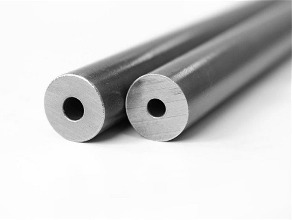
Thin wall tubes need cold drawing’s precision to hit the tight tolerances heat exchangers require. Thick wall tubes benefit from the enhanced mechanical properties the process delivers. Changzhou Tenjan Steel Tube Co.,Ltd also produces cold drawn welded tube and custom shapes including oval, hexagonal, and triangular profiles for applications where standard round tubes won’t fit.
The economics of wall thickness extend past what the steel costs. Thicker walls mean more raw material, but they also affect processing time, welding requirements, and shipping weight. A thin wall tube costs less in material but might need additional support structures that add expense elsewhere in the project.
Changzhou Tenjan Steel Tube Co.,Ltd controls the full process from raw material to finished product. This integration lets us offer tailored steel tubing solutions that balance performance against total project cost rather than just optimizing one line item.
International standards for steel tubing exist because the consequences of getting wall thickness wrong range from inconvenient to catastrophic. ISO-certified quality control systems at Changzhou Tenjan Steel Tube Co.,Ltd include PMI (Positive Material Identification) and NDT (Non-Destructive Testing) on both thick and thin wall products.
Our tubes meet ASTM, EN, DIN, and JIS standards. For OEM partners and engineering projects where material integrity can’t be questioned, this compliance provides the documentation and traceability that procurement teams and regulators require.
Navigating the complexities of steel tube selection requires deep expertise. At Changzhou Tenjan Steel Tube Co.,Ltd, we combine decades of experience with advanced manufacturing capabilities to deliver precision steel tubing tailored to your exact specifications, whether thick wall or thin wall. From automotive to high-pressure boilers, our ISO-certified processes ensure material integrity and performance. Partner with us for bespoke solutions that meet the most stringent ASTM, EN, DIN, and JIS standards. Contact us today for a consultation or to discuss your next engineering project. Email: Sunny@tenjan.com | Tel:+86 51988789990 | WhatsApp:+86 13401309791| Tel:+86 51988789990 | WhatsApp:+86 13401309791
Load-bearing requirements come first. Thick wall steel tubes resist buckling better and handle higher stress concentrations, making them the default for heavy frameworks. Thin wall tubes can work in lighter structures but may need design modifications like closer support spacing or reinforced connection points. The application’s safety factor requirements often push the decision toward thicker walls even when thinner ones might theoretically suffice. Changzhou Tenjan Steel Tube Co.,Ltd provides precision steel tubing for structural applications across this spectrum.
Thin wall tubes weld faster with less heat input, which reduces distortion. The risk is burn-through if parameters aren’t controlled precisely. Thick wall tubes need more heat to achieve full penetration, and many applications require pre-heating and post-weld heat treatment to prevent cracking in the heat-affected zone. Our experience with cold drawn welded tube production informs how we advise clients on fabrication approaches for different wall thicknesses.
Yes. High-pressure boiler applications follow standards like ASTM A106 or EN 10216-2, which specify minimum wall thicknesses based on operating pressure and temperature. Automotive standards from JIS and ASTM focus more on formability and weight optimization. The standard that applies depends on the industry, the application, and sometimes the jurisdiction where the equipment will operate. Changzhou Tenjan Steel Tube Co.,Ltd manufactures to ASTM, EN, DIN, and JIS standards to cover these varied requirements.


Home Product Capabilities Case Studies Blogs About Get a Quote
Pipe & Tube Manufacturing Process Shapes & Profiles Pipes & Tubes Material Standard Steel Pipes & Tube Rebar Couplers Cold Drawn Steel Profiles & Bars
Oil & Petrochemical Industry Automotive & Motorcycle Components Mechanical Engineering Components Mining Construction Support Structures High-Pressure Boiler System Construction Machinery Geological Drilling Agricultural Machinery Parts Industrial Fluid Transfer Systems


© 2024 Changzhou Tenjan Steel Tube Co., Ltd All rights reserved. Privacy StatementTerms-ConditionsSitemap
