Steel Tube Inventory Management: A Practical Guide
Inventory is where procurement mistakes quietly compound. Buy too little and a three-week cold-drawing lead time turns a routine order into a line stop; buy too much and working capital sits on a rack while a…
Inventory is where procurement mistakes quietly compound. Buy too little and a three-week cold-drawing lead time turns a routine order into a line stop; buy too much and working capital sits on a rack while a fine film of rust slowly collects rent. For steel tubes the balance is sharper than for most industrial materials because the value is not just in the metal — it is in the dimension, grade, heat number, and surface condition that careless storage can quietly destroy.
This guide walks through a practical management sequence: segment, size, store, receive, and review. The goal is simple: hold the right tubes in the right condition at the lowest defensible cost.
Why Steel Tube Inventory Behaves Differently
A steel tube is not a bolt. Bolts are forgiving: within a grade family, one 8.8 fastener substitutes for another. Precision tubes are not. A cold-drawn E355 tube in EN 10305-1 condition, an ST52 mechanical stock item, and a hot-rolled structural pipe may look similar on the rack but serve completely different stress, tolerance, and traceability masters. That is why inventory discipline here is a quality function as much as a cost function.
Three characteristics make tube inventory unusually fragile. First, dimensional drift: precision stock is held to tight outside-diameter and wall-thickness bands, and any stock mixed with lower-tolerance material silently degrades the entire rack’s usable value. Second, traceability debt: once a heat number or inspection certificate is separated from the physical tube, the material can no longer be verified against EN 10204 inspection documents [2]. Third, grade-mixing risk: a few detached tags in a shared cantilever rack can turn a 100-tube bundle into a forensic identification project, with PMI re-testing as the only rescue.
Consider a hydraulic-component shop I visited years ago. The receiving team unloaded mixed pallets after a shift change and racked “the same looking round stock” together. Days later a machinist noticed one batch cut differently. PMI confirmed two alloys had been co-mingled, and the whole rack had to be re-inspected before anything could move to production. The metal was fine; the information had rotted. That is the real inventory risk for steel tubes: not that the steel fails while sitting still, but that you lose proof of what it is.
Ask your planner a simple question before moving on: can you point to every heat number on your rack and match it to a certificate today? If the honest answer is “mostly,” you already know where the next section starts.
Segment Inventory Before You Count It
Good inventory control starts with admitting that not all tubes deserve the same attention. The classic ABC/XYZ approach comes from supply-chain management [4]: classify items by value and by demand stability, then give every class a matching replenishment strategy.
| Class | Typical steel tube profile | Main watch-out | Replenishment approach |
|---|---|---|---|
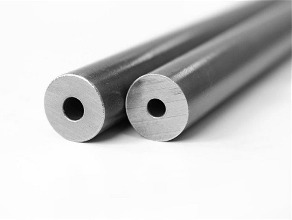
| A-X | Cold-drawn alloy and custom precision profiles | High value, stable but slow demand | Small, scheduled releases; avoid bulk buys |
| A-Y | High-value profiles with unstable demand | Stockout cost is severe | Keep modest buffer stock; review monthly |
| B-X | Standard mechanical rounds such as ASTM A519 [3] or ST52 | Moderate value, steady consumption | Min-max with calendar reviews |
| C-X | Common carbon rounds and structural sections | Easy to reorder, cheap but bulky | Higher order multiples, periodic counts |
| Legacy | Obsolete program-specific shapes | No live demand, still consumes space | Quarantine, reclassify, scrap or sell |
The most dangerous row is usually not A. It is “Legacy” — inventory no project needs but no one has been willing to write off. It rusts, it clutters, and it creates exactly the kind of confusion that causes the wrong tube to be pulled. Put a quarantine rule on legacy stock: if a profile has had no live demand for several quarters, it triggers a formal review, not silent shelf space.
The practical point: segmentation turns inventory from an emotional debate (“just in case”) into a documented classification with rules.
Set Safety Stock From Lead Time and Variability
Safety stock is the inventory equivalent of an airbag: the best outcome is that you never deploy it, but sizing it wrong is expensive in both directions. The standard formula remains the cleanest starting point [4]:
Safety stock = Z × σ × √(lead time)
Here Z is the service-level factor — approximately 1.65 for a 95% service level and about 2.33 for 99% — σ is the standard deviation of demand, and lead time is the replenishment interval. The square root matters: doubling a supplier’s lead time does not double the required buffer, but it raises it enough to feel in working capital.
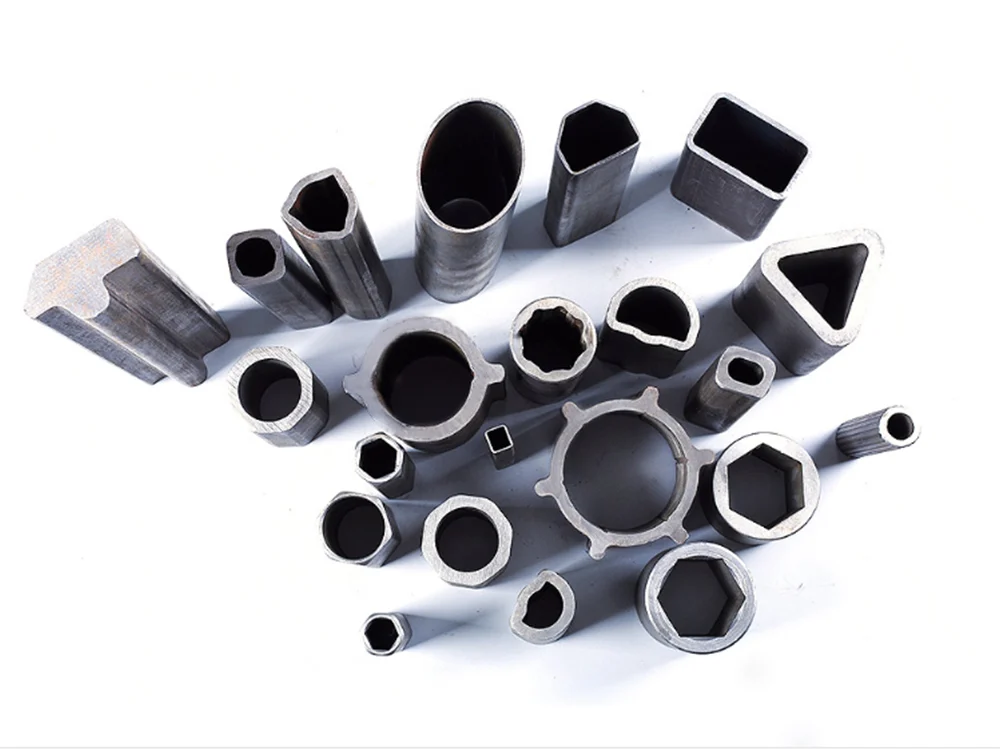
For steel tubes, lead time is not just elapsed time. It is also process complexity. A common carbon round from multiple mills reorders quickly. A custom cold-drawn profile with a defined tolerance band, specific heat treatment, and a 3.1 certificate [2] behaves differently — and any custom profile without a second source deserves a larger buffer almost by definition. Standard profiles can often be trimmed; proprietary shapes cannot.
One practical way to reduce that buffer is to change lot sizing rather than carry more stock. A purchasing team handling custom sections cut its holding volume by moving to smaller, more frequent releases with a supplier prepared to run small-batch production. The trade-off is real: shorter runs, more releases, but less dead stock and fresher certificates. That shift works only when the supplier has the process flexibility to absorb small orders without ballooning setup cost.
Think of safety stock as a negotiation between two numbers: how fast your supplier can respond, and how confidently you can predict consumption. Tighten either side and the formula gives you back cash.
Store Tubes So Value Does Not Leak
The tube sitting on your rack is not static. It is slowly losing value through corrosion, mechanical damage, and information decay. Storage is where inventory quality is either preserved or surrendered.
Corrosion is the loudest risk, and it is mostly a moisture problem. Corrosion-prevention guidance consistently puts moisture control first: keeping the storage area dry and ventilated, keeping bundles off the floor, and treating sustained high humidity — roughly above 60% relative humidity in many operating environments — as the point where condensation-driven attack climbs [5]. If your rack is in an unheated shed next to a roll-up door that spends the winter open, you are not storing tubes; you are weathering them.
Corrosion control is not a warehouse afterthought; it is where stored value either survives to the production line or quietly evaporates. <Steel Pipe Corrosion Protection Methods for Precision Tube> covers the coating, environment, and handling practices that keep precision tubes production-ready.
Mechanical damage is quieter but just as expensive. Thin-wall and high-precision tubes dent and ovalize more easily than standard structural stock. Nested bundles bear weight unevenly; sling marks become ovality; a single dropped bundle can shift every OD in that lot out of the tolerance band the part was specced for. Rack by section and wall thickness, support at enough points to prevent sag, and store thin-wall stock separately from heavy rounds.
A dent is not a scratch issue — it is a dimensional issue. <Steel Tube Dimensional Accuracy: Why Fit Depends on It> covers how storage and handling damage turn into fit failures at the machining stage.
Then there is identity. Tags fade, markers rub off, and oil films get disturbed. Store tubes so every bundle keeps its heat number visible, and keep inspection documents [2] filed against the same identifiers, not against “that pallet by the wall.” A tube without a traceable identity has already lost a large share of its engineered value. Broadly, ISO 9001’s preservation requirement treats storage as a controlled process — identification, handling, packaging, and protection must be designed, not improvised [1].
Receiving Checks That Protect the Whole Rack
The cheapest time to catch an inventory problem is the hour the truck arrives. Once mixed into the rack, a wrong grade or a dimensional outlier is expensive to find and riskier to miss. Receiving should be a short, disciplined gate: check the certificate, verify the material, and confirm the condition before the bundle enters storage.
| Receiving check | What it protects against | Practical acceptance cue |
|---|---|---|
| Mill test certificate | Grade, heat, and mechanical claims | EN 10204 3.1 or 3.2 document present and heat-matched [2] |
| PMI spot check | Alloy grade mix-ups | Composition matches the certificate family |
| OD and wall measurement | Dimensional drift | Readings within the specified tolerance band — for example ±0.1 mm on cold-drawn precision stock |
| Surface inspection | Deep pitting, rust bloom, pickling residue | Minor surface bloom only; no deep pits or scale pockets |
| Straightness and ovality | Transit and handling damage | No visible kink or out-of-round beyond the drawing tolerance |
| Marking and tags | Traceability loss | Heat numbers legible and unique per bundle |
| Coating and oil film | Corrosion during storage | Protective film continuous; re-apply if disturbed |
The receiving gate is where inventory quality is won or conceded before a single tube hits the rack. <Precision Tube Quality Inspection Checklist> covers the inspection points that make incoming stock trustworthy.
The certificate deserves a special mention because it changes the value of the tube, not its shape. EN 10204 defines the inspection document hierarchy: a 3.1 certificate is validated by the manufacturer’s authorized inspector, while a 3.2 adds independent verification [2]. For traceable, engineering-critical stock, the document and the physical heat number are one unit — accepting one without the other creates exactly the traceability debt described earlier.
Getting this gate right depends on supplier documentation that matches the physical material heat by heat. If you are recalibrating stock levels for cold-drawn precision tubes — or want help aligning grade-specific minimums with realistic lead times — email Sunny@tenjan.com or message WhatsApp at +86 13401309791 with the profiles and volumes you carry. A short discussion usually surfaces more working capital than a long hunt through stale reports.
Track, Review, and Adjust
Inventory control is not a one-time design; it is a rhythm. The highest-performing teams treat the stock file as a living record, not a static list.
Cycle counting is the backbone: count a defined subset on a fixed schedule rather than waiting for an annual wall-to-wall event [4]. High-value and high-risk classes get counted more often, matching the segmentation from earlier. A cycle count is not really about finding losses — it is about detecting drift between the system’s belief and the rack’s reality, which is the same principle as the receiving gate.
Track two or three numbers per class and review them on a routine: inventory turnover, the share of slow-moving stock, and fill rate. When a profile’s turnover falls while its stored quantity stays constant, you have not found a margin opportunity; you have found future dead stock. Reclassify it, quarantine it, or stop reordering it — politely but firmly.
The review is also the time to revisit the safety-stock formula with clean demand data. Forecasts degrade; supplier lead times change; standards update. A profile that was A-grade last year may be legacy this year. If your review cadence is slower than your business, the inventory plan is always answering last quarter’s questions.
Ask one closing question to your team: what is the only part of this rack you would defend keeping even if accounts payable demanded a painful reduction? Whatever survives that question is your real safety stock; the rest is optional.
Turn Inventory From a Guess Into a Plan
Inventory management for steel tubes stops being painful when segmentation, lead-time logic, storage discipline, and receiving checks operate together. The numbers get easier: less dead stock, fewer grade surprises, fresher documentation, and a stock file that matches the rack.
If you are planning stock levels for cold-drawn precision tubes, custom profiles, or standard mechanical rounds, Tenjan Steel Tube can help you map realistic lead times, grade-specific minimums, and small-batch replenishment options. Since 2004 we have supplied seamless and cold-drawn tubes with ISO-certified process control, PMI and NDT inspection, and full EN 10204 3.1 traceability.
Contact us to discuss your inventory profile:
- Email: Sunny@tenjan.com
- Tel: +86 51988789990
- Phone / WhatsApp: +86 13401309791
Frequently Asked Questions
Why is steel tube inventory more expensive to hold than standard fasteners?
Because the value is not only in the metal but in dimension, grade, heat number, and surface condition. Precision tubes tie up working capital and degrade in ways a bolt never will: corrosion, ovality, lost traceability, and grade mixing all destroy usable value before the material itself is consumed.
How long can precision steel tubes be stored?
There is no universal expiry date — the risk climbs with handling, humidity, and coating breakdown rather than calendar time alone. Tubes stored dry, off the floor, with intact oil films and legible heat numbers can remain serviceable for long periods. Tubes stored damp, mixed, or with detached tags can lose usable value quickly regardless of age [5].
Should I hold more stock of standard tubes or custom profiles?
In general, hold tighter buffers on custom profiles — especially those without a second source — and rely on faster reorders for standard rounds. Custom profiles carry longer effective lead times, higher setup sensitivity, and no easy substitution, which the safety-stock logic rewards with more protection.
What documentation should stay with stored tubes?
At minimum, the inspection certificate — EN 10204 3.1 or 3.2 — matched to each heat number, plus the relevant standard (such as ASTM A519 or EN 10305-1) and any dimensional or PMI records from receiving. Keep the documents filed against physical identifiers, not locations [2].
How do I reduce slow-moving steel tube inventory?
Start with segmentation and quarantine: identify legacy profiles with no live demand, stop reordering them, and formally review whether to retain, reclassify, or dispose. Then shift replenishment for active custom sections toward smaller, more frequent releases so slow stock stops being produced in the first place [4].
References
[1] International Organization for Standardization, ISO 9001:2015, Quality management systems — Requirements, 5th ed. Geneva, Switzerland: ISO, 2015.
[2] European Committee for Standardization, EN 10204:2004, Metallic products — Types of inspection documents. Brussels, Belgium: CEN, 2004.
[3] ASTM International, ASTM A519/A519M, Standard Specification for Seamless Carbon and Alloy Steel Mechanical Tubing. West Conshohocken, PA, USA: ASTM International.
[4] Association for Supply Chain Management, “SCOR digital standard: inventory and replenishment concepts,” ASCM. [Online]. Available: https://www.ascm.org. [Accessed: Jul. 2026].
[5] Association for Materials Protection and Performance (AMPP), “Corrosion prevention and control guidance,” AMPP. [Online]. Available: https://www.ampp.org. [Accessed: Jul. 2026].
If you’re interested, check out these related articles:
Carbon Steel vs Alloy Steel Tubes
Steel Tubes for Hydraulic Systems: Key Selection Factors for Engineers