Steel Tube Sustainability: Key Risks and Real Opportunities
A steel tube is a bit like a good recipe: you can change the ingredients, but if nobody measures the oven or traces the flour batch, the result may still fail the audit. For precision tube…
A steel tube is a bit like a good recipe: you can change the ingredients, but if nobody measures the oven or traces the flour batch, the result may still fail the audit. For precision tube manufacturers and the engineers who buy from them, sustainability is now less about slogans and more about measurable energy, carbon, scrap quality, and material traceability. Steel is already among the most recycled industrial materials on the planet [8], yet the steel sector still accounts for roughly 7–9% of global energy-related CO2 emissions [1][2]. That gap between “recyclable” and “low-carbon” is exactly where the steel tube industry’s risks and opportunities sit.
This article looks at the real challenges, the practical opportunities, and the choices that engineers, procurement teams, and tube producers can make without waiting for a perfect green steel market.
Why Steel Tube Sustainability Is No Longer Optional
Sustainability used to be a soft topic at the edge of a tube purchase decision. Today it sits directly inside the commercial and regulatory conversation. The European Union’s Carbon Border Adjustment Mechanism began transitional reporting in 2023, with definitive application planned from 2026 [3]. Buyers selling into Europe increasingly need embedded-emission data, not just a mill certificate. Large automotive and machinery OEMs have also started asking suppliers to report energy intensity, recycled content, and process route because scope 3 emissions now show up on their own balance sheets.
What makes this uncomfortable for the precision tube segment is that the product is usually small in mass but highly processed. A cold-drawn seamless tube may pass through forming, heat treatment, pickling, cold drawing, straightening, and finishing. Each step adds value, but each step also adds energy. The tube itself may be tiny compared with a structural beam, yet its carbon footprint per kilogram can be surprisingly high.
That is why sustainability in the steel tube industry is not just about the steel mill. It is about how the tube is made, how much material is lost, how much heat is applied, and how well the producer can prove the final claim.
The Real Challenges in Steel Tube Manufacturing
Carbon Accounting and Energy-Intensive Processing
Precision tube production often starts with steel made by the blast furnace–basic oxygen furnace route. That route typically emits around 1.8–2.2 tonnes of CO2 per tonne of crude steel, compared with roughly 0.4 tonnes for scrap-based electric arc furnace steel [1][2]. When you add cold drawing, annealing, normalizing, or quenching and tempering, the total process energy rises further. Energy management systems such as ISO 50001 provide a framework for monitoring those gains, but the underlying consumption still has to be engineered away [7].
The challenge is that precision tubes need consistent mechanical properties. You cannot simply skip a stress-relief cycle because it saves energy if the customer then finds the tube springing out of straightness during machining. Sustainability must be balanced against dimensional stability, fatigue life, and surface quality.
Scrap Quality and Residual-Controlled Grades
Using recycled steel sounds straightforward until you meet a cold-drawing shop. Scrap is not a single material; it is a mixture of old vehicles, appliances, machining chips, construction steel, and industrial offcuts. Each stream carries residual elements such as copper, tin, chromium, and nickel. Some residuals are tolerable in structural steel, but they can change cold workability, surface condition, and mechanical response in precision tubes.
This is a quiet but important challenge. A high recycled content number may look good on a sustainability report, but if the melt chemistry drifts, the tube producer may need more process adjustments, higher rejection rates, or extra heat treatment. In other words, circularity without chemistry control can simply move the waste from the steel mill into the tube factory.
Compliance Complexity Across Standards
Sustainability claims must sit on top of an already dense pile of product standards and inspection requirements. A single tube order may need to meet ASTM A519, EN 10305-1, DIN 2391, JIS G3445, or GB/T 3639, depending on the market. Each standard defines dimensions, mechanical properties, surface quality, and testing in its own way. Adding carbon accounting, environmental management, and supply-chain due diligence to that stack is not a marketing job; it is a documentation and process-control job.
For procurement teams, the practical question is whether a supplier can provide a real environmental data trail alongside the usual mill test report. ISO 14001 gives some assurance that an environmental management system exists, but it does not automatically tell you the carbon intensity of the specific tube you are buying [4].
Cost Pressure Versus Capital-Intensive Upgrades
Low-carbon process changes are rarely free. New furnaces, better scrap sorting, hydrogen-ready equipment, digital energy monitoring, and on-site renewables all require capital. In a globally priced steel tube market, the producer that invests early may face a cost disadvantage against competitors who wait. That is the classic first-mover problem: the carbon is reduced, but the invoice is not.
Buyers can help solve this by moving away from a pure lowest-price model. When engineers specify longer-life materials, tighter tolerances, and suppliers with verified process data, the total cost of ownership often improves even if the unit price does not.
Where the Opportunities Actually Are
Higher Scrap Utilization and Smarter Melting
The fastest available lever is scrap-based electric arc furnace steel. It does not solve every grade problem, but for many carbon steel and alloy steel tube applications it can dramatically reduce the starting carbon footprint [1][2]. In one common industrial scenario, a hydraulic component manufacturer switches from a mill with high primary-steel exposure to a producer with transparent melt sourcing and verified recycled content. The tube chemistry does not change much, but the embedded carbon story does.
The real opportunity is not just using more scrap; it is knowing what is in the scrap. Better sorting, pre-screening, and melt control allow producers to raise recycled content while keeping residual levels inside the customer’s specification.
Energy Efficiency in Cold Drawing and Heat Treatment
Precision tube producers are not passive buyers of steel. They control some of the most energy-sensitive steps in the value chain. Cold drawing is a mechanical process, but annealing, normalizing, stress relieving, and quenching require controlled heating. Digital energy monitoring can identify which furnace zones, line speeds, or batch sizes waste the most energy. In many plants, the cheapest tonne of CO2 reduction comes from scheduling larger coherent production runs and reducing unnecessary rework.
It is a little like highway driving: the destination stays the same, but steady speed and fewer emergency stops use less fuel. Tube factories that run smoother batches, minimize stoppages, and avoid repeated heat treatment get a carbon saving without touching the metallurgy.
Lightweighting and Near-Net-Shape Profiles
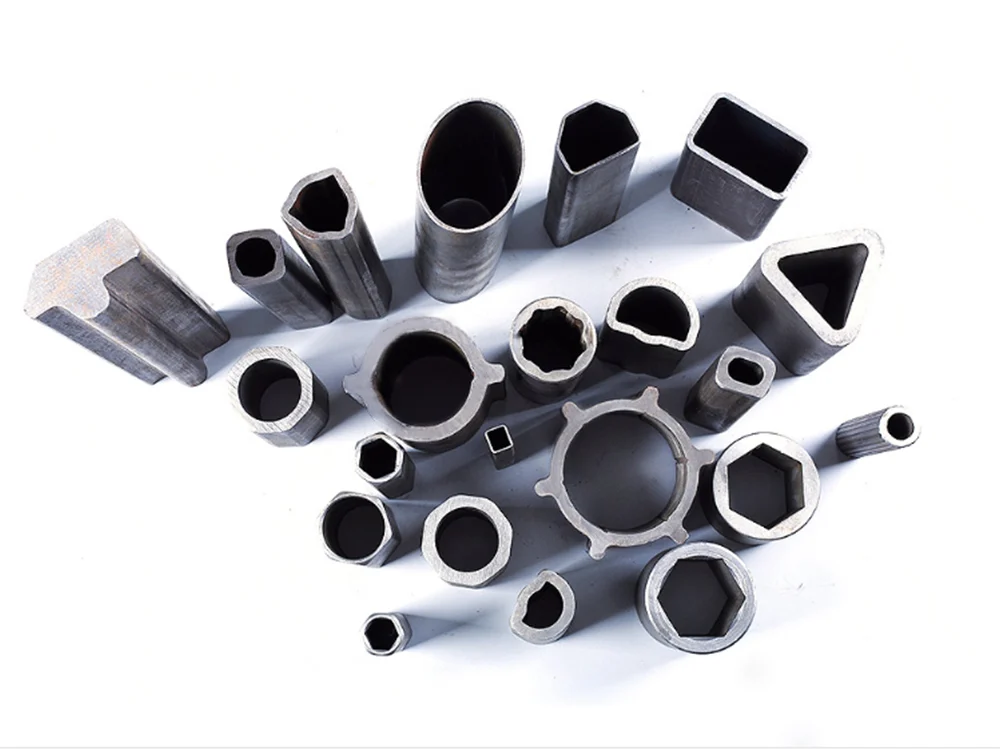
One of the strongest sustainability opportunities in steel tube supply is to use less material without losing performance. Engineers sometimes default to a round tube with a generous machining allowance because it is easy to source. In many applications—hydraulic cylinders, drive shafts, structural links, agricultural machinery—a tailored cold-drawn profile or a tighter wall-thickness control can remove unnecessary metal.
Think of it this way. A 10% reduction in wall thickness, when validated by fatigue testing, reduces the mass by roughly the same proportion. That is less steel melted, less energy moved, and less material shipped. The saving does not come from a magic alloy; it comes from better geometry and tighter dimensional control.
Digital Traceability and Verified Sustainability Claims
Sustainability without traceability is just a story. The more demanding buyers now want the same rigor for carbon data that they already expect for material certificates. For steel tubes, this means linking heat numbers, process records, energy readings, and inspection reports into a single audit trail. It also means avoiding vague statements like “green steel” unless the claim is backed by a defined standard or verified dataset.
The good news is that the tube industry already works with detailed documentation. A mill test report, a heat lot, a surface inspection record, and a PMI result are all traceability tools. Extending that same discipline to carbon and energy data is not a completely new language; it is a broader use of an existing one.
Circular Supply Chains and Take-Back Programs
Steel is infinitely recyclable without losing its core properties [8]. That means an end-of-life tube can return as scrap and become a new tube, beam, or plate. The opportunity for tube buyers is to design for that return loop from the start. This may include specifying compositions that are easier to recycle, avoiding unnecessary coatings that complicate melting, and working with suppliers who can take back clean process scrap.
Circularity also changes the commercial relationship. Instead of buying a finished tube and losing sight of the material, the buyer begins to think of steel as a material pool that circulates through the supply chain. It is a different mental model, but it aligns sustainability with material security.
How Engineers and Procurement Teams Can Act Now
You do not need a complete life-cycle assessment to make better decisions. A useful starting point is to ask three simple questions on your next tube release:
- What process route and recycled content are behind the steel?
- How tight is the dimensional tolerance, and how much machining waste is built into the design?
- Can the supplier show measured energy or carbon data, not just a certificate on the wall?
These questions cost nothing to ask and often separate reliable partners from those who are still running on marketing language.
Stop at the arithmetic first. If you are already collecting supplier carbon data, check three numbers before you compare: finished tube mass, material yield, and energy route. For a direct review of how these factors affect your precision tube specification, email Sunny@tenjan.com or WhatsApp +86 13401309791 with your grade, standard, and annual volume.
How Precision Tube Manufacturers Are Responding
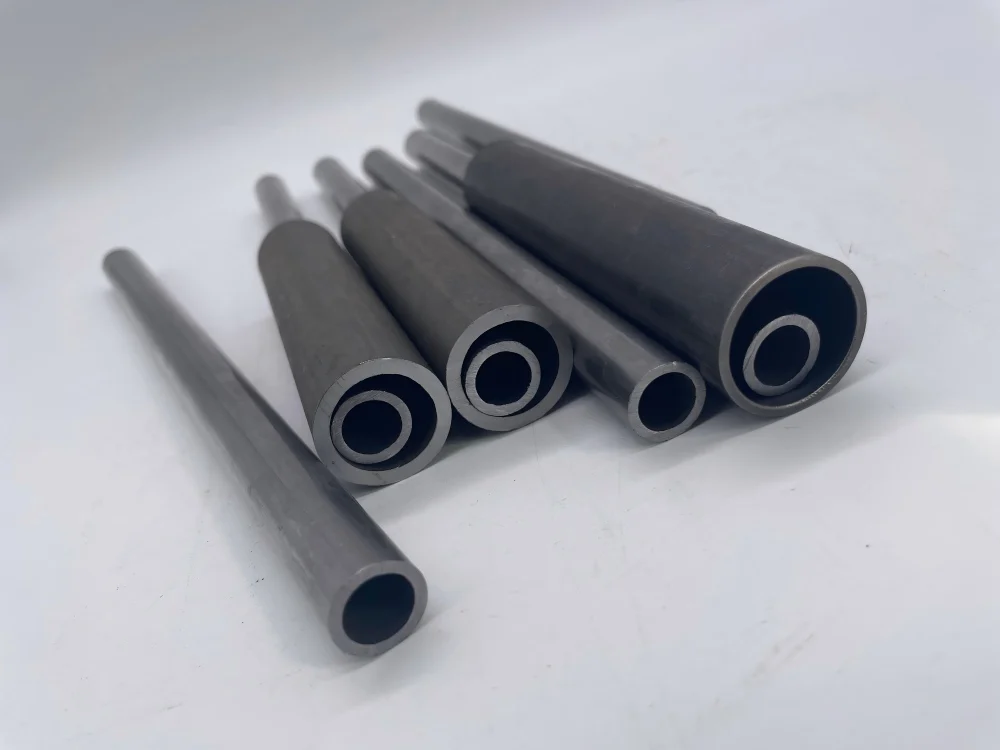
Manufacturers that take this seriously tend to focus on process control rather than wishful thinking. One practical example is the move toward tighter incoming material control. If the incoming hollow or bar stock is closer to the final size, the tube maker needs fewer drawing passes and less intermediate treatment. That cuts energy, reduces scrap, and improves delivery stability.
Another response is closer collaboration with the customer at the design stage. In one mobile machinery project, a standard round tube was replaced with a customized cold-drawn profile and a tighter straightness tolerance. The redesign removed a subsequent machining step and reduced the total assembly mass. The winning idea was not a new steel grade; it was a better match between geometry, process capability, and end use.
This is where the engineer’s instinct for optimization overlaps with sustainability. The best carbon reduction often comes from not producing waste in the first place.
Material route and residual chemistry shape both the carbon footprint and the cold-workability of a precision tube. <Carbon Steel vs Alloy Steel Tubes> covers how composition, strength, and sourcing choices interact for engineering applications.
The Future of Sustainable Steel Tubes
The next decade will push the steel tube industry further toward low-carbon melting, digital energy management, and product-level environmental data. Hydrogen-based direct reduced iron and carbon capture on primary steel are promising but still scaling [6]. Scrap-based electric steel will continue to improve as sorting technology becomes more automated. For precision tube producers, the more immediate wins will come from smarter scheduling, tighter tolerances, fewer lost heats, and verified traceability.
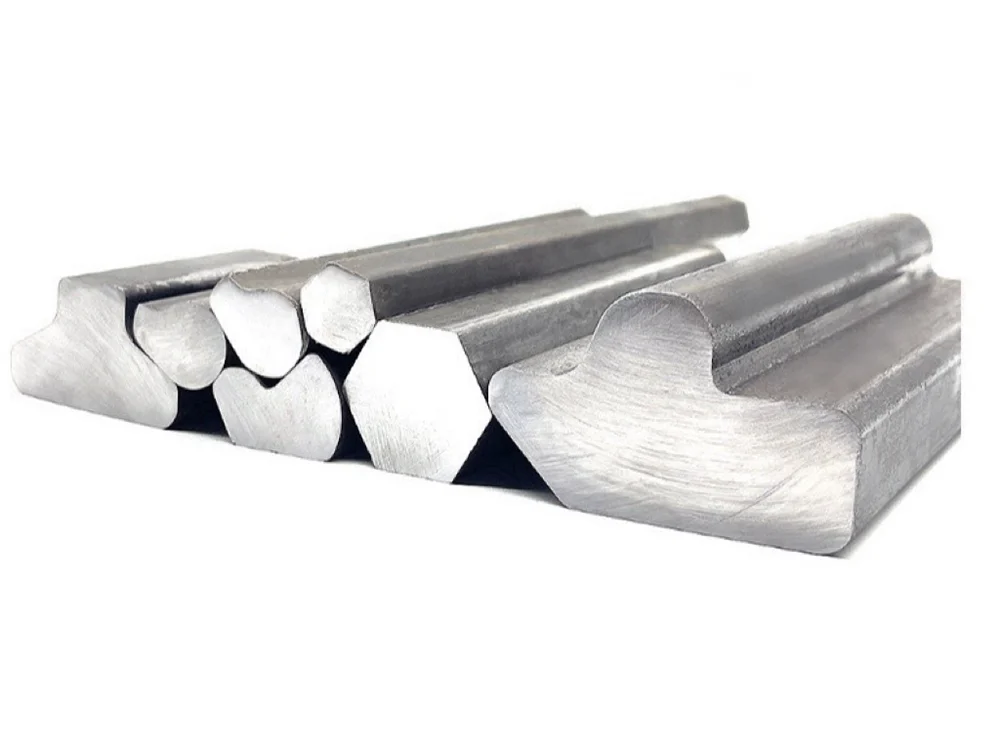
The product may look the same to the naked eye. A steel tube will still be round, square, or shaped; it will still have an outer diameter and a wall thickness. But the information attached to that tube will become much thicker. Engineers will increasingly expect to know where the steel came from, how it was melted, how it was drawn, and how its carbon and energy numbers were measured.
That is not bad news for the industry. It is a chance to turn a commodity into a more accountable, better-engineered product. The producers and buyers who learn to manage both metallurgy and carbon data will be the ones who win the next generation of OEM projects.
Plan Your Next Tube Order Around Verifiable Performance
When you are ready to move from general sustainability claims to mill-level data, send the following to Sunny@tenjan.com or WhatsApp +86 13401309791:
- Target grade and product standard, such as EN 10305-1, ASTM A519, DIN 2391, or JIS G3445.
- Outer diameter, wall thickness, tolerance, and required length.
- Annual or project volume and delivery window.
- Any scope 3 carbon reporting, recycled-content, or audit requirement.
- The application and critical performance values, such as pressure, fatigue, or machining allowance.
A trained technical team can then check the material route, dimensional control, and documentation package before you commit to a supplier.
FAQ
Is steel tube production really that carbon-intensive?
It depends on the process route. Blast furnace–basic oxygen furnace steel is significantly more carbon-intensive than scrap-based electric arc furnace steel [1][2]. In precision tube production, the subsequent cold drawing, heat treatment, and finishing steps add further energy, so the total footprint per kilogram is usually higher than many buyers expect.
Does using recycled scrap lower the quality of precision tubes?
Not automatically. Steel is infinitely recyclable without losing its fundamental properties [8]. The risk is not recycling itself but poor scrap sorting and uncontrolled residual elements. With proper melt control and chemistry verification, recycled-content steel can meet precision tube specifications.
What is the difference between EAF and BF-BOF steel for tube buyers?
The electric arc furnace route typically uses scrap and emits far less CO2 per tonne, while the blast furnace route relies more on iron ore and coal [1][2]. For many carbon and alloy steel tube applications, EAF-based steel can be a practical sustainability improvement if the grade and final properties are verified.
Which certifications should a sustainable tube supplier have?
Look for ISO 14001 for environmental management and ISO 50001 for energy management, along with product-specific standards such as EN 10305-1 or ASTM A519 [4][7]. The most important evidence is not the certificate alone but whether the supplier can connect its energy and material data to your specific order.
Can lightweight tube design actually reduce total cost?
Yes, in many applications. Reducing wall thickness or moving to a near-net-shape profile lowers material mass, machining waste, and transport cost. The saving only works when fatigue life, pressure capacity, and mechanical behavior remain validated for the application.
References
- World Steel Association. “Climate Change and the Production of Iron and Steel.” 2021. https://worldsteel.org/climate-action
- International Energy Agency. “Iron and Steel Technology Roadmap.” 2020. https://www.iea.org/reports/iron-and-steel-technology-roadmap
- European Commission. “Regulation (EU) 2023/956 Establishing a Carbon Border Adjustment Mechanism.” Official Journal of the European Union, 2023.
- ISO 14001:2015. “Environmental Management Systems — Requirements with Guidance for Use.” ISO, 2015.
- World Steel Association. “Steel Statistical Yearbook 2024.” 2024. https://worldsteel.org/steel-topics/statistics/
- International Energy Agency. “Achieving Net Zero Heavy Industry Sectors in G7 Members.” 2024. https://www.iea.org/reports/achieving-net-zero-heavy-industry-sectors-in-g7-members
- ISO 50001:2018. “Energy Management Systems — Requirements with Guidance for Use.” ISO, 2018.
- World Steel Association. “Steel and the Circular Economy.” 2023. https://worldsteel.org/steel-topics/steel-and-circular-economy/
- European Steel Association (EUROFER). “Low Carbon Roadmap for European Steel.” 2023. https://www.eurofer.eu/publications/reports
- ASTM International. “A519 Standard Specification for Seamless Carbon and Alloy Steel Mechanical Tubing.” 2018. https://www.astm.org/a0519-06r12.html
If you’re interested, check out these related articles:
Steel Tubes for Engineering Applications: Precision, Standards, and Selection
Steel Pipe Corrosion Protection Methods for Precision Tube
DIN 2448 Seamless Steel Pipe: Sizing, Weights and Ordering