How Global Trade Policies Are Reshaping the Steel Tube Market
Steel tube buyers used to compare price, tolerance, and delivery. Today the same order also carries a policy file: which HS code applies, whether the material is inside or outside an EU safeguard quota, what origin…

Steel tube buyers used to compare price, tolerance, and delivery. Today the same order also carries a policy file: which HS code applies, whether the material is inside or outside an EU safeguard quota, what origin evidence the customs broker needs, and whether the mill can share carbon-emissions data. Global trade policy has moved from background news to a direct cost, lead-time, and documentation variable.
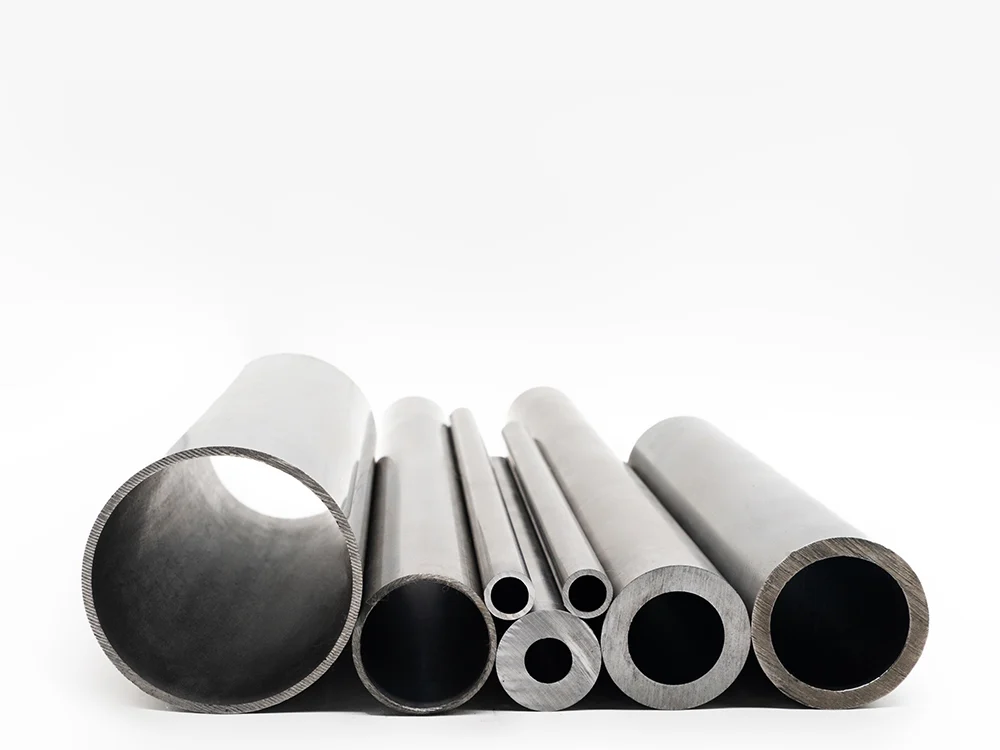
China still produces roughly 55% of the world’s crude steel, according to World Steel Association data [1], so any policy aimed at steel quickly reaches the tube, pipe, and hollow-section supply chain. The result is a market where two identical-looking tubes can face different duty treatment depending on alloy content, weld form, process route, and country of origin.
The Policy Tools Acting on Steel Tube Trade
Trade policy sounds abstract until it lands on a purchase order. Four tool groups matter most for steel tube procurement.
| Policy tool | How it works | Steel tube exposure |
|---|---|---|
| Section 232 tariff | 25% U.S. tariff on broad steel product categories [2] | Seamless and welded mechanical, structural, and line-pipe products |
| EU safeguard measure | Tariff-rate quota with a 25% out-of-quota duty across 26 steel product categories [3] | Many tube and pipe categories in HS Chapter 73 |
| Anti-dumping and countervailing duties | Country-specific duties after investigations under WTO trade-remedy rules [4] | Commodity tube categories, especially from high-capacity producers |
| Carbon Border Adjustment Mechanism | Carbon reporting and a scheduled cost obligation on covered imports [5] | EU imports of iron and steel products, including many tube categories |
Each tool pulls the market in a slightly different direction. A Section 232 tariff is broad and origin-focused. An anti-dumping duty is product- and country-specific. An EU safeguard is quota-based, which means the cost pressure can change quickly once a quota period fills. CBAM is not yet a classic tariff, but it is already changing the documentation burden for European imports.
Why the Same Duty Affects Two Tubes Differently
HS classification is not a formality. Seamless tube often falls under heading 7304, while welded tube generally falls under heading 7306; alloy content, section shape, and end finish can move a product among subheadings. A classification error can be more expensive than the difference between two steel grades.
Alloy differentiation is one practical lever. A plain carbon steel mechanical tube and a 4130 chromium-molybdenum tube can be coded under different categories, and trade-remedy duties often target broad non-alloy categories rather than niche alloy specifications. Buyers should not assume that a single commercial invoice fits an entire shipment. Item-level classification is the audit trail.
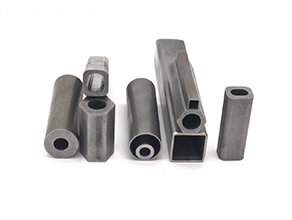
When tariff classification collides with material specifications, anchoring the inquiry to a standard is the cleanest way to control scope. Understanding ASTM, EN, DIN and JIS Tube Standards covers what each designation means for inspection, traceability, and cross-border acceptance.
A tariff is the strictest spec you will never see on a mill test certificate. It does not care about weld penetration or surface finish, but it applies with absolute precision to the declared classification.
Compliance Moves From the Back Office to the Border
Documentation is now a survival skill. For most cross-border shipments, the package includes a commercial invoice with tariff classification, a certificate of origin, a mill test certificate such as EN 10204 3.1, standards declarations against ASTM, EN, DIN, or JIS, and importer security or entry documentation where required. The same policy that imposes a duty also tends to increase inspection rates.
Manufacturers with traceable heat numbers and structured test documentation adapt faster because much of the compliance story already exists in the quality system. A buyer who can ask for lot-level traceability and receive it quickly is in a stronger position than one negotiating price first and discovering documentation gaps later.
Trade-policy reviews usually become certification and traceability reviews before they become engineering reviews. How to Verify ISO Certification for Steel Tube Manufacturers covers the audit evidence and document checks that keep border and procurement reviews from turning into delivery delays.
Ask one question before you negotiate price: can the mill issue an EN 10204 3.1 certificate and trace each lot to its heat number? If the answer is a vague “we are certified,” ask for the certificate scope.
Sourcing Response: Diversification, Standards Discipline, and Buffer
Trade policy rarely removes demand; it redirects it. Buyers under tariff pressure respond with supplier diversification, standards rationalization, and larger safety stocks. The temptation is to switch origins purely on unit price. The better response is to switch to supply chains with clear origin records.
Consider a European hydraulic equipment builder that had sourced drawn-over-mandrel tube from a single Central European mill. When safeguard quota uncertainty appeared, the builder added an approved alternative supplier in Asia. The first order took longer, not because of production, but because incoming inspection had to align two standards frameworks and verify origin documentation from scratch. Once the dual-source approval was documented, the buyer stopped treating tariff risk as an emergency and started treating it as a procurement constraint that could be planned like a tolerance stack-up.
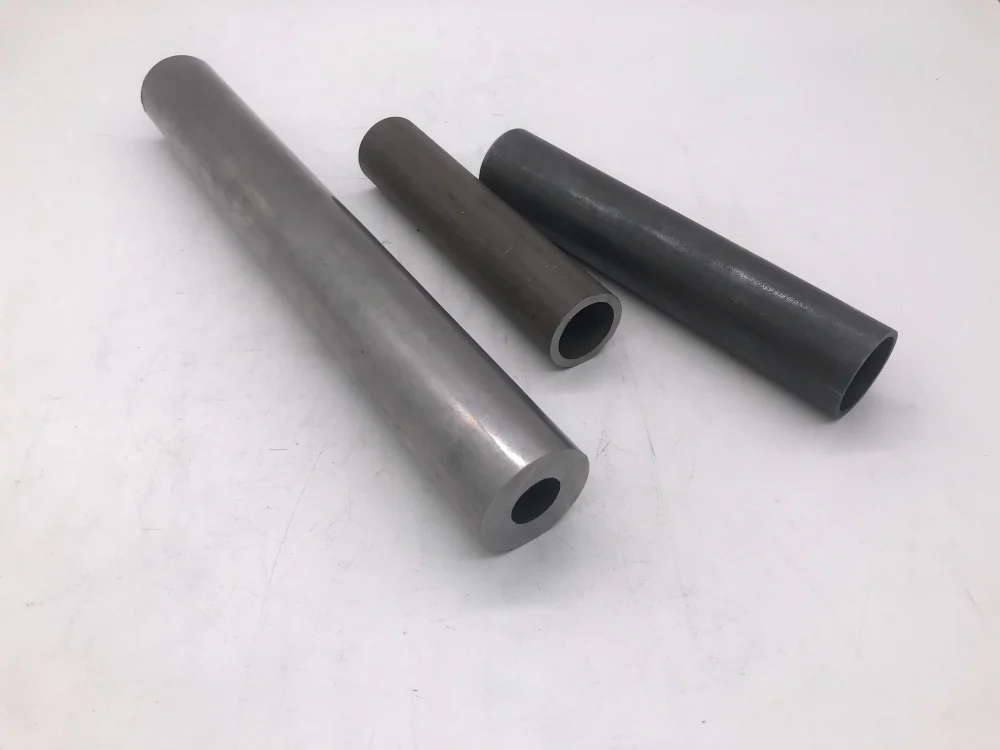
Supplier selection is where trade risk and engineering requirements meet. How to Choose a Steel Tube Supplier for Your Next Project covers the capacity, documentation, and communication checks that matter most in a shifting trade environment.
A practical starting point
If your current supplier review is driven by tariff classification or quota risk, the fastest way around the problem is to work from the drawing and the destination country backward. Send the product scope to Sunny@tenjan.com, and the Tenjan team will confirm the material, standard, and documentation route before pricing.
Carbon Policy Is the Next Tariff
The EU Carbon Border Adjustment Mechanism entered transitional reporting in October 2023 and is scheduled to move to definitive payment from January 2026 [5]. Steel is among the first sectors covered, which means the environmental data trail now travels beside the mill test certificate.
For tube buyers, this is not primarily a chemistry problem; it is a data-handling problem. The supplier that can document scrap mix, electricity carbon intensity, and process yield has a practical advantage, even for buyers whose current shipments are not yet directly covered. Product-level carbon data is becoming part of the same procurement file as dimensional tolerance and material certification.
What to Watch Over the Next 24 Months
Several signals will separate resilient tube supply chains from reactive ones:
- Safeguard extensions and quota reviews — EU and other safeguard measures are reviewed on fixed schedules, and quota availability can shift mid-year.
- Tighter origin scrutiny — customs authorities are paying more attention to value-added rules and genuine transformation claims.
- CBAM verification — importers will need supplier-level emissions data that survives audit, not just a headline carbon number.
- Standards convergence — cross-border projects increasingly demand one supplier that can work across ASTM, EN, DIN, and JIS frameworks without re-documenting the same lot.
Turn Trade Risk Into a Clear Sourcing Specification
If your next project sits at the intersection of tariffs, standards, and delivery risk, Tenjan can help turn the policy question into a practical tube specification. The company supplies precision seamless and welded tube to ASTM, EN, DIN, and JIS standards, with full-process traceability and EN 10204 3.1 documentation.
Email: Sunny@tenjan.com
Tel: +86 519 8878 9990
WhatsApp: +86 134 0130 9791
Frequently Asked Questions
How do tariffs reach the final steel tube price?
Tariffs are paid by the importer of record and become part of landed cost. That cost then passes through margin, stocking, and distribution layers before it appears on the buyer’s quote. The exact pass-through depends on the product’s price sensitivity and whether alternative origins are available.
Are seamless and welded tubes treated differently by trade policy?
Yes in many cases. Seamless tube often falls under HS heading 7304, while welded tube generally falls under 7306, and duties, quotas, and investigations can differ between those product families. Alloy content and end use can create further classification differences.
Which documents help prove origin and compliance?
The most important documents are a commercial invoice with correct tariff classification, a certificate of origin, an EN 10204 3.1 mill test certificate, standards declarations, and any product-level carbon data required by the destination market.
What is the difference between a safeguard and an anti-dumping duty?
A safeguard addresses an import surge and applies more broadly to a product category, often through quotas or tariff-rate quotas. An anti-dumping duty targets products from a specific country after an investigation finds that goods are being sold below normal value and causing injury. Both can apply to steel tube trade.
How should a buyer prepare for EU CBAM?
Start by confirming the correct HS classification and collecting embedded-emissions data at the product level. Then require suppliers to provide a documented emissions methodology and batch-level data that can support future verification requests.
References
[1] World Steel Association, World Steel in Figures 2025. [Online]. Available: https://worldsteel.org/data/world-steel-in-figures-2025/
[2] U.S. Department of Commerce, Bureau of Industry and Security, “Section 232 Steel and Aluminum Tariffs.” [Online]. Available: https://www.bis.doc.gov/index.php/232-steel
[3] European Commission, “EU steel safeguard measures.” [Online]. Available: https://trade.ec.europa.eu/access-to-markets/en/content/eu-steel-safeguard-measures
[4] World Trade Organization, “Anti-dumping, subsidies, safeguards: contingencies, etc.” [Online]. Available: https://www.wto.org/english/tratop_e/adp_e/adp_e.htm
[5] European Commission, “Carbon Border Adjustment Mechanism.” [Online]. Available: https://taxation-customs.ec.europa.eu/carbon-border-adjustment-mechanism_en
If you’re interested, check out these related articles:
Seamless vs ERW Pipe: Which Is Right for Your Project?
DIN 1629 Steel Pipe: Grades, Dimensions, and Sourcing
How to Choose the Right Seamless Steel Tube
ASTM A106 vs A53 Pipe: Choosing by Pressure and Temperature
Cold Drawn vs Cold Rolled Steel Tubes