Welcome to Changzhou Tenjan Steel Tube Co., Ltd
Sunny@tenjan.com



Working with automotive steel tubes for years teaches you something: the difference between a good component and a great one often comes down to details invisible to the naked eye. Grain structure, wall uniformity, surface finish—these factors determine whether a tube survives a decade of vibration and stress or fails prematurely. The automotive industry leaves no room for “good enough” when lives depend on structural integrity.
Steel tubes carry weight that their appearance never suggests. In a collision, the chassis tubes absorb impact energy through controlled deformation, buying milliseconds that protect occupants. High-strength low-alloy steel (HSLA) has become the material of choice for safety cages and structural frames because it combines formability during manufacturing with exceptional strength in service. The tubes must handle constant vibration, temperature swings, and stress cycles for 15 years or more without developing fatigue cracks.
Exhaust systems present a different challenge entirely. Temperatures exceeding 600°C combined with corrosive combustion gases attack metal from the inside out. Corrosion resistance here depends on alloy composition—typically stainless grades or aluminized coatings that form protective barriers. Brake lines and fuel lines demand something else again: absolute pressure integrity with zero tolerance for leaks. A single pinhole in a brake line can mean the difference between stopping and not stopping.
The push for lighter vehicles never lets up. Every kilogram removed from the chassis improves fuel efficiency and reduces emissions. Engineers balance this against safety requirements, which is why precision steel tubes matter so much—they deliver strength where it’s needed without excess material where it isn’t.
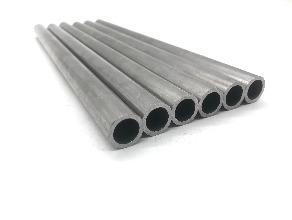
The cold drawing process does something remarkable to steel. Pulling a tube through a die at room temperature compresses and realigns the grain structure, creating a denser, stronger material than the original. Tensile strength increases. Yield strength climbs. Surface finish improves to levels that hot-formed tubes simply cannot match.
Cold drawn seamless tubes like ST35 Seamless Pipe or 1035 Seamless Pipe excel in high-pressure applications. Without a weld seam, there’s no weak point where failure might initiate under cyclic loading. Cold drawn welded tubes serve applications where the cost savings matter and the stress levels permit—after drawing, the weld zone properties often approach those of the parent metal.
Custom profiles open design possibilities that round tubes cannot. Square, rectangular, hexagonal, and more complex geometries allow engineers to optimize space utilization within tight packaging constraints. Hydroforming automotive components takes this further, using internal fluid pressure to expand precision tubes into complex shapes that would require multiple stamped parts otherwise. The result: lighter assemblies with fewer welds and better structural efficiency.
Material selection determines everything downstream. Carbon steels like 1020 Steel Pipe and S45C Steel Tubes offer good weldability and machinability for components where extreme strength isn’t the primary requirement. They machine cleanly, weld predictably, and cost less than alloy grades.
When loads increase, alloy steels step in. 4140 Steel Pipe contains chromium and molybdenum that enable through-hardening and provide fatigue resistance that carbon steels cannot match. Axles, crankshafts, and transmission components routinely specify this grade. 25CrMo4 Steel Pipe handles high-temperature applications where other steels would soften and creep.
HSLA grades like Q355B Steel Pipe bridge the gap between structural steels and full alloy grades. They deliver higher strength than plain carbon steel while maintaining weldability—critical for chassis fabrication where hundreds of welds join tubes into complete structures. S355JR Steel Pipe and STKM13A Steel Tubes meet international specifications that automotive OEMs require for global platforms.
| Steel Grade | Material Type | Key Properties | Typical Automotive Application |
|---|---|---|---|
| 4140 | Alloy Steel | High strength, toughness, wear resistance | Axles, crankshafts, gears |
| 25CrMo4 | Alloy Steel | High hardenability, high-temperature strength | Engine components, transmission parts |
| Q355B | HSLA Steel | High strength, weldability | Chassis, structural frames |
| S45C | Carbon Steel | Good mechanical properties, machinability | General fasteners, shafts |
| ST52 | Structural Steel | High strength, excellent weldability | Hydraulic cylinders, structural supports |
A single material mix-up can cascade into a recall affecting thousands of vehicles. Positive Material Identification (PMI) testing catches these errors at the source, verifying chemical composition against specifications before tubes enter production. The handheld XRF analyzer takes seconds to confirm that the 4140 is actually 4140, not a similar-looking grade with different properties.
Non-Destructive Testing (NDT) finds what visual inspection cannot see. Eddy current testing detects surface cracks and seams. Ultrasonic inspection reveals internal voids and inclusions. Magnetic particle testing highlights surface discontinuities in ferromagnetic materials. These methods examine every tube without destroying it, ensuring that only sound material ships to customers.
ISO certification—including ISO 9001—provides the framework that makes consistent quality possible. Documented procedures, controlled processes, and regular audits create accountability at every step. Material traceability links each tube back to its heat of steel, its processing history, and its inspection records. When a customer asks about a specific lot shipped three years ago, the records exist to answer.
Battery electric vehicles weigh more than their combustion counterparts, primarily due to battery mass. This makes lightweighting elsewhere even more critical for achieving acceptable range. Thinner-walled tubes with higher-strength steels help offset battery weight while maintaining crash performance.
Battery thermal management systems rely on precision steel tubing to circulate coolant around cell modules. Temperature uniformity across the pack affects both performance and longevity—hot spots accelerate degradation. The tubes must handle ethylene glycol-based coolants, resist corrosion, and maintain dimensional stability across temperature cycles from -30°C to +60°C.
New vehicle architectures for EVs and autonomous platforms integrate structural functions differently than traditional body-on-frame or unibody designs. Skateboard platforms place batteries low in the chassis, requiring new structural tube configurations. Hydroforming creates complex integrated components that reduce part count and assembly complexity while improving structural efficiency.
Vertical integration changes the supplier relationship fundamentally. When one company controls steel sourcing, tube forming, cold drawing, heat treatment, and finishing, problems get solved faster. There’s no finger-pointing between suppliers when an issue arises—one team owns the entire process and the solution.
Custom shaped steel tubes—including Special-Shaped Alloy Steel Tubes and Special-Shaped Carbon Steel Tubes—enable designs that standard catalog products cannot support. Complex geometries that integrate mounting features, optimize load paths, or fit unusual packaging constraints require close collaboration between OEM engineers and tube manufacturers. The conversation starts with application requirements and works backward to tube specifications.
Global automotive programs demand suppliers who can deliver consistent quality across multiple plants and time zones. Technical support, documentation in multiple languages, and logistics capabilities matter as much as the tubes themselves.
Seamless steel tubes in chrome-moly alloy grades handle high-pressure applications most reliably. The absence of a weld seam eliminates the most likely failure initiation point under cyclic pressure loading. Cold drawing improves both strength and dimensional precision—critical when tubes must seal against fittings at pressures exceeding 200 bar. Hydraulic brake lines, fuel injection systems, and power steering circuits typically specify seamless tubes meeting ASTM A519 or EN 10305 standards.
Multiple verification layers work together. ISO certification establishes the quality management framework. PMI testing confirms material chemistry matches specifications. Dimensional inspection verifies wall thickness, outer diameter, and straightness against tolerances. NDT methods—eddy current, ultrasonic, and magnetic particle testing—detect internal and surface defects that could cause failures in service. Documentation traces each tube back to its raw material source and processing history.
Weight reduction drives most EV tubing innovation. Higher-strength steels enable thinner walls without sacrificing crash performance. Battery cooling systems require tubes with precise internal dimensions and excellent corrosion resistance for coolant compatibility. Hydroforming creates complex structural components that integrate multiple functions into single parts, reducing weight and assembly complexity. Some manufacturers are exploring steel-composite hybrid tubes that combine steel’s strength with composite weight savings.
For over two decades, Changzhou Tenjan Steel Tube Co.,Ltd has been at the forefront of precision steel tubing, delivering vertically integrated manufacturing excellence for the automotive industry. From seamless and cold-drawn profiles to custom-shaped tubes compliant with global standards, our ISO-certified processes and rigorous NDT/PMI inspections ensure unparalleled material integrity and performance. Partner with us to engineer the future of automotive components. Contact Tenjan Steel Tube today for tailored solutions that meet your most demanding specifications. Email: Sunny@tenjan.com | Tel:+86 51988789990 | Phone/WhatsApp:+86 13401309791| Tel:+86 51988789990 | Phone/WhatsApp:+86 13401309791


Home Product Capabilities Case Studies Blogs About Get a Quote
Pipe & Tube Manufacturing Process Shapes & Profiles Pipes & Tubes Material Standard Steel Pipes & Tube Rebar Couplers Cold Drawn Steel Profiles & Bars
Oil & Petrochemical Industry Automotive & Motorcycle Components Mechanical Engineering Components Mining Construction Support Structures High-Pressure Boiler System Construction Machinery Geological Drilling Agricultural Machinery Parts Industrial Fluid Transfer Systems


© 2024 Changzhou Tenjan Steel Tube Co., Ltd All rights reserved. Privacy StatementTerms-ConditionsSitemap
