Welcome to Changzhou Tenjan Steel Tube Co., Ltd
Sunny@tenjan.com



Steel pipes in oil and gas operations face conditions that would destroy most industrial materials within months. The combination of hydrogen sulfide exposure, extreme pressure differentials, and temperature swings from -40°C to over 200°C creates a testing environment where material failures can mean environmental disasters and loss of life. After two decades of manufacturing precision tubing for this sector, the patterns become clear: the pipes that survive long-term share specific metallurgical characteristics and manufacturing processes that cannot be shortcut.
Selecting steel pipes for oil and gas projects follows strict international standards rather than manufacturer preference or cost optimization. These standards—developed through decades of field failures and engineering analysis—dictate material composition, mechanical properties, testing protocols, and manufacturing processes. The reasoning is practical: a pipe that meets API 5L specifications in Texas will perform predictably when installed in a pipeline crossing Kazakhstan. This interoperability prevents the chaos of incompatible materials and unpredictable failure modes.
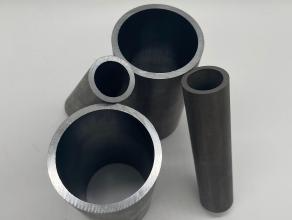
API 5L remains the dominant standard for line pipe used in pipeline transportation systems. The standard covers seamless and welded steel pipes across grades like X42, X52, and X60, where the number indicates minimum yield strength in thousands of psi. An X60 pipe, for example, must demonstrate at least 60,000 psi yield strength before permanent deformation occurs. This yield strength directly determines how much internal pressure the pipeline can safely contain during normal operations and pressure surges. Seamless Pipe&Tube products manufactured to API 5L specifications undergo specific chemical composition controls and mechanical testing to verify these properties.
| Standard | Application Focus | Key Requirements | Typical Materials |
|---|---|---|---|
| API 5L | Line Pipe (Oil/Gas) | Yield Strength, Toughness | Carbon Steel |
| ASTM A106 | High-Temp Service | Pressure, Temperature | Carbon Steel |
| EN 10216-2 | Pressure Purposes | High Temperature | Alloy Steel |
| DIN 2391 | Precision Tubing | Dimensional Accuracy | Carbon/Alloy Steel |
| JIS G3454 | Pressure Piping | High Pressure | Carbon Steel |
Cold drawing fundamentally changes the mechanical behavior of steel tubes through controlled plastic deformation. The process pulls a metal tube through a die at room temperature, reducing both diameter and wall thickness while the material work-hardens. This work-hardening refines the grain structure at the microstructural level, creating smaller, more uniform grains that resist crack propagation more effectively than the original material.
The practical results show up in three measurable ways: dimensional tolerances tighten to ±0.05mm compared to ±0.5mm for hot-finished tubes, tensile strength increases by 15-30% depending on the reduction ratio, and surface roughness drops below Ra 1.6μm. For oil and gas environments where high-pressure fluids flow through tubing for years, these improvements translate directly to longer service life and fewer unplanned shutdowns. cold-drawn welded tube products demonstrate these enhanced properties while offering cost advantages for applications where absolute seamless uniformity is not required.
The seamless versus cold-drawn welded decision depends on specific operating conditions rather than a general quality hierarchy. Seamless steel pipes form from solid billets without any weld seam, providing uniform wall thickness and consistent mechanical properties around the entire circumference. This uniformity matters most in applications involving cyclic pressure loading, where stress concentrations at weld zones could initiate fatigue cracks over thousands of pressure cycles. High pressure boiler tubes and critical hydraulic systems typically specify seamless construction for this reason. Seamless Carbon Steel Tubes serve these demanding applications.
Cold-drawn welded tubes start from welded base material but achieve comparable precision and mechanical properties through the drawing process. The cold work actually strengthens the weld zone, often making it stronger than the base metal. For applications where the operating pressure remains relatively constant and the cost difference between seamless and welded matters to project economics, cold-drawn welded tubes provide excellent performance. Both types appear throughout oil and gas infrastructure, selected based on engineering requirements rather than assumptions about inherent superiority.
Material integrity verification in oil and gas applications requires multiple independent checks because no single test catches every potential defect. A systematic approach addresses different failure modes at different stages of production.
Incoming Material Inspection: Raw materials undergo chemical analysis using optical emission spectrometry to verify alloy composition matches specifications. Mechanical testing on sample pieces confirms yield strength, tensile strength, and elongation values.
In-Process Monitoring: During cold drawing operations, laser micrometers continuously measure outside diameter and wall thickness. Surface inspection systems detect scratches, pits, or inclusions that could become stress concentrators.
Positive Material Identification (PMI): PMI testing steel tubes uses X-ray fluorescence to verify exact alloy composition on finished products, preventing material mix-ups that could put the wrong grade into a critical application.
Non-Destructive Testing (NDT): NDT inspection steel pipes employs ultrasonic testing to detect internal voids and laminations, while eddy current testing identifies surface and near-surface defects. Neither method damages the tested pipe.
Hydrostatic Testing: Each pipe undergoes pressure testing at 1.5 times the rated working pressure, held for a specified duration to confirm leak-free performance.
Final Dimensional Inspection: Coordinate measuring machines verify that finished dimensions fall within specified tolerances before shipping.
This layered approach catches defects that any single test might miss, providing the reliability that oil and gas operations require.
Standard pipe geometries cannot address every engineering challenge in oil and gas projects. Offshore platforms, subsea installations, and specialized processing equipment often require tubing with specific dimensions, shapes, or alloy compositions that do not exist in standard catalogs.
Custom steel tubing solutions address these requirements through modified manufacturing processes. Custom-shaped steel tubes including square, rectangular, and hexagonal profiles serve structural and mechanical applications where round tubes would not fit or function properly. Hexagonal Steel Pipes&Tubes find use in specialized structural supports and mechanical assemblies. Custom alloy steel tubes with modified chromium, molybdenum, or nickel content provide enhanced corrosion resistance for specific chemical environments. Hydraulic tubing for oil rigs operating in highly corrosive environments often requires these tailored compositions. This capability to manufacture to exact specifications rather than forcing designs to accommodate available products makes OEM steel pipe supplier relationships valuable for complex engineering project steel solutions.
Delivery timing affects oil and gas project economics as much as product quality. A drilling rig waiting for tubing costs tens of thousands of dollars per day in standby charges. Pipeline construction crews cannot work ahead when pipe deliveries fall behind schedule.
Vertically integrated manufacturing provides control over the entire production sequence from raw material sourcing through finished product. This integration eliminates dependencies on external suppliers who might prioritize other customers or face their own supply disruptions. Production schedules can adjust to accommodate urgent orders without waiting for upstream suppliers to respond.
Global supply chain capabilities ensure that high-precision steel tubing reaches project sites across different continents with predictable transit times. Supply chain optimization in oil and gas means understanding customs requirements, shipping routes, and local delivery logistics for each destination market. The goal is functioning as a reliable steel pipe supplier that project managers can count on for consistent delivery performance.
Steel pipes for extreme oil and gas environments need high yield strength to contain internal pressure, sufficient toughness to resist brittle fracture at low temperatures, and corrosion resistance appropriate to the specific fluids being transported. Sour gas service containing hydrogen sulfide requires hardness limits and specific heat treatment to prevent sulfide stress cracking. High-temperature service demands creep resistance to prevent gradual deformation under sustained load. Standards like API 5L, ASTM A106, and EN 10216 specify these properties for different operating conditions, with comprehensive testing including NDT and PMI verifying that manufactured pipes actually meet the specifications.
Cold drawing improves high-pressure performance through three mechanisms. The work-hardening effect increases yield strength, allowing thinner walls to contain the same pressure, which reduces weight and material cost. Dimensional precision improves dramatically, with wall thickness variations dropping from ±10% in hot-finished tubes to ±5% or better in cold-drawn products. This uniformity means the thinnest point of the wall still meets design requirements rather than relying on average values. Surface finish improvement reduces friction losses in flowing systems and eliminates surface defects that could initiate fatigue cracks under cyclic pressure loading.
API standards dominate North American oil and gas applications, with API 5L covering line pipe and API 5CT covering casing and tubing for wells. ASTM A106 Gr.B Steel Pipe specifications apply to seamless carbon steel pipe for high-temperature service. European projects typically reference EN 10216 for seamless steel tubes for pressure purposes. DIN standards from Germany and JIS standards from Japan appear in projects involving equipment or engineering from those regions. Most major manufacturers maintain certifications across multiple standard systems, allowing their products to qualify for projects regardless of which regional standard the specification references.
As a vertically integrated manufacturer since 2004, Changzhou Tenjan Steel Tube Co.,Ltd offers unparalleled expertise in precision steel tubing for the oil and gas industry. From seamless and cold-drawn tubes to custom-shaped solutions compliant with ASTM, EN, DIN, and JIS standards, our ISO-certified processes ensure material integrity and reliability. Partner with Tenjan for your next critical project. Contact us today to discuss your specific requirements and benefit from our full process control and global supply capabilities. Email: Sunny@tenjan.com | Tel: +86 51988789990 | WhatsApp: +86 13401309791| Tel: +86 51988789990 | WhatsApp: +86 13401309791


Home Product Capabilities Case Studies Blogs About Get a Quote
Pipe & Tube Manufacturing Process Shapes & Profiles Pipes & Tubes Material Standard Steel Pipes & Tube Rebar Couplers Cold Drawn Steel Profiles & Bars
Oil & Petrochemical Industry Automotive & Motorcycle Components Mechanical Engineering Components Mining Construction Support Structures High-Pressure Boiler System Construction Machinery Geological Drilling Agricultural Machinery Parts Industrial Fluid Transfer Systems


© 2024 Changzhou Tenjan Steel Tube Co., Ltd All rights reserved. Privacy StatementTerms-ConditionsSitemap
