Welcome to Changzhou Tenjan Steel Tube Co., Ltd
Sunny@tenjan.com



Working with steel tubes across different industries teaches you something early: certifications are not paperwork exercises. They are the difference between a tube that performs under pressure and one that fails when conditions get serious. For anyone sourcing tubes for boilers, hydraulic systems, or precision machinery, understanding which standards apply and why they exist is not optional knowledge.
Steel tube standards exist because engineers in different countries need to trust materials they have never personally tested. ASTM, EN, DIN, and JIS each emerged from specific industrial traditions, but they now function as a shared vocabulary for quality expectations.
ASTM standards dominate North American specifications. ASTM A179 Steel Pipe defines requirements for seamless cold-drawn low-carbon tubes used in heat exchangers and condensers. The standard specifies not just dimensions but also the exact testing protocols that verify a tube can handle thermal cycling without degrading.
European EN standards, particularly EN 10216 for seamless tubes and EN 10305 for precision applications, reflect the continent’s emphasis on pressure system safety. These standards emerged partly from historical industrial accidents that demonstrated the cost of inadequate material specifications.
German DIN standards carry a reputation for precision that extends beyond marketing. DIN 2391 Steel Pipe for precision seamless cold-drawn tubes specifies tolerances tight enough for hydraulic systems where even minor dimensional variation causes performance problems.
Japanese JIS standards, including JIS G3445 Steel Pipe for carbon steel mechanical tubing, reflect manufacturing philosophies that prioritize consistency across large production volumes. Asian automotive supply chains rely heavily on these specifications.
| Standard | Primary Focus | Typical Application | Tenjan Product Example |
|---|---|---|---|
| ASTM A179 | Heat Exchangers | Condensers, Boilers | Seamless Cold-Drawn |
| EN 10216 | Seamless Tubes | Pressure Systems | Precision Pipe&Tube |
| DIN 2391 | Precision Tubes | Hydraulic Lines | DIN 2391 Steel Pipe |
| JIS G3445 | Mechanical Tubes | Automotive Parts | JIS G3445 Steel Pipe |
High-pressure applications punish material deficiencies without warning. A tube that looks identical to a certified product but lacks proper composition control might survive initial testing and fail catastrophically months later under cyclic loading. This reality drives the emphasis on material certification for tubes destined for boilers, hydraulic cylinders, and automotive structural components.
The certification process involves two parallel verification tracks. Mechanical properties testing measures tensile strength, yield strength, and elongation. These numbers predict how a tube will behave when stressed. Chemical composition analysis confirms the alloy mix matches specifications. Even small variations in carbon content or alloying elements can shift performance characteristics outside acceptable ranges.
Alloy steel tubes like 4140 Steel Pipe and 25CrMo4 Steel Pipe exist specifically because certain applications need strength and toughness combinations that plain carbon steel cannot provide. The chromium and molybdenum additions in these grades improve hardenability and high-temperature performance, but only when the composition falls within specified ranges.
Material Test Reports document this verification. They trace a tube back to its original heat, recording the chemical analysis and mechanical test results that prove compliance. For automotive steel tube requirements and boiler tube certifications, these documents are not optional extras. They are the evidence that a tube meets the standard it claims to meet.
Seamless steel tubes typically carry certifications tied to their intended service. ASTM A106 Gr.B Steel Pipe covers high-temperature applications common in power generation and refining. EN 10216-1 addresses non-alloy steel tubes for pressure purposes across European markets. API 5L governs pipeline applications where long-term integrity under continuous pressure matters. Each certification reflects testing protocols designed for specific failure modes.
ISO 9001 certification establishes the framework for consistent manufacturing, but the real quality assurance happens through specific inspection protocols applied at multiple production stages.
Positive Material Identification uses portable spectrometers to verify alloy composition directly on the material. This catches mix-ups that could send the wrong grade to a critical application. The technology works by analyzing the characteristic X-ray fluorescence of different elements, providing composition data in minutes rather than days.
Non-destructive testing methods detect flaws that visual inspection misses. Ultrasonic testing sends sound waves through the tube wall, identifying internal voids or inclusions. Eddy current testing detects surface and near-surface discontinuities by measuring changes in electromagnetic response. Magnetic particle inspection reveals surface cracks in ferromagnetic materials.
These methods matter because cold-drawn and seamless tubes can contain defects introduced during any production stage. A small inclusion in the starting billet might elongate during drawing, creating a weakness that only becomes apparent under stress. Systematic NDT catches these issues before tubes ship.
Third-party inspection adds another verification layer. Independent inspectors apply the same tests using their own equipment and procedures, confirming that internal quality systems produce reliable results.
ISO 9001 matters because it forces manufacturers to document and control their processes. Without systematic quality management, production consistency depends on individual skill and attention. With it, quality becomes embedded in procedures that survive personnel changes and production scaling. The certification also provides customers with a recognized benchmark for evaluating supplier capability.
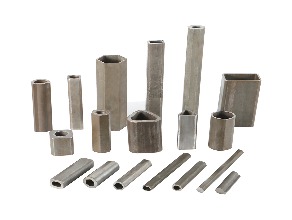
Standard specifications cover common applications, but many engineering projects require tubes that do not exist in catalogs. OEM requirements often specify unique cross-sections, tighter tolerances, or material grades that combine properties from different standard specifications.
Cold drawing enables production of non-circular profiles including square steel tube certification, rectangular steel tubing standards, and Hexagonal Steel Pipes&Tubes. The process starts with round tube and progressively reshapes it through dies, achieving dimensional accuracy that machining from solid stock cannot match economically.
Automotive chassis components frequently require oval or irregular cross-sections optimized for specific load paths and packaging constraints. The certification challenge for these custom shapes involves demonstrating that the forming process does not compromise material properties. Mechanical testing on finished profiles confirms that cold work has not introduced brittleness or residual stresses that could cause problems in service.
Custom steel tube standards development often involves collaboration between manufacturer and customer engineering teams. The goal is defining specifications that capture the essential performance requirements while remaining achievable through controlled manufacturing processes.
Steel tube certification loses meaning if the chain of custody between raw material and finished product contains gaps. A tube certified to a specific standard must trace back to materials that themselves meet documented specifications.
Raw material certification starts with billet suppliers who provide chemical analysis and quality documentation for each heat. Incoming inspection verifies this documentation against actual material properties. Any discrepancy triggers investigation before material enters production.
Process documentation tracks material through each manufacturing stage. Heat treatment records confirm that tubes received the specified thermal cycles. Dimensional inspection results verify that drawing operations achieved target tolerances. This documentation creates the traceability of steel products that customers need for their own quality systems.
Finished product inspection provides final verification. Dimensional checks confirm compliance with geometric specifications. Mechanical testing on sample tubes validates that the production batch meets strength requirements. NDT confirms freedom from defects that could cause service failures.
Material Test Reports compile this information into a single document that accompanies each shipment. The MTR connects the finished tubes to their raw material origins, processing history, and test results.
Global steel tube markets involve regulatory frameworks that vary by destination. A manufacturer supplying multiple regions must understand which certifications and markings each market requires.
European markets often require CE marking for tubes used in pressure equipment. This involves demonstrating compliance with the Pressure Equipment Directive through conformity assessment procedures that vary based on the equipment category and hazard level.
North American markets rely primarily on ASTM standards, with additional requirements depending on the application. Tubes for pressure vessels might need ASME code compliance. Automotive applications involve OEM specifications that reference ASTM grades but add proprietary requirements.
Documentation requirements also vary. Some markets accept manufacturer declarations of conformity. Others require third-party certification or specific test reports formatted according to local conventions. Customs procedures differ in their documentation requirements and inspection protocols.
Staying current with these requirements involves monitoring regulatory changes across multiple jurisdictions. Trade agreements sometimes harmonize standards, while other regulatory developments create new compliance obligations.
Ensure your critical applications are built with certified, high-precision steel tubes. Partner with Changzhou Tenjan Steel Tube Co.,Ltd, your vertically integrated manufacturer since 2004. Contact us today for tailored solutions compliant with ASTM, EN, DIN, and JIS standards, backed by ISO-certified quality and comprehensive NDT inspections. Email Sunny@tenjan.com or call +86 51988789990.
Steel tube certifications verify that materials meet defined performance thresholds before they enter service. For pressure-containing applications, this verification prevents failures that could injure personnel or damage equipment. For structural applications, certifications confirm that tubes will carry design loads without unexpected deformation or fracture. Regulatory frameworks in most industries require certified materials for liability and insurance purposes.
Material Test Reports form the core documentation package. These reports include chemical composition analysis showing the percentages of carbon, manganese, and alloying elements. Mechanical test results cover tensile strength, yield strength, and elongation. Heat treatment records confirm processing conditions. Dimensional inspection results verify compliance with geometric specifications. NDT reports document freedom from internal and surface defects. Third-party inspection certificates may accompany shipments when customers require independent verification.
Changzhou Tenjan Steel Tube Co.,Ltd produces custom-shaped steel tubes and develops certification documentation for non-standard specifications. The process involves defining test protocols that demonstrate compliance with customer requirements, even when those requirements fall outside existing standards. Cold-drawn profiles in custom geometries undergo the same mechanical testing and chemical analysis as standard products. Documentation packages are tailored to customer quality system requirements and regulatory obligations.


Home Product Capabilities Case Studies Blogs About Get a Quote
Pipe & Tube Manufacturing Process Shapes & Profiles Pipes & Tubes Material Standard Steel Pipes & Tube Rebar Couplers Cold Drawn Steel Profiles & Bars
Oil & Petrochemical Industry Automotive & Motorcycle Components Mechanical Engineering Components Mining Construction Support Structures High-Pressure Boiler System Construction Machinery Geological Drilling Agricultural Machinery Parts Industrial Fluid Transfer Systems


© 2024 Changzhou Tenjan Steel Tube Co., Ltd All rights reserved. Privacy StatementTerms-ConditionsSitemap
