Welcome to Changzhou Tenjan Steel Tube Co., Ltd
Sunny@tenjan.com



Choosing between high-pressure and standard pipes isn’t just a technical checkbox—it’s one of those decisions that quietly shapes whether a system runs smoothly for years or becomes a recurring headache. I’ve seen projects where the wrong call on piping led to premature failures that cost far more than the initial savings. The differences between these two categories run deeper than most spec sheets suggest, touching everything from molecular structure to long-term maintenance costs.
High-pressure pipes exist because certain applications simply won’t tolerate compromise. These pipes handle extreme internal and external forces, operating under elevated working pressure that would deform or rupture standard alternatives. Their design centers on robust pressure resistance and system integrity—qualities that matter when failure means more than inconvenience.
Standard pipes serve a different purpose. They handle lower pressure applications where operational stresses stay within comfortable margins. Water supply lines, drainage systems, general construction—these environments don’t demand the same material heroics.
The real distinction comes down to stress management capacity and operational limits. A high-pressure pipe isn’t just a thicker version of a standard one. The engineering philosophy differs from the ground up.
| Characteristic | High-Pressure Pipe | Standard Pipe |
|---|---|---|
| Wall Thickness | Significantly thicker | Thinner |
| Material Strength | High tensile and yield strength alloys | Moderate carbon steel |
| Manufacturing | Seamless, cold-drawn, precise tolerances | Welded or seamless, broader tolerances |
| Working Pressure | Very high (e.g., >200 bar) | Low to moderate (e.g., <100 bar) |
| Applications | Hydraulics, boilers, oil & gas | Water supply, drainage, general construction |
A pipe’s ability to endure high pressure starts at the molecular level. High-pressure pipes rely on specialized alloy steel pipes or high-grade carbon steel pipes—materials selected specifically for their superior tensile strength and yield strength. These properties determine whether a pipe deforms gradually under load or maintains its shape until catastrophic failure.
The alloy content matters more than many engineers initially realize. Chromium-molybdenum combinations, for instance, create a microstructure that resists both mechanical stress and thermal cycling. This isn’t marketing language—it’s metallurgy that translates directly into field performance.
Manufacturing processes amplify these material advantages. Seamless tubes eliminate weld seams that could become failure points under pressure. Cold-drawn profiles produce tighter dimensional tolerances and finer grain structures. At Tenjan Steel Tube, these processes operate under ISO-certified quality control with PMI and NDT inspections verifying that each pipe meets specifications for demanding applications.
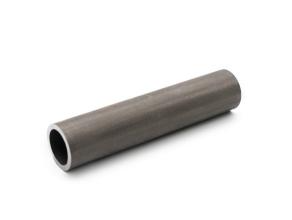
High-pressure pipes demand materials with enhanced mechanical properties—higher carbon or alloy content that delivers superior strength and toughness simultaneously. The manufacturing intensity differs substantially too.
Cold-drawn welded tube and seamless cold drawing processes produce uniform wall thickness throughout the pipe length. This uniformity matters because pressure concentrates at thin spots. A pipe with inconsistent walls might meet average thickness requirements while containing localized weak points.
Standard pipes use more common carbon steel grades and less intensive manufacturing. The resulting products have lower material strength and broader dimensional tolerances—acceptable for their intended applications but inadequate when pressures climb.
Our precision steel tubing reflects these manufacturing standards, with tolerances tight enough to satisfy hydraulic system requirements.
Engineers evaluate pipe performance through burst pressure and fatigue life—metrics that reveal how a pipe will behave over thousands of pressure cycles. High-pressure pipes carry significantly higher burst pressure ratings and extended fatigue life, building in safety factors that protect critical industrial systems.
International standards codify these requirements. ASTM standards, EN standards, DIN standards, and JIS standards each specify material compositions, testing protocols, and design pressure calculations. These aren’t arbitrary bureaucratic requirements—they represent accumulated knowledge about what fails and why.
ASTM A192 Steel Pipe illustrates this specificity. The standard exists because high-pressure boilers present unique challenges that generic pipe specifications don’t address. Tenjan Steel Tube maintains compliance with these global standards, ensuring products meet safety and reliability requirements regardless of destination market.
High-pressure piping incorporates substantially higher pressure ratings and more conservative safety factors. A pipe rated for 300 bar operating pressure might have a burst pressure exceeding 900 bar—a margin that accounts for pressure spikes, material aging, and unforeseen stresses.
Standard pipes operate with lower design pressure limits and less stringent safety factors. This reflects their intended use in environments where occasional overpressure won’t trigger catastrophic consequences.
Non-destructive testing (NDT) becomes routine for high-pressure pipes. Ultrasonic inspection, radiographic examination, and magnetic particle testing detect material flaws invisible to visual inspection—flaws that could initiate cracks under cyclic loading.
Certain industries don’t offer a choice between high-pressure and standard tubing. Automotive tubing, hydraulic systems, high-pressure boilers, and oil and gas pipelines operate under conditions where standard pipes would simply fail.
Consider hydraulic cylinders in construction machinery. These components transmit forces measured in tons through fluid pressure. The pipes connecting them must handle not just static pressure but dynamic loading—sudden pressure spikes when loads shift or operators make rapid control inputs.
Petroleum cracking units add thermal stress to the equation. Pipes must maintain integrity while handling high temperatures and corrosive media simultaneously. Geological drilling operations push these demands even further, with pressures and temperatures increasing as depth grows.
4140 Steel Pipe and 25CrMo4 Steel Pipe address these demanding environments through alloy compositions optimized for combined mechanical and thermal stress.
The decision criteria are straightforward: high operating pressure, extreme temperatures, corrosive environments, or safety-critical systems all point toward high-pressure steel tubing.
Fluid power systems exemplify this logic. Hydraulic fluid under pressure stores enormous energy. A pipe failure doesn’t just leak—it releases that energy violently. The strength, fatigue resistance, and reliability of high-pressure pipes prevent failures that could injure workers or destroy equipment.
High-pressure boilers present similar stakes. Steam under pressure carries both thermal and mechanical energy. Pipe failures in these systems have caused industrial disasters throughout history, driving the development of increasingly stringent standards.
High-pressure pipes cost more upfront than standard alternatives. This price difference tempts some buyers toward false economy—selecting cheaper pipes for applications that demand better.
A comprehensive cost analysis tells a different story. Total cost of ownership often favors high-pressure solutions in demanding applications because of extended service life, reduced maintenance requirements, and dramatically lower failure risk.
Consider what a pipe failure actually costs. Production downtime. Emergency repairs at premium rates. Potential equipment damage. Possible injury claims. Environmental cleanup if hazardous materials escape. Against these possibilities, the premium for high-pressure piping looks modest.
Operational efficiency compounds these savings. Systems designed with appropriate piping run reliably, allowing maintenance to follow planned schedules rather than emergency responses.
Selecting a manufacturer with genuine expertise in high-precision steel tubing determines project outcomes more than most procurement decisions. The difference between adequate and excellent manufacturing shows up years later, in maintenance records and failure rates.
Vertically integrated manufacturers offer advantages that distributed supply chains struggle to match. Full process control—from raw material sourcing through finished product—allows quality verification at every stage. Problems caught early cost less to fix than problems discovered during installation or operation.
Changzhou Tenjan Steel Tube Co.,Ltd. operates this way, specializing in seamless, cold-drawn, and custom-shaped steel tubes tailored to exact specifications. Adherence to global standards including ASTM, EN, DIN, and JIS provides baseline assurance. ISO-certified quality control with PMI and NDT inspections verifies material integrity beyond standard requirements.
Engineering support matters too. Complex projects benefit from manufacturers who can discuss material selection, recommend appropriate grades, and suggest design modifications that improve performance or reduce cost without compromising safety.
For engineering excellence and uncompromised safety in your high-pressure applications, partner with Changzhou Tenjan Steel Tube Co.,Ltd. Since 2004, we have provided vertically integrated manufacturing of precision steel tubing, specializing in seamless, cold-drawn, and custom-shaped tubes compliant with global standards like ASTM, EN, DIN, and JIS. Our ISO-certified quality control, coupled with PMI and NDT inspections, ensures material integrity and tailored solutions for OEMs and complex engineering projects worldwide. Contact our experts today to discuss your specific requirements and discover how our high-performance steel tubes can elevate your project’s reliability and efficiency. Email: Sunny@tenjan.com | Tel: +86 51988789990 | WhatsApp: +86 13401309791| Tel: +86 51988789990 | WhatsApp: +86 13401309791
Several indicators point toward high-pressure requirements: system design pressure exceeding standard pipe limits, operating temperatures that affect material properties, exposure to corrosive media, or applications where failure creates safety hazards. Hydraulics, boilers, and oil & gas systems typically fall into this category. When industry codes mandate specific material grades or testing protocols, that’s another clear signal. Tenjan’s precision steel tubing addresses these demanding specifications through appropriate material selection and manufacturing processes.
Wall thickness directly determines a pipe’s pressure rating and structural integrity. Thicker walls increase burst pressure and resistance to external forces—but the relationship isn’t simply linear. Material properties interact with geometry. A thinner pipe made from superior alloy might outperform a thicker standard steel pipe.
High-pressure pipes combine increased wall thickness with superior materials and precise manufacturing. This combination produces greater safety margins and extended service life. Inconsistent wall thickness—even if average values meet specifications—creates weak points where failures initiate.
This approach creates unacceptable risks. Standard pipes differ from high-pressure alternatives in material composition, manufacturing tolerances, and fundamental design assumptions. These differences can’t be corrected through field modifications.
High-pressure piping requires specific alloy grades selected for strength and toughness. It requires seamless construction or carefully controlled welding. It requires quality verification throughout manufacturing. Attempting to modify standard pipes for high-pressure service ignores these requirements and invites catastrophic failure.
The safer and more reliable path is specifying purpose-built high-pressure steel tubing from manufacturers like Tenjan Steel Tube who understand the engineering requirements and maintain appropriate quality systems.


Home Product Capabilities Case Studies Blogs About Get a Quote
Pipe & Tube Manufacturing Process Shapes & Profiles Pipes & Tubes Material Standard Steel Pipes & Tube Rebar Couplers Cold Drawn Steel Profiles & Bars
Oil & Petrochemical Industry Automotive & Motorcycle Components Mechanical Engineering Components Mining Construction Support Structures High-Pressure Boiler System Construction Machinery Geological Drilling Agricultural Machinery Parts Industrial Fluid Transfer Systems


© 2024 Changzhou Tenjan Steel Tube Co., Ltd All rights reserved. Privacy StatementTerms-ConditionsSitemap
