Welcome to Changzhou Tenjan Steel Tube Co., Ltd
Sunny@tenjan.com



When a hydraulic cylinder manufacturer tosses a batch of tube because the ID wandered by 0.05 mm, the problem wasn’t the steel—it was the specification. Mechanical steel tubing forms the skeleton of actuators, linkages, and structural joints in agricultural gear, high-pressure boilers, and injection molding machines. The difference between a trouble-free assembly and a field failure often comes down to a few cents per meter and a fraction of a millimeter. I’ve spent twenty years in precision tube manufacturing, and I can tell you: picking the right grade, process, and tolerance isn’t a formality—it’s the core of mechanical design. This guide walks through the selection decisions that define performance, from material trade-offs to supplier quality checks.
Think of mechanical tubing as the high-precision cousin of standard pipe—made to slide, rotate, or bear load with minimal play in machined assemblies. Unlike structural tubing, which carries building loads, mechanical tubing is engineered for components like shafts, bushings, hydraulic cylinder bodies, and bearing housings where dimensional accuracy and consistent mechanical properties matter more than raw tonnage. ASTM A519 defines the baseline for carbon and alloy steel mechanical tubing in North America, while EN 10305‑1 and DIN 2391 cover the European equivalent.
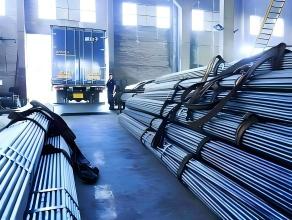
The range of applications is broad: automotive suspension links, motorcycle fork tubes, hydraulic manifolds, agricultural implement pivots, and pneumatic cylinder bodies all depend on precise inner and outer diameters. For off‑highway machinery, mechanical tubing often bridges the gap between standard structural hollows and expensive machined‑from‑solid parts—giving design engineers a cost‑effective way to hit tight fit tolerances.
Mechanical tubing comes in three main process families, each with its own cost‑tolerance‑performance footprint.
Seamless cold‑drawn starts as a hot‑rolled hollow that is pierced and then cold drawn through a die, refining grain structure and boosting yield strength. It offers the most homogeneous wall and the best fatigue resistance, making it the default for high‑pressure hydraulic cylinders and aerospace‑type components.
DOM (drawn over mandrel) uses welded tube as the starting stock; it is drawn over a mandrel to improve inner surface finish and bring the ID to precise dimensions. The result is often indistinguishable from seamless in many mechanical applications but at a lower base cost.
Cold‑drawn welded tube is welded tube that gets a single cold‑drawing pass. It tightens tolerances dramatically over hot‑formed tube and suits non‑critical mechanical parts like spacers, bushings, and structural sleeves.
A quick comparison helps match process to use:
| Process | Typical Wall Tolerance | Inner Surface Finish | Relative Cost | Best For |
|---|---|---|---|---|
| Seamless cold‑drawn | ±0.1 mm achievable | Good as‑drawn, can be honed | Higher | High‑pressure hydraulics, fatigue‑prone parts |
| DOM | ±0.08–0.15 mm | Excellent, smooth | Moderate | Cylinder tubes, precision rollers |
| Cold‑drawn welded | ±0.1‑0.2 mm | Fair, may need pickling | Lower | Structural sleeves, spacers, low‑pressure housings |
I’ve seen European construction machinery OEMs switch from seamless to DOM for non‑structural pivot bushings and save 12‑15% on material cost without a single dimensional rejection. The key is knowing where the specification can afford a weld seam.
Choosing a steel grade is like picking the right tool for a job—an oversized wrench can work, but it wastes energy and money. Mechanical tubing comes in carbon and alloy steels, each with a clear performance envelope.
Carbon grades like 1020, 1026, ST52, E355, and S45C cover the majority of general‑purpose applications. 1020 is extremely formable and weldable but tops out around 350 MPa yield; it’s a solid choice for agricultural bushings and spacers that see static load. 1026 bumps yield into the 450‑500 MPa range while retaining decent machinability. ST52 and E355 are the workhorses of European hydraulic cylinders—good strength, good weldability, no drama.
Alloy grades such as 4130, 4140, 25CrMo4, and 34MnB5 push strength well past 700 MPa after heat treatment, at the cost of weldability and machinability. 4130 finds a home in aerospace control rods and motorsport suspension where failure is not an option. I’ve watched a program default to 1020 for a splined shaft only to find dimensions creeping after machining because the yield strength simply couldn’t hold the feature—stepping up to 1026 eliminated rework completely.
| Grade | Typical Yield (MPa, cold‑drawn) | Machinability | Weldability | Relative Cost |
|---|---|---|---|---|
| 1020 | 350‑380 | Excellent | Excellent | Low |
| 1026 / ST52 / E355 | 450‑520 | Good | Good | Medium |
| 4130 (normalized) | 460‑550 | Moderate | Fair (requires preheat) | Medium‑high |
| 4140 / 25CrMo4 (Q&T) | 650‑800 | Fair | Difficult | High |
| 34MnB5 | 550‑650 | Good | Moderate | Medium |
If your part combines high‑cycle fatigue with precise bore tolerances, verifying the heat treatment condition against your exact wall thickness makes the difference between a smooth‑running assembly and an early warranty claim—reach out to discuss your material trade‑offs at Sunny@tenjan.com or call +86 13401309791.
Tolerance is where mechanical tubing earns its keep. The standard commercial tolerance for hot‑rolled structural tube is ±12.5% on wall thickness; mechanical tubing often demands ±0.1 mm or less, plus controlled straightness and ovality. For a hydraulic cylinder, a wall variation of 0.05 mm on a 2 mm wall moves the centerline and creates uneven honing pressure, leading to seal wear and internal leakage.
We hold ±0.1 mm wall tolerance on cold‑drawn tubes for a German hydraulic motor manufacturer—that consistency reduces their honing allowance by nearly 30% and eliminates the scrap that results from violating the minimum wall thickness limit. In simple terms, tighter as‑drawn tolerance means less stock removal, shorter cycle time, and fewer inspection failures.
Surface finish options further tailor the tube to the application:
– Cold‑finished hard (as‑drawn): smooth, work‑hardened surface; good for bushings and sliding fits directly.
– Cold‑finished soft (annealed): easier to machine and bend; ideal when the part will undergo additional forming.
– Pickled and oiled: removes mill scale and rust, providing a clean surface for welding or painting.
Don’t underestimate ovality. In a pneumatic cylinder, a 0.2 mm ovality on the tube ID can cause the piston to bind because the seal can’t compensate for the changing clearance. Specifying straightness tolerance (e.g., 1 mm per 1,000 mm) prevents the tube from acting like a banana inside a tight housing.
A mill test certificate (MTC) is the bare minimum. It tells you the chemistry and mechanical properties of the heat the tube came from. But a paper certificate doesn’t verify itself. I’ve audited suppliers who claimed EN consistency yet couldn’t produce a full PMI report on the alloy elements that matter—like chromium or molybdenum. Always ensure the supplier has in‑house spectrometers and performs positive material identification on every heat.
Beyond chemistry, ultrasonic testing (UT) for internal defects and eddy current testing for surface cracks weed out hidden faults that can nucleate fatigue cracks. Tensile testing verifies yield and elongation, while dimensional inspection with laser micrometers catches wall thickness drift before the tubes ship.
Standards matter. ASTM A519 covers North American mechanical tubing; EN 10305‑1 governs precision cold‑drawn seamless and welded tubes in Europe; DIN 2391 was the historic benchmark; JIS G3445 serves Japan. A good manufacturer tests to the standard you specify, not whatever is convenient.
Tenjan runs PMI, UT, and dimensional checks on every production batch as part of ISO‑certified quality control. When you receive shipping documents, the numbers match the heat lot—not a generic data sheet.
The real test of a mechanical tubing supplier isn’t the price per meter on the quote—it’s whether the tube lands at your dock on spec, on time, with the paperwork to prove it. One delayed or out‑of‑tolerance shipment can idle an entire assembly line, and the cost of line‑down far outweighs a few percentage points saved on material.
Three things separate a reliable supplier from a convenience:
Process control from raw material to finished tube. When a supplier buys blank tube and only does finishing, they inherit whatever tolerances the upstream mill shipped. A vertically integrated manufacturer that draws its own tube controls the entire dimensional chain.
Customization capability. Not every mechanical part is round. Square, hexagonal, oval, or even double‑finned profiles reduce assembly steps. A supplier that offers special‑shaped mechanical tubing under EN 10305‑1, for instance, can eliminate a welding or machining operation.
Transparent communication. Lead times that stretch without warning, MOQs that suddenly double, and unanswered technical questions are red flags. A good partner provides realistic lead times and can discuss the engineering trade‑offs of grade, tolerance, and finish.
Finding a supplier that meets all three—tight tolerance, the right certifications, and dependable delivery—is arguably harder than designing the tube itself. Tenjan Steel Tube combines in‑house cold drawing with rigorous in‑process QC to ensure every shipment meets your spec, backed by 20 years of serving global OEMs. To discuss your mechanical tubing requirements, send your part number, size, and target quantity to Sunny@tenjan.com or call +86 13401309791 for a technical review. We’ll confirm feasibility and lead time without any guesswork.
Yes, but how it behaves depends on the delivery condition. Cold‑finished hard tube has a work‑hardened surface that may crack if bent without stress relieving. Annealed or normalized tube bends more safely. For machining, cold‑drawn tube often turns beautifully because the grain structure is refined; just allow a little extra stock if you’re planning to heat treat afterward. Always let your supplier know the post‑processing steps—they can recommend the best starting condition.
Hydraulic tubing is a subset of mechanical tubing, but it comes with extra hygiene. Hydraulic cylinder tubes require a cleaner internal surface—often honed or skived and roller burnished—to support high‑pressure seals. Mechanical tubing used for a bushing may only need a decent ID tolerance and a smooth surface, not the 0.2‑0.4 µm Ra finish that a hydraulic application demands. If your part sees 250 bar and double‑acting seals, specify hydraulic‑grade tube; otherwise, standard mechanical tube is fine.
It depends on what “better” means for you. Cold drawing improves yield strength through work hardening, tightens tolerances, and leaves a shinier surface. If your part is a spacer that gets welded into a frame, the extra cold‑drawn precision may be wasted cost—hot‑rolled may suffice. But if you’re dropping a machined shaft into a bearing housing, those extra tenths of a millimeter matter. I usually recommend cold‑drawn when the tube must mate with another precision component.
Send the cross‑section sketch, OD (or the major dimensions), wall thickness, material grade, applicable standard, and quantity. A supplier that does its own tooling can design the draw dies for your profile. Tenjan regularly produces hexagonal, oval, and even triangular tubes for niche mechanical linkages. Provide your requirements, and we’ll confirm whether the shape can be cold drawn within your tolerance window.
The cost equation includes material grade, the number of drawing passes, tolerance tightness, surface finish treatment, and the volume you order. An alloy 4130 tube drawn to ±0.05 mm with a polished surface will be several times the price of a 1020 tube with commercial tolerances. But cheaper isn’t always cheaper if you add post‑machining or scrap. If your application demands precision down to a few hundredths of a millimeter, investing in a high‑quality cold‑drawn tube upfront reduces downstream costs—send your specifications, and we’ll walk you through the cost‑performance trade‑offs for your specific part.


Home Product Capabilities Case Studies Blogs About Get a Quote
Pipe & Tube Manufacturing Process Shapes & Profiles Pipes & Tubes Material Standard Steel Pipes & Tube Rebar Couplers Cold Drawn Steel Profiles & Bars
Oil & Petrochemical Industry Automotive & Motorcycle Components Mechanical Engineering Components Mining Construction Support Structures High-Pressure Boiler System Construction Machinery Geological Drilling Agricultural Machinery Parts Industrial Fluid Transfer Systems


© 2024 Changzhou Tenjan Steel Tube Co., Ltd All rights reserved. Privacy StatementTerms-ConditionsSitemap
