Welcome to Changzhou Tenjan Steel Tube Co., Ltd
Sunny@tenjan.com



Finding the right steel tube supplier can feel like searching for a needle in a haystack. The global market is crowded, specifications vary wildly between regions, and one bad batch can shut down an entire production line. After two decades in this industry, we have learned that reliable precision steel tubing comes down to three things: manufacturing control, material consistency, and honest communication about what a tube can actually handle. This piece walks through what matters when sourcing industrial pipes and tubes, from the technical differences between seamless and cold-drawn products to the certifications that actually mean something.
The precision steel tubing market operates on a web of interconnected suppliers, each with different strengths and limitations. Some manufacturers excel at high-volume commodity tubes while others focus on tight-tolerance specialty work. The challenge when sourcing industrial pipes lies in matching your application requirements with a supplier whose capabilities genuinely fit rather than one who simply promises everything.
Regional differences matter more than most buyers realize. European mills often prioritize surface finish and dimensional consistency. Asian manufacturers frequently offer competitive pricing on standard grades. North American suppliers tend to excel at custom specifications and rapid turnaround. Understanding these tendencies helps narrow the field before you even request quotes.
Material science knowledge separates adequate suppliers from excellent ones. A manufacturer who understands why certain alloys perform better under specific conditions can recommend solutions you might not have considered. This expertise becomes critical when applications push tubes to their limits.
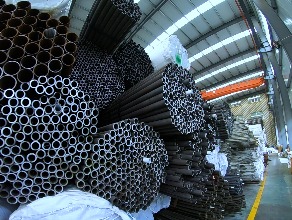
| Feature | Seamless Pipe & Tube | Cold Drawn Pipe & Tube |
|---|---|---|
| Dimensional Accuracy | High | Superior (±0.1mm precision tolerance) |
| Surface Finish | Good | Excellent |
| Strength | High, uniform structure | Enhanced due to cold working |
| Applications | High-pressure, general industrial | Automotive, hydraulics, precision components |
| Materials | Carbon Steel, Alloy Steel | Carbon Steel, Alloy Steel |
The production methods behind precision steel tubing determine what each tube can handle in real-world conditions. Seamless tubes start as solid billets that get pierced and rolled into hollow forms. This process creates a uniform grain structure throughout the wall thickness, which explains why these tubes handle high internal pressures without weak points. High-pressure boiler applications rely on this consistency.
Cold-drawn profiles take a different path. The drawing process pulls tubes through progressively smaller dies, which does two things simultaneously: it tightens dimensional tolerances and work-hardens the steel. That work-hardening effect increases yield strength compared to the starting material. Surface finish improves dramatically as well, often eliminating the need for secondary machining.
We produce both carbon steel tubes and alloy steel tubes depending on application requirements. Our ST35 Seamless Pipe works well for general fabrication where formability matters more than extreme strength. When applications demand wear resistance and higher tensile properties, 4140 Steel Pipe becomes the better choice due to its chromium-molybdenum content.
Custom geometries present unique manufacturing challenges. Our custom-shaped steel tubes program produces hexagonal, oval, and other non-round profiles that standard mills cannot supply. Cold drawn welded tube technology offers another option, combining the cost advantages of welded starting material with the precision benefits of cold drawing.
International standards exist for good reasons, though the alphabet soup of certifications can overwhelm buyers unfamiliar with the system. Each standard body developed specifications based on their regional industrial needs, which means ASTM standards compliance emphasizes different testing protocols than EN steel tube specifications or DIN tube quality requirements.
Our ISO-certified quality control system covers every production stage because problems caught early cost far less than problems discovered in the field. Raw material inspection verifies that incoming steel meets chemical composition requirements before any processing begins. In-process checks monitor dimensional accuracy as tubes move through production. Final inspection confirms that finished products match customer specifications.
PMI inspection uses X-ray fluorescence to verify alloy content matches documentation. This matters because mislabeled steel has caused catastrophic failures in critical applications. NDT inspections including ultrasonic and eddy current testing reveal internal defects invisible to visual examination. These material integrity verification steps add cost but prevent the far greater expense of field failures.
Products like ASTM A179 Steel Pipe for heat exchanger applications and DIN 17175 Steel Pipe for elevated temperature service undergo testing specific to their intended use. The JIS steel pipe requirements add another layer of specification for customers supplying Japanese manufacturers.
If you are interested in understanding the factors that affect the integrity of steel tubes, you might find our article on 《Analysis of Key Causes and Prevention Strategies for Cracking in Seamless Steel Tubes during Bending and Flattening》 insightful.
Different industries stress tubes in different ways, which drives our approach to specialized steel tube applications. Automotive manufacturers need automotive tubing solutions that combine tight dimensional tolerances with consistent mechanical properties across thousands of parts. A tube that varies even slightly from specification can cause assembly problems or premature component failure.
Power generation facilities require high-pressure boiler tubes suppliers who understand the consequences of failure. Boiler tubes operate under continuous pressure at elevated temperatures, conditions that reveal any weakness in material or manufacturing. Our tubes for these applications undergo additional testing beyond standard requirements.
Construction machinery components and hydraulic systems present their own challenges. Hydraulic tubing manufacturers must deliver tubes that seal reliably under fluctuating pressures while resisting the abrasion and impact common in heavy equipment environments. Wall thickness consistency becomes critical because thin spots create failure points.
As an OEM steel tube supplier, we work with engineering teams during the design phase rather than simply filling orders. This collaboration often identifies opportunities to optimize tube specifications for specific applications. Our S355JR Steel Pipe serves structural applications where weldability and impact resistance matter. For components requiring high-temperature strength, 25CrMo4 Steel Pipe provides the necessary performance.
Choosing steel tube manufacturer partnerships requires looking beyond price quotes and delivery promises. Vertical integration indicates a supplier controls their process from raw material through finished product. This full process control tubing approach reduces the variables that cause quality problems and typically shortens lead times because work does not move between multiple facilities.
Quality certifications provide a starting point but tell only part of the story. ISO 9001 certification means a company has documented quality procedures and follows them. It does not guarantee those procedures produce tubes suitable for your application. Ask potential suppliers about their specific testing capabilities and reject rates. A manufacturer willing to discuss their quality challenges honestly probably manages them better than one claiming perfection.
Technical support capability separates commodity suppliers from genuine partners. Can the supplier’s engineers discuss your application intelligently? Do they ask questions about operating conditions, or do they simply take your specifications and quote? The best relationships develop when suppliers understand why you need certain properties, not just what properties you specified.
We offer both Precision Pipe&tube and Seamless Pipe&Tube products supported by engineering staff who have solved problems across dozens of industries. That experience helps us recommend solutions that might not be obvious from a specification sheet.
Changzhou Tenjan Steel Tube Co.,Ltd has manufactured precision steel tubing since 2004. Our vertical integration means we control every step from raw material selection through final inspection. This approach delivers consistent quality and realistic lead times because we do not depend on outside processors.
Our product range spans seamless tubes, cold-drawn profiles, and custom-shaped solutions. All products comply with global standards including ASTM, EN, DIN, and JIS specifications. The ISO-certified processes governing our facility ensure material integrity for applications in automotive, boiler, hydraulic, and general industrial sectors.
Contact us to discuss your specific project requirements. Our engineering team can help determine whether standard products meet your needs or whether custom specifications make more sense. Reach out via email at Sunny@tenjan.com or call +86 51988789990 / +86 13401309791 (WhatsApp available).
Start with manufacturing capability rather than price. A supplier producing precision steel tubing needs documented quality systems, typically ISO certification, plus compliance with relevant material standards like ASTM, EN, DIN, or JIS depending on your market. Vertical integration matters because suppliers controlling their entire process deliver more consistent results. Ask about custom-shaped steel tubes if your application requires non-standard profiles. Finally, evaluate their technical support. A supplier who asks smart questions about your application will likely deliver better solutions than one who simply quotes your specification.
Seamless tubes offer uniform wall structure because they start as solid billets rather than welded strip. This makes them the standard choice for high-pressure boiler tubes and hydraulic systems where internal pressure creates the primary stress. Cold-drawn tubes, including cold-drawn profiles and cold drawn welded tube products, achieve tighter dimensional tolerances and smoother surfaces through the drawing process. The cold working also increases strength compared to the base material. Automotive tubing and construction machinery components often specify cold-drawn products when precision fit matters more than maximum pressure capacity. Cost differences depend on volume, material grade, and required tolerances.
ISO 9001 certification demonstrates a manufacturer follows documented quality procedures, which provides a baseline of reliability. Beyond that general certification, look for compliance with material-specific standards. ASTM, EN, DIN, and JIS specifications define chemical composition, mechanical properties, and testing requirements for different steel grades. The testing methods matter as much as the certifications. PMI inspection confirms alloy content matches documentation, preventing dangerous material mix-ups. NDT inspections reveal internal defects that visual examination cannot detect. Any OEM steel tube supplier serving critical applications should employ both methods routinely.


Home Product Capabilities Case Studies Blogs About Get a Quote
Pipe & Tube Manufacturing Process Shapes & Profiles Pipes & Tubes Material Standard Steel Pipes & Tube Rebar Couplers Cold Drawn Steel Profiles & Bars
Oil & Petrochemical Industry Automotive & Motorcycle Components Mechanical Engineering Components Mining Construction Support Structures High-Pressure Boiler System Construction Machinery Geological Drilling Agricultural Machinery Parts Industrial Fluid Transfer Systems


© 2024 Changzhou Tenjan Steel Tube Co., Ltd All rights reserved. Privacy StatementTerms-ConditionsSitemap
