Welcome to Changzhou Tenjan Steel Tube Co., Ltd
Sunny@tenjan.com



High precision steel tubes demand a level of manufacturing control that separates critical applications from general-purpose work. These components carry the weight of system reliability in automotive fuel lines, hydraulic cylinders, and high-pressure boilers. The difference between a standard tube and a precision-engineered one shows up in tolerances measured in tenths of millimeters, surface finishes that affect fluid dynamics, and mechanical properties tuned for specific stress profiles. Global standards from ASTM, EN, DIN, and JIS codify these requirements, but the real test happens when the tube performs under load, pressure, and time.
High precision steel tubes represent more than tight dimensional control. The definition extends into material consistency, predictable behavior under extreme stress, and surface characteristics that influence everything from fluid resistance to corrosion initiation. These factors combine to make precision tubes essential where failure carries serious consequences.
Dimensional accuracy in Precision Pipe&tube means strict adherence to specified outer diameter, wall thickness, and straightness tolerances. These tolerances often fall within ±0.1mm. Such tight control enables seamless integration into complex mechanical assemblies, minimizing friction, preventing leaks, and maintaining optimal operational efficiency across thousands of operating cycles.
Surface finish distinguishes precision tubes from standard products. Both internal and external surfaces achieve significantly lower roughness values than conventional tubes. This smoothness reduces fluid resistance in hydraulic systems, delays corrosion initiation by eliminating surface irregularities where moisture collects, and extends component lifespan. Superior surface quality also simplifies subsequent processing like coating or plating, eliminating extensive pre-treatment steps.
Mechanical properties receive careful engineering for specific demands. These tubes exhibit enhanced tensile strength, yield strength, and hardness through rigorous cold drawing and heat treatment processes. The resulting material withstands high pressures, dynamic loads, and fatigue cycling, ensuring long-term reliability in demanding environments. Materials like 4140 Steel Pipe and 25CrMo4 Steel Pipe demonstrate excellent strength and wear resistance for applications requiring these characteristics.
The practical benefits translate directly to operational performance. Improved system efficiency results from reduced friction and leakage. Equipment service life extends because components experience less wear. Safety improves in high-pressure applications because the tubes perform predictably. Consistent quality minimizes manufacturing defects, reduces scrap rates, and lowers overall production costs for OEMs building products around these specifications.
Consider hydraulic cylinders as an example. A precisely manufactured tube ensures smooth piston movement, preventing premature wear and maintaining consistent pressure throughout the stroke. In automotive components like fuel injection lines or suspension parts, precision tubes guarantee structural integrity and optimal performance. The consistency in material properties and dimensions means each tube performs identically, which matters greatly for mass production and product reliability.
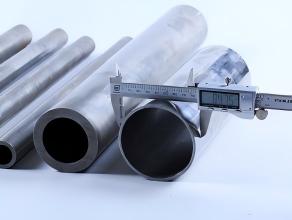
| Feature | Standard Steel Tubes | High Precision Steel Tubes |
|---|---|---|
| Dimensional Control | Moderate (e.g., ±0.5mm) | Superior (e.g., ±0.1mm) |
| Surface Roughness | Higher (e.g., Ra > 3.2 µm) | Lower (e.g., Ra < 1.6 µm) |
| Material Consistency | Good | Excellent |
| Application | General structural | Critical, high-performance |
| Cost | Lower | Higher |
The path from raw material to a high precision steel tube involves meticulously controlled stages. Each step contributes specific characteristics to the final product. This manufacturing expertise creates the difference between a standard tube and a high-performance precision component.
The process typically starts with seamless hot-rolled tubes serving as initial feedstock. These tubes undergo thorough inspection to verify they meet basic quality requirements before further processing. Defects at this stage would compromise the final product, so screening happens early.
Cold drawing or cold rolling forms the core of precision tube manufacturing. This process reduces the tube’s diameter and wall thickness without heating the material. Cold drawing pulls the tube through a die, while cold rolling uses rollers to achieve target dimensions. Multiple passes are often required, progressively refining the tube’s shape and size. This mechanical working significantly enhances dimensional accuracy and surface finish while improving mechanical properties like tensile strength and hardness through work hardening.
Intermediate annealing treatments become necessary between cold working passes. Annealing heats the tubes to a specific temperature followed by controlled cooling. This relieves internal stresses built up during cold drawing, restores ductility, and refines the grain structure. Without annealing, the material would become too brittle for further cold deformation.
After achieving target dimensions, tubes undergo various finishing operations. These include straightening, cutting to precise lengths, and specialized surface treatments like polishing or shot blasting. Each step ensures the tubes meet exact specifications for their intended application.
Rigorous quality control measures run throughout the entire manufacturing process. Non-destructive testing such as eddy current or ultrasonic testing detects internal flaws. Positive Material Identification confirms correct alloy composition. These checks guarantee material integrity and compliance with international standards.
Producing EN10305-1 Steel Pipe involves strict control over each step to achieve specified precision and surface quality. This dedication to process control ensures every tube leaving the factory meets its intended purpose.
Multiple cold drawing passes form the foundation of dimensional control. Each pass uses progressively smaller dies and mandrels, meticulously reducing the tube’s diameter and wall thickness. This iterative approach allows extremely tight control over final dimensions. Specialized dies made from tungsten carbide resist wear and maintain consistent shaping throughout production runs. Internal and external polishing further refines the surface, removing imperfections and reducing roughness. The result is a smooth, uniform surface that minimizes friction and enhances performance in critical applications.
High precision steel tubes enable reliable operation of critical systems across numerous industries. Their exact specifications and robust performance are non-negotiable for safety and efficiency. These tubes function as engineered components, not merely conduits.
The automotive sector relies on high precision tubes for fuel lines, brake systems, hydraulic power steering, and suspension components. Demands for lightweight yet strong materials, combined with precise fluid control, make these tubes indispensable. Materials like STKM13A Steel Tubes and S45C Steel Tubes are frequently specified for automotive applications due to their suitable mechanical properties.
Hydraulic systems spanning heavy construction machinery to industrial automation depend heavily on these tubes. Internal pressures often exceed 300 bar, necessitating tubes with exceptional burst strength and fatigue resistance. The smooth internal bore ensures efficient fluid flow and minimizes pressure drops, contributing to system efficiency. ST52 Steel Pipe is a common choice for demanding hydraulic applications because of its high strength characteristics.
High-pressure boilers and heat exchangers utilize precision steel tubes where extreme temperatures and pressures challenge structural integrity. Standards like ASTM A179 Steel Pipe and ASTM A192 Steel Pipe specifically address requirements for seamless cold-drawn carbon steel tubes used in heat transfer applications.
Construction machinery including excavators and cranes incorporates precision tubes in hydraulic cylinders and structural frames. The durability and dimensional stability of these tubes ensure longevity and safe operation of heavy equipment. Geological drilling operations also use specialized precision tubes that provide the strength and integrity needed for demanding subsurface conditions.
Adherence to international standards remains paramount. Standards from ASTM, EN, DIN, and JIS define chemical composition, mechanical properties, dimensional tolerances, and testing procedures. ASTM A519 Steel Pipe covers seamless carbon and alloy steel mechanical tubing. DIN 2391 Steel Pipe specifies seamless precision steel tubes. Compliance with these standards guarantees interchangeability, reliability, and safety across global markets.
| Standard | Description | Typical Applications |
|---|---|---|
| ASTM A519 | Seamless Carbon and Alloy Steel Mechanical Tubing | Automotive, Hydraulic Cylinders, Machinery Parts |
| EN 10305-1 | Steel Tubes for Precision Applications | Hydraulic and Pneumatic Systems, Automotive |
| DIN 2391 | Seamless Precision Steel Tubes | Automotive, General Engineering, Hydraulic Lines |
| JIS G3445 | Carbon Steel Pipes for Machine Structural Purposes | Machine Components, Automotive, General Machinery |
| ASTM A179 | Seamless Cold-Drawn Low-Carbon Steel Tubes | Heat Exchangers, Condensers |
Standard tube configurations often fall short in complex engineering projects. The capability for customization and specialized geometries in precision tubing addresses unique design challenges that off-the-shelf products cannot solve.
Customization extends beyond length and diameter adjustments. It encompasses tailored alloy compositions, specific heat treatments, and unique cross-sectional profiles. While Seamless Carbon Steel Tubes serve many applications, some situations require enhanced properties from Seamless Alloy Steel Tubes like 41Cr4 Alloy Pipe or 8620 Alloy Pipe. These alloys offer superior strength, wear resistance, or hardenability for specific performance demands.
Specialized geometries represent another capability area. Beyond traditional round tubes, manufacturers produce Square Steel Tubing, Rectangular Steel Tubing, Hexagonal Steel Pipes&Tubes, Oval Steel Pipes&Tubes, and more complex profiles like Triangle Steel Pipes & Tubes or Octagonal Steel Pipes&Tubes. These shapes serve specific functional purposes rather than aesthetic preferences. Square or rectangular tubes provide high torsional rigidity for structural frames. Hexagonal tubes facilitate easier gripping or integration into specific mechanical linkages.
A complex machine might require a tube with an internal profile that precisely matches a mating component, reducing assembly time and improving overall system performance. An architectural project might demand a uniquely shaped tube for both structural integrity and visual requirements. This level of customization gives engineers greater design freedom, optimizing space utilization and reducing secondary machining operations.
The ability to provide tailored solutions stems from vertical integration and advanced tooling capabilities. Close collaboration between client and engineering team translates specific requirements into manufacturable products. The final tube integrates perfectly into the client’s design, enhancing functionality and efficiency.
Long-term performance of high precision steel tubes depends on robust quality assurance and verified material integrity. These are fundamental requirements for reliability in critical industrial applications. Every tube must perform as expected, consistently, throughout its operational lifespan.
Quality assurance protocols cover every stage from raw material procurement to final product delivery. Stringent checks on incoming materials verify chemical composition and mechanical properties. This proactive approach prevents potential issues from propagating through the manufacturing process.
In-process inspections during production monitor dimensional accuracy, surface finish, and mechanical properties. Precise measurements verify outer diameter, wall thickness, and straightness. Visual inspections detect surface imperfections. Specialized equipment measures surface roughness against stringent specifications.
Non-Destructive Testing forms a cornerstone of material integrity verification. Eddy current testing and ultrasonic testing detect internal flaws, cracks, or inconsistencies invisible to visual inspection. These methods verify the structural soundness of every tube. Positive Material Identification confirms exact alloy composition, preventing material mix-ups and ensuring correct metallurgical properties.
Certifications like ISO 9001 demonstrate commitment to quality management systems. These certifications provide independent verification that processes consistently meet international quality standards. They give clients confidence in product reliability and consistency.
This rigorous approach to quality control reduces operational risks for end-users. It minimizes the likelihood of premature component failure, costly downtime, and potential safety hazards. A hydraulic system relying on precision tubes certified through NDT and PMI operates with greater safety and efficiency.
High precision steel tubes deliver several significant advantages in industrial applications. Superior dimensional accuracy and smooth internal surfaces reduce friction and minimize leakage, directly enhancing system efficiency. Robust mechanical properties and verified material integrity ensure exceptional strength and fatigue resistance, extending component service life. These benefits translate into reduced maintenance, lower operational costs, and improved safety in high-pressure or high-stress environments. Consistent quality simplifies assembly processes and reduces manufacturing defects, contributing to overall product reliability and performance.
Choosing the right manufacturer for high precision steel tubes affects project success and long-term reliability. This decision involves more than purchasing a product. It establishes a partnership with a supplier who understands and delivers on critical engineering demands.
Vertical integration deserves consideration as a key factor. A vertically integrated company controls the entire production process from raw material sourcing to finished product. This provides control over quality, lead times, and cost while ensuring consistent material integrity and performance. It eliminates reliance on external suppliers for intermediate steps, streamlining production and enhancing traceability.
Technical expertise matters significantly. The manufacturer should possess deep understanding of metallurgy, cold drawing processes, heat treatments, and quality control methodologies. This expertise enables development of custom solutions and the ability to address complex challenges. Experienced engineers who can collaborate on design and material selection add value throughout the project.
Global compliance and certifications are non-negotiable requirements. A reputable manufacturer adheres to international standards such as ASTM, EN, DIN, and JIS, and holds certifications like ISO 9001. These demonstrate commitment to quality management and ensure products meet globally recognized benchmarks for safety and performance. This matters particularly for OEMs operating in diverse markets.
Customization capabilities indicate manufacturing sophistication. The ability to produce Special-Shaped Alloy Steel Tubes or Special-Shaped Carbon Steel Tubes to exact specifications shows advanced manufacturing prowess and flexibility for unique engineering requirements.
Commitment to quality assurance including comprehensive testing protocols like NDT and PMI indicates dedication to delivering products with verified material integrity and reliability. Partnering with such a manufacturer builds projects on a foundation of precision and verified performance.
As a vertically integrated manufacturer since 2004, Changzhou Tenjan Steel Tube Co.,Ltd specializes in delivering high precision steel tubes tailored to demanding automotive, hydraulic, and industrial applications. Our ISO-certified processes, comprehensive inspections, and commitment to global standards ensure material integrity and performance excellence. Partner with Tenjan for custom-engineered steel tube solutions that meet your specific requirements. Contact us today for a consultation. Email: Sunny@tenjan.com | Tel:+86 51988789990 | WhatsApp:+86 13401309791| Tel:+86 51988789990 | WhatsApp:+86 13401309791
For high precision steel tubes used in automotive, hydraulic, and boiler applications, several international standards govern specifications. ASTM A519 Steel Pipe covers seamless carbon and alloy steel mechanical tubing. EN 10305 addresses steel tubes for precision applications. DIN 2391 Steel Pipe specifies seamless precision steel tubes. JIS G3445 Steel Pipe covers carbon steel pipes for machine structural purposes. These standards dictate material composition, mechanical properties, dimensional tolerances, and testing requirements, ensuring tubes meet stringent performance and safety criteria for their intended applications.
High precision steel tubes contribute to hydraulic system efficiency and safety through their superior dimensional accuracy, smooth internal surfaces, and robust mechanical properties. Precise tolerances minimize leakage and pressure loss, ensuring optimal fluid flow and system efficiency. The smooth bore reduces friction and prevents contamination, extending component lifespan. High strength and fatigue resistance allow these cold drawn seamless tubes to withstand extreme pressures and dynamic loads inherent in hydraulic applications, preventing failures that could cause equipment damage or safety incidents.
High precision steel tubes are frequently customized to meet specific engineering requirements. Customization options include specialized shapes such as Square Steel Tubing, Rectangular Steel Tubing, Hexagonal Steel Pipes&Tubes, and complex geometries. Varying wall thicknesses, specific lengths, and tailored alloy compositions in both carbon and alloy steel are available. This customization ensures tubes integrate precisely into unique designs, optimizing performance, reducing assembly time, and meeting functional demands for OEMs and complex engineering projects across global markets.


Home Product Capabilities Case Studies Blogs About Get a Quote
Pipe & Tube Manufacturing Process Shapes & Profiles Pipes & Tubes Material Standard Steel Pipes & Tube Rebar Couplers Cold Drawn Steel Profiles & Bars
Oil & Petrochemical Industry Automotive & Motorcycle Components Mechanical Engineering Components Mining Construction Support Structures High-Pressure Boiler System Construction Machinery Geological Drilling Agricultural Machinery Parts Industrial Fluid Transfer Systems


© 2024 Changzhou Tenjan Steel Tube Co., Ltd All rights reserved. Privacy StatementTerms-ConditionsSitemap
