Welcome to Changzhou Tenjan Steel Tube Co., Ltd
Sunny@tenjan.com



Finding the right precision metal pipe manufacturer often determines whether a project succeeds or stumbles. Every application brings its own demands for material properties, dimensional accuracy, and performance under real-world conditions. What follows covers the practical considerations for choosing a manufacturing partner and the production technologies that separate adequate steel tubing from genuinely reliable product.
Comparing price lists tells you almost nothing useful about a manufacturer’s actual capabilities. The real evaluation starts with understanding how much control they maintain over their own production, how they approach quality verification, and whether their process can adapt to your specific requirements.
Manufacturers worth considering demonstrate comprehensive oversight from raw material sourcing through final inspection. This end-to-end control matters because material integrity and dimensional precision depend on consistent handling at every stage. Look for suppliers with documented experience across diverse steel tube types, particularly those serving demanding applications like high-pressure boilers and automotive components. Their ability to customize specifications for materials such as ST52 Steel Pipe or JIS G3445 Steel Pipe reveals how well they can respond to non-standard requirements.
A manufacturer’s investment in current machinery and skilled personnel signals their commitment to staying relevant. Equally telling is their capacity to handle complex orders while providing substantive technical support throughout the project.
| Criteria | Description | Importance |
|---|---|---|
| Vertical Integration | Control from raw material to finished product. | High |
| Certifications | ISO 9001, ASTM, EN, DIN, JIS compliance. | High |
| Customization Capability | Ability to produce specific shapes and sizes. | High |
| Quality Control | PMI, NDT, and other advanced inspection methods. | High |
| Technical Support | Engineering assistance and problem-solving. | Medium |
| Lead Times | Efficiency in production and delivery schedules. | Medium |
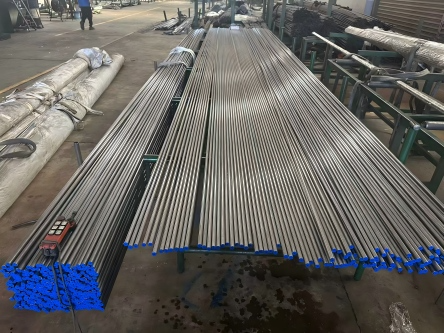
How a tube gets made shapes how it performs under stress. Two production approaches dominate the field, each suited to different application demands.
Seamless steel tube advantages center on structural integrity. Without a welded seam, these tubes handle pressure and temperature extremes that would compromise welded alternatives. Products like ASTM A192 Steel Pipe or ASTM A106 Gr.B Steel Pipe serve high-pressure fluid transport and boiler applications where failure carries serious consequences.
Cold drawing refines what the initial process creates. The tube passes through a die that reduces diameter and wall thickness while increasing tensile strength and hardness. This works on both seamless stock and cold drawn welded tube applications. The resulting products, including EN10305-1 Steel Pipe and Precision Pipe & Tube, achieve the tight tolerances that precision components require. Automotive systems and construction machinery depend on this dimensional accuracy. Custom steel profiles manufacturing relies heavily on cold drawing to ensure exact fit within complex assemblies.
Both cold drawn and cold rolled processes apply across carbon and alloy steels, with the specific approach matched to the material characteristics and end-use requirements.
| Feature | Seamless Tube | Cold Drawn Tube |
|---|---|---|
| Manufacturing | Extruded or pierced, no weld seam. | Drawn through a die, can be seamless or welded. |
| Strength | High, ideal for pressure applications. | Enhanced, excellent for mechanical components. |
| Dimensional Accuracy | Good, but cold drawing improves it further. | Superior, tight tolerances. |
| Surface Finish | Good, but cold drawing provides smoother finish. | Excellent, often requires less post-processing. |
| Applications | High-pressure, high-temperature. | Precision parts, hydraulics, automotive. |
For related technical guidance, our analysis on preventing cracking in seamless steel tubes during bending and flattening addresses common processing challenges. 《Analysis of Key Causes and Prevention Strategies for Cracking in Seamless Steel Tubes during Bending and Flattening》
Round tubes work for many applications. Many, but not all.
Custom steel tube solutions often require cross-sectional profiles that standard catalogs simply do not include. Custom shaped steel tubes in square, rectangular, hexagonal, and more complex geometry steel tubing configurations address structural and functional requirements that round profiles cannot satisfy efficiently.
Hexagonal steel pipes & tubes find use where torque transmission matters or where compact packaging drives the design. Oval steel pipes & tubes optimize fluid dynamics or provide ergonomic advantages in user-facing applications. The manufacturing capability extends to special-shaped alloy steel tubes and special-shaped carbon steel tubes, produced to the exact specifications that OEM steel tube solutions demand.
This customization ensures components integrate properly within their intended systems. Agricultural machinery, fluid transport networks, and specialized industrial equipment all benefit from geometry matched precisely to function rather than forced into standard dimensions.
Performance claims mean little without verification. The steel tubing industry operates under established international frameworks that provide objective benchmarks for quality and consistency.
Compliance with ASTM, EN, DIN, and JIS steel tube standards ensures products meet documented specifications rather than vague promises. DIN 17175 Steel Pipe addresses high-temperature service requirements. JIS G3461 Steel Pipe satisfies Japanese standards for boilers and heat exchangers. Each standard exists because specific applications demanded documented, repeatable material performance.
Verification goes beyond paperwork. Positive Material Identification confirms chemical composition matches specification, catching substitution errors before they become field failures. Non-Destructive Testing steel tube inspection methods including ultrasonic and eddy current examination detect internal and surface defects without destroying the product being tested.
This approach applies whether the product is 4140 Steel Pipe for demanding mechanical applications or 25CrMo4 Steel Pipe for components requiring specific strength and toughness combinations. ISO certified steel tube manufacturing processes provide the framework for consistent execution.
| Standard | Description | Key Application Areas |
|---|---|---|
| ASTM | American Society for Testing and Materials. | General structural, mechanical, pressure systems. |
| EN | European Norms. | Mechanical, pressure, structural, general purpose. |
| DIN | Deutsches Institut für Normung (German Institute for Standardization). | Precision, mechanical, general engineering. |
| JIS | Japanese Industrial Standards. | Machine structural, boilers, heat exchangers. |
| GOST | Russian national standard. | Seamless steel pipes for various applications. |
Controlling the entire production chain changes what a manufacturer can promise and actually deliver.
A vertically integrated steel tube supplier manages every stage from raw material procurement through finished product. This full process control steel tubing approach eliminates the uncertainty that comes with depending on external suppliers for critical production steps. Lead times become more predictable. Quality checks happen at every phase rather than just at receiving and shipping.
The practical benefit shows in products like S45C Steel Tubes or 16MnCr5 Steel Pipe, where mechanical properties and surface finish depend on consistent processing throughout the production sequence. Tailored precision tubing solutions become feasible because the manufacturer can adjust parameters across the entire process rather than working within the constraints of what outside suppliers happen to provide.
This structure also enables faster response when project requirements change. Adjustments propagate through a single organization rather than requiring renegotiation across multiple vendors.
When selecting a precision steel tube manufacturer, prioritize vertical integration for comprehensive quality control, adherence to international standards like ASTM, EN, DIN, and JIS, and the capability for custom geometries. Look for proven expertise in both seamless and cold-drawn tube technologies, backed by robust quality certifications such as ISO, PMI, and NDT inspections. A manufacturer’s ability to offer tailored solutions for specific applications, from automotive to high-pressure boilers, is also crucial.
Seamless steel tubes are produced without a welded seam, offering superior strength and pressure resistance, ideal for high-pressure applications like boilers and hydraulics. Cold-drawn steel tubes, whether seamless or welded, undergo a drawing process that refines dimensional accuracy, surface finish, and mechanical properties. This makes cold-drawn tubes perfect for precision components, custom profiles, and applications requiring tight tolerances, such as automotive parts and construction machinery, where exact specifications are paramount for metal pipe manufacturers.
For high-pressure steel tubing, essential quality certifications include ISO 9001 for quality management systems, ensuring consistent production standards. Material integrity is further verified through Non-Destructive Testing (NDT) methods like ultrasonic and eddy current testing, and Positive Material Identification (PMI) to confirm alloy composition. Compliance with specific international material standards such as ASTM, EN, DIN, and JIS is critical to guarantee the tubing meets the stringent performance and safety requirements for high-pressure industrial applications, a hallmark of reliable metal pipe manufacturers.
Elevate your engineering projects with Changzhou Tenjan Steel Tube Co.,Ltd’s precision steel tubing expertise. For tailored solutions in seamless, cold-drawn, or custom-shaped tubes compliant with global standards, contact our specialists today. Partner with a vertically integrated manufacturer committed to unparalleled material integrity and performance. Email: Sunny@tenjan.com, Tel:+86 51988789990, Phone:+86 13401309791, WhatsApp:+86 13401309791.


Home Product Capabilities Case Studies Blogs About Get a Quote
Pipe & Tube Manufacturing Process Shapes & Profiles Pipes & Tubes Material Standard Steel Pipes & Tube Rebar Couplers Cold Drawn Steel Profiles & Bars
Oil & Petrochemical Industry Automotive & Motorcycle Components Mechanical Engineering Components Mining Construction Support Structures High-Pressure Boiler System Construction Machinery Geological Drilling Agricultural Machinery Parts Industrial Fluid Transfer Systems


© 2024 Changzhou Tenjan Steel Tube Co., Ltd All rights reserved. Privacy StatementTerms-ConditionsSitemap
