Seamless Steel Tube Industry Future: 5 Trends for 2026
The future of the seamless steel tube industry is not a single forecast; it is a set of overlapping shifts in materials, manufacturing data, energy demand, and buyer expectations. Seamless precision tubes have long earned their…
The future of the seamless steel tube industry is not a single forecast; it is a set of overlapping shifts in materials, manufacturing data, energy demand, and buyer expectations. Seamless precision tubes have long earned their place in hydraulic cylinders, high-pressure boilers, automotive safety systems, and construction machinery because they combine uniform grain flow with predictable dimensional control. What is changing is the level of proof now attached to those properties. More engineers are evaluating a tube not simply by OD and wall thickness, but by its complete process story: raw material source, cold-drawing route, heat treatment, inspection record, and traceability link. That is a structural shift, and it is more durable than a short-term pricing cycle [1].
1. Market Landscape: A Modest Recovery with Structural Shifts
Global steel demand is currently moving through a low-growth phase in which the headline number tells only part of the story. Demand forecasts point to a modest recovery in the near term, with weaker mature-market construction offset by selected energy, infrastructure, and manufacturing pockets [1]. For seamless tube producers, the meaningful pressure is not volume alone. It is the reallocation of demand toward applications that require more documentation, tighter tolerances, and more specialized alloys.
| Market signal | Current pattern | Probable 2026–2030 shift | Impact on seamless tube sourcing |
|---|---|---|---|
| Regional demand | Mature construction flat; emerging markets uneven | Energy transition, EV supply chains, and infrastructure lead incremental growth | Add regional standards, logistics, and qualification planning |
| Application mix | Automotive, machinery, and pressure equipment dominate | EV lightweighting, hydrogen, and renewable energy grow share | Higher alloy content, tighter traceability |
| Quality expectation | Batch testing and sample inspection remain common | Digital traceability and inline NDT become default | Full-lot documentation and audit-ready records |
| Environmental pressure | Carbon reporting emerging | CO2 footprint and circularity enter procurement scoring | Scrap optimization, energy-efficient cold drawing |
The table above is deliberately qualitative. In an industry where demand can shift by region and standard, precise single-number forecasts age quickly. What matters for sourcing teams is the direction: precision is becoming a compliance issue, not a premium feature.
2. Material Innovation and Standard Evolution
Material choice is the quiet driver behind most future seamless tube applications. Carbon steel grades such as 1020 and 1045 remain workhorses for cost-sensitive mechanical parts, but demanding programs continue to push toward microalloyed and chromium-molybdenum grades when service temperature, fatigue life, or weight reduction are critical [2]. For automotive and powertrain work, material specification packages are often governed by the quality management expectations embedded in IATF 16949 [3].
The standard stack is also shifting. EN 10305-1 defines technical delivery conditions for seamless cold-drawn precision tubes, covering dimensional tolerances, surface condition, and testing [4]. In the U.S. market, ASTM A519 remains the most common reference for seamless carbon and alloy mechanical tubing [2]. A future-facing specification is rarely about one standard in isolation. It is a layered set of requirements: the dimensional framework from EN 10305-1, the mechanical property reference from ASTM A519 or an equivalent national standard, and the quality system evidence from ISO 9001:2015 [5].
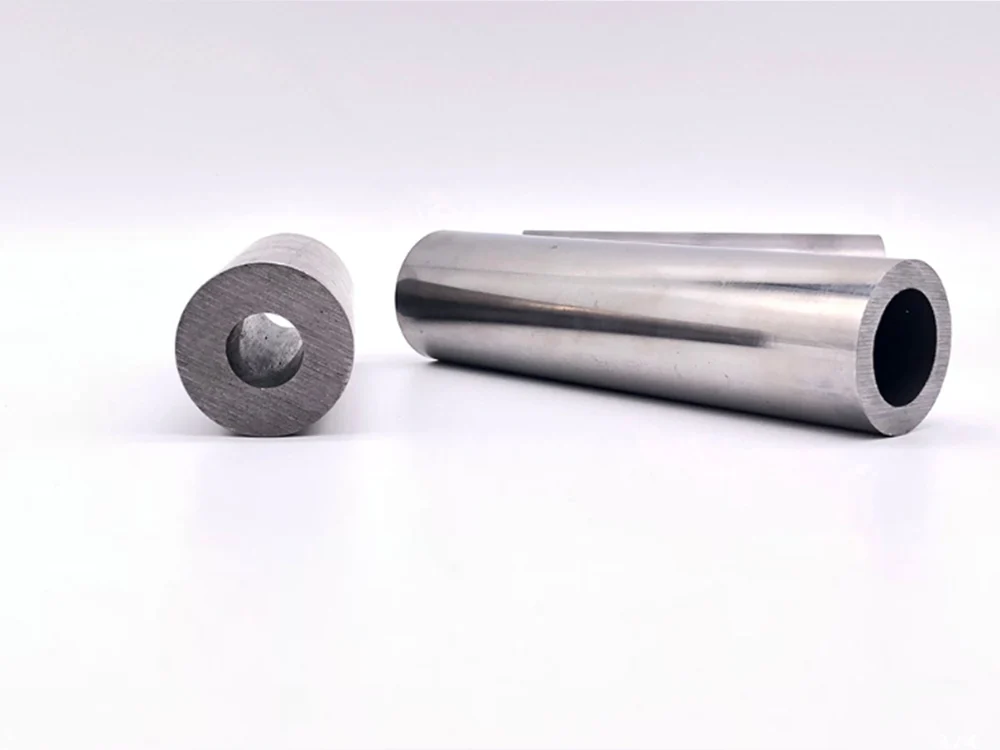
Standards are most useful when they are read as a system rather than as isolated titles. The interaction between dimensional tolerance, mechanical testing, and inspection status is where most sourcing mistakes occur. <Steel Tubes for Engineering Applications: Precision, Standards, and Selection> covers how EN 10305-1, ASTM A519, and similar frameworks map to service conditions.
One material trend deserves particular attention: the shift from “buy the cheapest acceptable grade” to “buy the grade that stays consistent across qualification lots.” In fatigue-sensitive automotive and hydraulic applications, batch-to-batch variability can erase the theoretical benefit of a stronger alloy. That is why forward-looking procurement teams now ask for full chemical composition, PMI verification, and statistical process data rather than a simple mill certificate.
3. Process Automation and Digital Quality Control
The factory floor of the future is less about removing people and more about removing blind spots. Automated cold-drawing lines can maintain constant speed and force, reducing the dimensional drift that appears in manual process adjustment. Inline ultrasonic and eddy-current testing already allow manufacturers to detect subsurface and surface discontinuities before a tube enters finished inventory. The next step is to connect that inspection data to a traceability record that survives through cutting, machining, and assembly [5].
Digital traceability changes the nature of a quality claim. Instead of a paper certificate that accompanies a lot, engineers increasingly expect a searchable record that links heat number, drawing parameters, heat treatment cycle, and inspection signal data. This is not a distant concept; it is a practical response to the rising cost of field failures and the tightening expectations of high-pressure and safety-critical applications [4].
As quality systems move from paper records to digital threads, the practical challenge is turning inspection data into audit-ready evidence without slowing production. <How Digital Traceability Tightens Steel Tube Quality Control> covers the inspection and documentation workflow that makes traceability durable.
Engineering Support for Future-Ready Tube Specs
If you are revising a seamless tube specification around an EV platform, a hydrogen system, or a tighter assembly window, it helps to bring dimensional and material questions together before locking the print. A technical review with mill data attached can be requested by writing to Sunny@tenjan.com or calling +86 13401309791. The most useful inquiries include OD, wall tolerance, required standard, application temperature, and whether the tube will be bent, welded, or machined downstream.
4. The Precision Frontier: Tolerances and Shaped Profiles
Precision is no longer a niche demand. Hydraulic cylinders, steering components, and fuel-handling systems have pushed tolerances from “commercial” to “engineered fit.” A modern cold-drawn seamless tube can be supplied with wall tolerance in the ±0.1 mm range and controlled OD depending on the standard and profile [4]. The implication is not that every part needs the tightest possible tolerance; it is that dimensional capability should be selected deliberately, because unnecessary tightness adds cost while insufficient control creates assembly risk.
Shaped profiles add another layer. Square, rectangular, hexagonal, oval, and custom geometries reduce the need for secondary forming or machining in some assemblies, but they require a different process discipline. Die design, corner fill, straightness, and residual stress all interact in ways that round-tube specifications do not capture. For design teams moving from round stock to application-specific geometry, early DFM is the highest-value step.
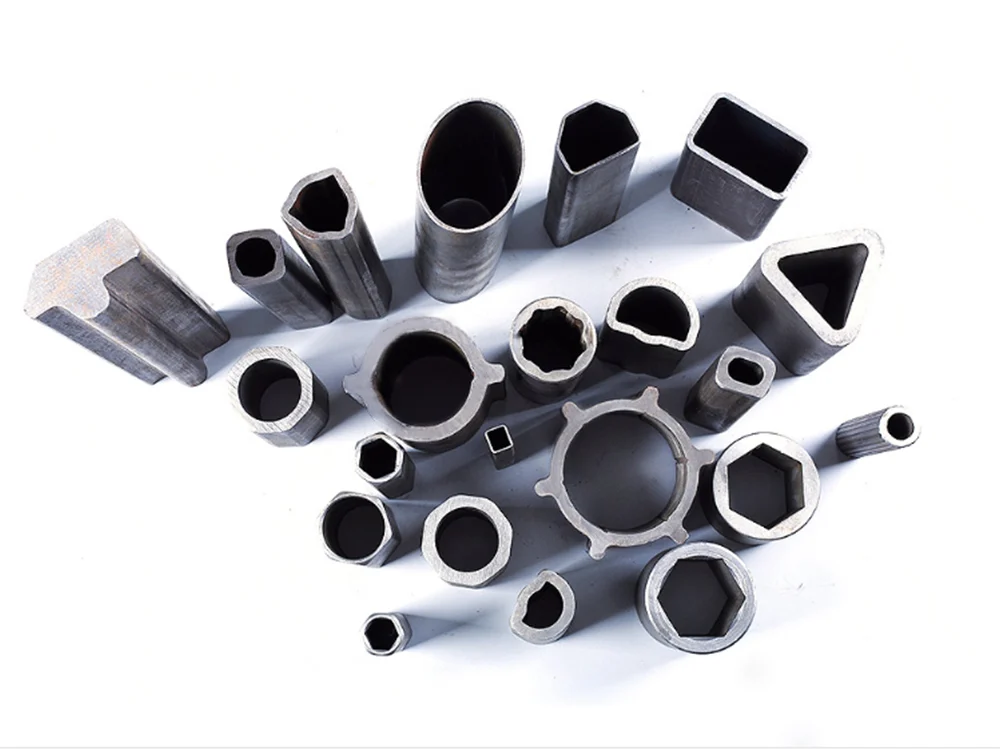
As profile design moves from off-the-shelf rounds to custom cross-sections, early manufacturing feedback prevents cost surprises in machining and assembly. <Custom-Shaped Steel Tubes: Design Considerations> covers the geometry and process trade-offs that decide whether a shaped tube performs as intended.
The same logic applies to dimensional accuracy. A tube that is straight and round on paper can still create installation problems if the process does not control ovality, straightness, or residual stress. Engineers who treat dimensional accuracy as an inspection outcome rather than a process result often discover the difference during assembly.
5. Sustainability, Circularity, and the Energy Transition
The energy transition is the strongest long-term tailwind for precision seamless tube demand. Electric vehicle platforms still require brake tubes, fuel-system lines for hybrids, cooling circuits, drive components, and structural elements. The IEA’s long-term outlook continues to show electrified road transport gaining share, which reshapes the mix of tube properties rather than eliminating steel from mobility [6]. Hydrogen systems add a different challenge: high-pressure storage and transport require material cleanliness, validated mechanical properties, and careful control of surface defects.
At the same time, environmental management systems are becoming part of standard supplier questionnaires. ISO 14001:2015 remains a common reference for environmental management, and buyers increasingly ask about scrap recovery, energy intensity, and the carbon footprint of cold drawing [7]. Seamless tube production has an inherent circular advantage in principle: steel is recyclable without losing its metallurgical usefulness. The practical issue is whether the mill can evidence its scrap loop and process energy in a way procurement can score.
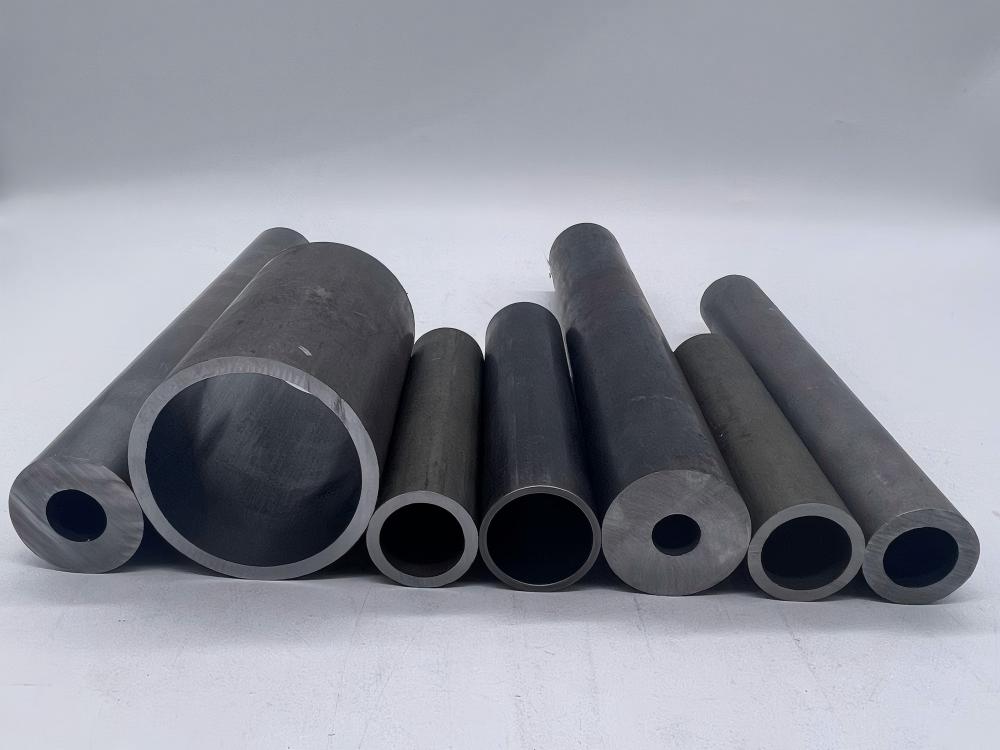
The circular economy angle is not only about compliance. Closed-loop scrap sorting, lower-energy normalizing routes, and reduced material waste in shaped profiles all translate into cost and delivery advantages over time. For procurement teams, the key shift is to treat sustainability data as part of technical qualification rather than a separate corporate statement.
Plan Your Next Seamless Tube Project
The future of the seamless steel tube industry will reward suppliers that combine material knowledge, dimensional control, traceability, and quick turnaround. Tenjan Steel Tube has produced precision seamless tubes, cold-drawn profiles, and custom-shaped sections since 2004, serving automotive, high-pressure boiler, construction machinery, and hydraulic programs. In-house control from raw material to finished product helps reduce the gap between a drawing and a repeatable production lot.
For standard specifications, fast-track service of approximately 20–25 days is available, and a portion of capacity is held in reserve for urgent orders. To discuss an existing drawing or a new design, contact Sunny@tenjan.com, call +86 13401309791, or send a drawing and target quantity for a DFM-informed response.
FAQ
Is the seamless steel tube industry still growing?
Yes, but the growth is uneven. Global steel demand is currently expanding at a modest rate, with the strongest traction in energy, infrastructure, and selected manufacturing applications [1]. The seamless tube segment is less about headline volume and more about growth in higher-specification precision applications, where material quality and traceability carry a premium.
Will seamless tubes remain relevant as welded tube technology improves?
Yes. Welded tube is improving for many general-purpose applications, but seamless tube remains the preferred choice where uniform grain flow, consistent wall integrity, high-pressure resistance, or critical fatigue performance is required. The future is likely to be a sharper division of labor: welded tube for cost-sensitive structural use, seamless tube for safety-critical and high-energy duty.
Which standards will matter most for precision seamless tubes by 2030?
EN 10305-1 is likely to remain the core European precision tube framework, while ASTM A519 will continue to anchor mechanical tubing in North American supply chains [4][2]. ISO 9001:2015 will remain the baseline for quality management [5], with automotive programs adding IATF 16949 requirements [3]. Regional standards will still matter, but the broader trend is a convergence around tighter documented tolerances and full material traceability.
How is digital traceability changing seamless tube quality control?
Digital traceability connects heat identity, cold-drawing parameters, heat treatment cycles, and nondestructive test results into a single searchable record. This makes it easier to isolate nonconforming lots, verify audit trails, and correlate process changes with dimensional or material variation [5][4]. For buyers, the main benefit is a more defensible quality claim.
What should engineers check before specifying a future-facing seamless tube?
Start with the function: operating pressure, temperature, fatigue environment, corrosion exposure, and downstream operations such as bending or machining. Then lock the standard stack, the required tolerance band, the surface condition, and the inspection records. Early DFM feedback is the least expensive way to avoid specifying a tube that is technically possible but commercially inefficient.
References
[1] World Steel Association, “Short Range Outlook,” worldsteel.org. [Online]. Available: https://worldsteel.org/steel-topics/statistics/short-range-outlook/
[2] ASTM International, A519/A519M-17 Standard Specification for Seamless Carbon and Alloy Steel Mechanical Tubing, ASTM, West Conshohocken, PA, 2017.
[3] International Automotive Task Force, IATF 16949:2016 Quality management system requirements for automotive production and relevant service parts organizations, IATF, 2016.
[4] European Committee for Standardization, EN 10305-1:2016 Steel tubes for precision applications — Technical delivery conditions — Seamless cold drawn tubes, CEN, Brussels, Belgium, 2016.
[5] International Organization for Standardization, ISO 9001:2015 Quality management systems — Requirements, ISO, Geneva, Switzerland, 2015.
[6] International Energy Agency, “Global EV Outlook 2024,” iea.org. [Online]. Available: https://www.iea.org/reports/global-ev-outlook-2024
[7] International Organization for Standardization, ISO 14001:2015 Environmental management systems — Requirements with guidance for use, ISO, Geneva, Switzerland, 2015.
If you’re interested, check out these related articles:
ASTM A106 vs A53 Pipe: Choosing by Pressure and Temperature
Custom-Shaped Steel Tubes: Design Considerations
Steel Tube Manufacturing Process: Precision and Quality
Thin Wall Steel Tubing: When It Works and When It Fails
Carbon Steel vs Alloy Steel Tube: Which Material Works