Avoid Steel Tube Delivery Delays: A Sourcing Checklist
Steel tube delivery delays rarely start at the shipping dock. They usually begin much earlier: in an ambiguous drawing note, a tolerance that is not manufacturing-friendly, a supplier whose “available capacity” is already booked through next…
Steel tube delivery delays rarely start at the shipping dock. They usually begin much earlier: in an ambiguous drawing note, a tolerance that is not manufacturing-friendly, a supplier whose “available capacity” is already booked through next quarter, or an inspection clause that is only discovered when the first article is already on the water. If you are buying precision seamless tube for hydraulic cylinders, automotive components, construction machinery, or boiler systems, the question is not whether a supplier can promise a date. The question is whether the order is structured so that the date can survive reality.
This guide breaks delivery risk into five control points: specification, lead-time modeling, supplier capacity, quality documentation, and logistics.
1. Lock the Specification Before the Quote, Not After
No single action reduces steel tube delivery risk more than a frozen specification. For precision tube, small changes cascade quickly. A ±0.05 mm dimensional adjustment may require a different cold drawing pass, a different straightening setup, or additional stress-relieving time. A material grade substitution from a common stock alloy to a less common grade can move an order from fast-track to made-to-melt.
Use this discipline before issuing a purchase order:
- Material — state the standard and grade exactly, such as ASTM A519 1026, EN 10305-1 E355, DIN 2391 ST52, or JIS G3445 STKM13A, rather than “alloy steel tube.”
- Dimensions — lock outer diameter, wall thickness, length, straightness, ovality, and roundness tolerances.
- Surface and end condition — define whether the tube is as-drawn, stress-relieved, pickled, polished, or cut to length.
- Inspection — request the correct inspection document level, such as EN 10204 3.1, and define whether PMI, eddy current, ultrasonic, or hydrostatic testing is required [1][2].
I often ask engineers the same question: “If I produce exactly this print, will it work?” The silence is informative. If the answer is “probably,” add one design-for-manufacturability review before releasing the PO. For custom shaped tubes, a quick DFM pass can catch whether a corner radius is cold-drawable or whether a wall transition will require a secondary operation.
2. Model Lead Time as a Chain, Not a Single Number
Most delivery disputes start with a single-number promise. Real lead time is a chain: raw material availability, mother tube preparation, cold drawing, possible heat treatment, straightening, cutting, PMI and NDT, inspection documentation, packaging, transport, and customs clearance. Any unresolved link becomes the new bottleneck.
A useful model splits lead time into four blocks:
- Material preparation — confirm whether the mill can start from existing raw mother tube or must source a specific steel grade.
- Process run — drawing, rolling, heat treatment, straightening, cutting, and any special surface work such as pickling, polishing, or phosphating.
- Inspection and documentation — PMI, eddy current, ultrasonic, dimensional reports, and EN 10204 certification.
- Logistics — agreed Incoterms, container loading, inland freight, and customs clearance.
When you compare suppliers, ask for the longest confirmed link, not the best-case total. This is one reason original equipment manufacturers often keep suppliers with their own drawn-tube capacity and in-house inspection rather than pure trading companies. If someone gives you a 20-day process lead time but needs 30 days to buy the raw pipe, the second number is the one to trust.
For custom steel tube lead times, a supplier with vertical integration can compress several links because raw material, cold drawing, and inspection share one production plan.
For a closer look at how OEM buyers can structure orders to protect delivery dates, <Managing Custom Steel Tube Lead Times for OEM Buyers> covers raw-material booking, capacity reservation, and milestone confirmation.
3. Verify Supplier Capacity Before You Need It
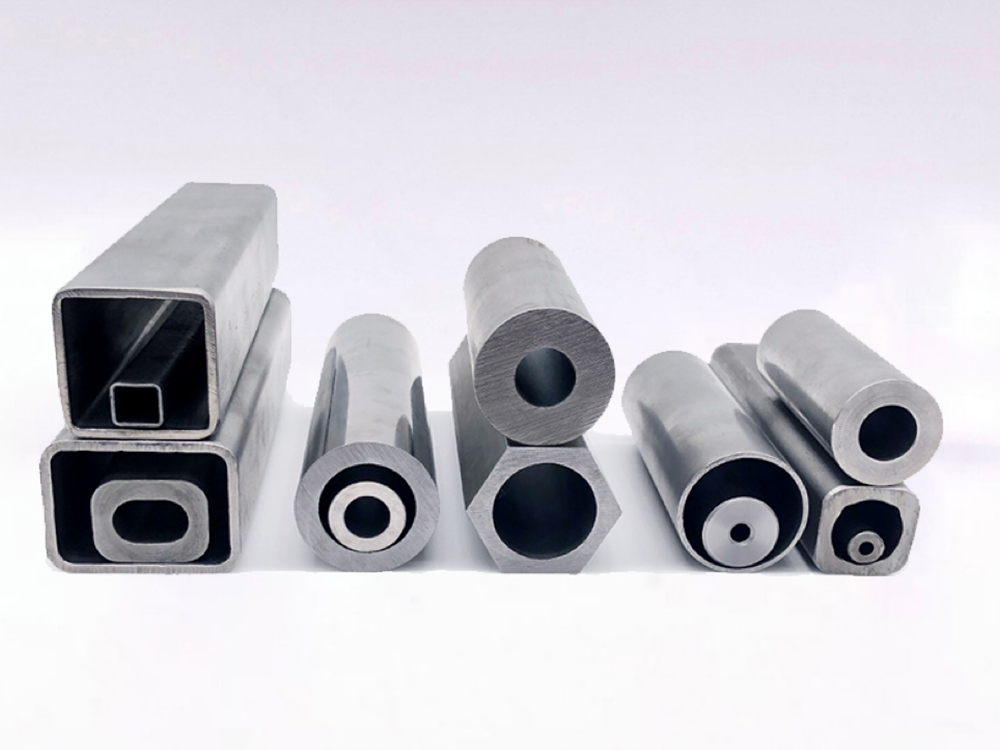
“Available capacity” is not a static fact. It is a function of raw material inventory, equipment utilization, shift patterns, tooling, and the complexity of your order. A supplier may be excellent for 20 mm round tube and completely wrong for a 60 mm hexagonal profile with a 2 mm wall and tight form tolerances.
Ask for this level of detail:
- Which drawing line or mill the order will actually run on.
- Whether the specified grade is already in stock or must be procured from a steel mill.
- How many drawing passes are planned.
- Current utilization for that specific line, not for the whole plant.
- A written production plan with inspection points and completion dates.
I once watched a buyer approve a supplier because the factory showed impressive annual output. The order was a small lot of special-shaped alloy tube. The plant’s high-volume line could not run the profile economically, so the order waited until enough similar profiles were collected. The buyer had capacity, but not the right kind of capacity.
A supplier evaluation should therefore include process fit, current load, changeover capability, and inspection throughput, not only total tonnage [3].
If you are building or reviewing a supplier scorecard, <Steel Tube Supplier Evaluation: Technical Criteria for Engineers> describes how to weigh process control, inspection capability, and capacity evidence.
4. Make Quality Documentation Parallel, Not Sequential
Another common delay is documentation. Even when the tube is ready, shipping can wait for a mill test report, PMI record, eddy current chart, dimensional report, or 3.1 certificate. The solution is to define documents in the purchase order and make inspection part of the production plan, not a post-production surprise.
For critical applications, include these clauses:
- Request EN 10204 3.1 inspection certificates where traceability is required [1][2].
- Define whether third-party inspection by TÜV, SGS, or a customer representative is required before packing.
- Agree on document format, language, and delivery timing.
- Add a document review milestone before dispatch, not after arrival.
A simple trick: ask the supplier to send the test plan before production starts. If the test plan does not match the PO clauses, you catch it in days rather than after the goods are blocked at the port.
Working on a steel tube order? If you are specifying seamless, cold-drawn, or custom-shaped steel tube, send the drawing to Sunny@tenjan.com or WhatsApp +86 13401309791 for a DFM and lead-time check before the PO is issued. The earlier the specification is locked, the fewer chances for delay.
5. Control Logistics and Payment Milestones
Delivery risk also lives in trade terms, payment milestones, and customs. A missed Incoterm can shift responsibility for loading, export clearance, or insurance to the wrong party [4]. A slow payment approval can turn a “ready to ship” order into warehouse dwell.
Keep three points explicit in the contract:
- Incoterms 2020 — confirm whether the order ships FOB, CIF, DAP, or another term, and know who bears export and import customs risk [4].
- Transport mode and package — confirm whether the order moves by sea, rail, road, air, or a combined route. Long or oversized tube lengths may require special loading plans.
- Trade documents — list the packing list, commercial invoice, certificate of origin, inspection certificate, and test report required by the destination country.
Clear milestones also reduce friction. For example, a purchase order can define payment after receipt of the approved 3.1 certificate and shipping documents, not after cargo arrival. This keeps the process moving without adding unnecessary credit risk.
6. A Delay-Proofing Checklist
Use this table as a pre-order review. Each unresolved item is a potential delay.
| Control point | What to confirm | Delay risk if skipped |
|---|---|---|
| Specification | Grade, dimensions, tolerances, surface condition | Rework or mill re-start |
| DFM | Profile drawability, radius, wall transition | Production holds and retooling |
| Material availability | Stock grade vs. made-to-melt | Weeks of raw material wait |
| Process capacity | Correct line type and current utilization | Order queued behind wrong equipment |
| Inspection plan | PMI, NDT, 3.1 documentation, third-party scope | Port or warehouse blockage |
| Logistics | Incoterm, packing, route, customs documents | Loading delays and customs hold |
The pattern is consistent: delivery reliability is not one impressive promise. It is a chain of verified, documented commitments.
If you are comparing multiple mills or distributors, <How to Choose a Steel Tube Supplier for Your Next Project> covers the qualification questions that separate reliable suppliers from optimistic ones.
Get a Delivery-Risk Review Before You Order
If you are planning an OEM or engineering order for precision steel tube, a 15-minute review of the drawing, standard, inspection requirement, and target date can expose delay risks before they become production problems.
Changzhou Tenjan Steel Tube Co., Ltd. has been manufacturing precision steel tube since 2004. The company produces seamless tubes, cold-drawn profiles, cold drawn welded tubes, and custom-shaped steel tubes to ASTM, EN, DIN, and JIS standards. Its in-house process covers raw material through finished product, with ISO-certified quality control, PMI and NDT inspection, and EN 10204 3.1 traceability.
Contact Sunny@tenjan.com, call +86 51988789990, or WhatsApp +86 13401309791 with your drawing and target lead time.
FAQ
What is the most common cause of steel tube delivery delays?
The most common cause is a specification that is not final when the order is placed. Grade changes, tolerance changes, and added inspection requirements after production begins are more disruptive than raw material shortages in many precision tube orders.
How much buffer should I add to a steel tube lead time?
There is no universal number, but a practical approach is to identify the longest confirmed link in the process chain and add buffer around that link, not across the whole order. For custom profiles, material preparation and tooling confirmation usually deserve more buffer than packaging or final inspection.
Should I pay more to reserve supplier capacity?
In many cases, yes. Capacity reservation with a clear production plan is more valuable than a lower unit price that comes with an unconfirmed schedule. The key is to require the reservation to be tied to a specific line, planned drawing pass, and inspection milestone.
What is the difference between EN 10204 2.2 and 3.1 documentation?
EN 10204 3.1 provides inspection documents certified by an independent function within the manufacturer. EN 10204 2.2 is a test report based on non-specific inspection. For critical applications such as hydraulic cylinders or boiler components, buyers usually specify 3.1 because it supports material traceability and independent verification [1][2].
When should I involve a supplier in DFM before ordering?
As early as possible. For custom shaped tubes or tight-tolerance components, a DFM review should happen before the final purchase order, not after tooling decisions are made. This can catch drawability problems, corner radius limits, or wall-thickness transition issues while changes are still inexpensive.
References
[1] ISO 9001:2015, Quality management systems — Requirements, International Organization for Standardization.
[2] EN 10204:2004, Metallic products — Types of inspection documents, European Committee for Standardization.
[3] ASTM A519/A519M, Standard Specification for Seamless Carbon and Alloy Steel Mechanical Tubing, ASTM International.
[4] ICC Incoterms® 2020, ICC Rules for the Use of Domestic and International Trade Terms, International Chamber of Commerce.
If you’re interested, check out these related articles:
Why Steel Pipe Pickling Process Needs 6 Strict Controls
How to Choose the Right Seamless Steel Tube