Precision Steel Tube Demand in Emerging Markets: A Buyer's Guide
What Makes a Steel Tube "Precision"? An emerging-market project usually starts with a simple-sounding requirement: a tube with a given outside diameter and wall thickness. The difference between a commodity pipe and a precision steel tube…
What Makes a Steel Tube “Precision”?
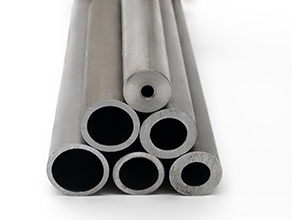
An emerging-market project usually starts with a simple-sounding requirement: a tube with a given outside diameter and wall thickness. The difference between a commodity pipe and a precision steel tube lies in the details that survive the drawing review.
Precision steel tubes are typically produced by cold drawing or cold rolling a wider mother tube. The cold process improves dimensional control, roundness, straightness, surface finish, and mechanical consistency. Buyers do not just buy a dimension; they buy a tolerance class, a material grade, a delivery condition, and a set of inspection documents.
In practice, a precision tube specification should answer at least five questions: outside diameter and tolerance, wall thickness and tolerance, steel grade or alloy, delivery condition, and required documentation. ASTM A519 is a common reference for seamless carbon and alloy mechanical tubing in many mechanical applications [3]. In European-style drawings, EN 10305-1 often governs seamless cold-drawn precision tubes, including dimensions, surface quality and technical delivery conditions [4].
<img src="https://www.tenjan.com/wp-content/uploads/2026/07/xjIV2LT3f9i16w8G76182jKK113od0Zj.jpg" alt="precision Pipe&tube" style="max-width: 600px; height: auto; display: block; margin: 20px auto;" />
A tube is not born precise; it is made precise through controlled reduction, heat treatment and straightening. <Steel Tube Manufacturing Process: Precision and Quality> covers the process steps that keep one batch from drifting into the next.
Three Forces Pulling Demand into Emerging Markets
Long-term steel demand growth has increasingly concentrated in emerging economies, where infrastructure, construction machinery and industrial relocation remain the strongest demand engines [1]. Public investment cycles and manufacturing expansion in emerging Asia, the Middle East, Africa and Latin America continue to create demand for reliable mechanical tubing [2].
The first force is infrastructure and construction machinery. Excavators, cranes, roadheaders and hydraulic cylinder systems all depend on precision tube for load-bearing and fluid-power components. The second force is local manufacturing. As automotive, motorcycle, agricultural machinery and appliance assembly lines expand, local fabricators need dependable mechanical tube without waiting for inconsistent import parcels. The third force is energy and water infrastructure. High-pressure boiler systems, drilling equipment, desalination plants and solar mounting structures all consume precision tube in applications where dimensional error becomes a safety or performance problem.
This does not mean every emerging-market project wants the tightest possible tolerance. It means more buyers are moving from “any steel pipe will do” to “I need a tube that fits the same way in the first batch and the tenth.”
Standards Are the Real Supply-Chain Currency
One of the first surprises for new buyers is that the same physical tube can be described under multiple standard systems. Drawings may reference ASTM, EN, DIN, JIS, or an emerging-market national standard such as GB/T. The material may be identical or close, but the certification language, test requirements and delivery conditions differ.
| Market or Application | Common Reference Standard | Typical Focus |
|---|---|---|
| North American mechanical | ASTM A519 | Seamless carbon and alloy mechanical tubing |
| European precision cold drawn | EN 10305-1 | Tolerances, surface condition, delivery conditions |
| Japanese machine structural | JIS G3445 | Carbon steel tubes for machine structural use |
| Chinese precision cold drawn | GB/T 3639 | Cold drawn or cold rolled seamless tubes |
International drawings often mix ASTM, EN and local GB/JIS references on the same bill of materials. <Understanding ASTM, EN, DIN and JIS Tube Standards> covers how these systems compare and where material substitution is usually straightforward.
For buyers, the practical rule is to keep the standard named in the drawing as the governing reference. If a project wants a local standard but the original design is European, an experienced supplier should map the requirements across systems rather than quietly substitute one grade for another.
The Local vs Global Sourcing Tension
Emerging-market procurement often starts local. That can reduce freight time and support local content rules, but it does not always solve the precision problem. Local distributors may hold round pipe in standard sizes, yet struggle with special shapes, tight tolerances, alloy grades, or complete mill certificates.
Global sourcing brings depth but adds duty, logistics, payment and inspection complexity. Lead time depends on more than production. It includes mill scheduling, pre-shipment inspection, customs clearance, port congestion and inland transport. Buyers who treat the shipping date as the only date in the plan tend to discover late that customs has its own calendar.
The most effective approach is usually hybrid: use local stock for simple structural tube, and use a specialized global supplier for the precision, special-shape or certified material that cannot be safely substituted. The decision should hinge on failure risk, not only unit price.
Specification Discipline Matters More Than Price
Specifying a tube by outside diameter and wall thickness alone is like ordering a car by color and wheel size. You will receive something, but it may not survive the road. For a hydraulic cylinder, the missing details might be ID surface finish, straightness, ovality or the EN 10204 3.1 certificate.
Consider a hydraulic cylinder line in a Southeast Asian assembly plant. The design office specifies OD 40 mm, wall 4 mm, ST52, with a honed inner surface. Three suppliers quote the same OD and wall. Only one includes the surface finish, straightness and full traceability records the cylinder needs. The other two tubes look identical on paper until the first production run.
<img src="https://www.tenjan.com/wp-content/uploads/2026/07/2N1ra250mvx74CQ5nNaj5Y1q3T876X8U.jpg" alt="Shaped Steel Pipes&Tubes" style="max-width: 600px; height: auto; display: block; margin: 20px auto;" />
A stronger RFQ includes application, operating pressure, movement type, end use, required standard, tolerance class, documentation level and any special surface or non-destructive testing requirements. This step removes most of the price-only quoting problems before they begin.
Specification shortcut: If you already have a drawing, send it to Sunny@tenjan.com or WhatsApp +86 13401309791. A quick DFM review can catch tolerance, grade or documentation mismatches before the RFQ goes out.
Quality Risks That Travel with Long Supply Chains
Cross-border precision tube supply chains are not fragile because the tubes are hard to make. They are fragile because information can separate from the material.
A heat number on a paper certificate must match the heat number on the physical bundle. A mill test report should correspond to the material actually loaded. When material changes hands several times, a missing label or a rerouted container can create a traceability gap that takes weeks to close. In demanding applications, buyers increasingly ask for positive material identification and non-destructive testing such as ultrasonic or eddy current inspection.
ISO 9001-based process control helps create repeatability, but it does not by itself prove a specific tube meets a specific property requirement [5]. That proof still comes from the documented combination of grade, heat treatment, testing and inspection.
A paper MTR is easy to attach and hard to verify. <How Digital Traceability Tightens Steel Tube Quality Control> covers what digital traceability can and cannot prove across a cross-border handoff.
What to Watch Over the Next Five Years
The emerging-market precision tube opportunity is shifting toward smaller lots, faster design changes and stricter documentation. Buyers are moving away from massive one-size orders and toward planned replenishment tied to actual project consumption.
Three trends deserve attention. First, digital traceability is becoming a procurement expectation, not a premium feature. Second, energy-transition projects are creating demand for high-strength, corrosion-resistant and pressure-capable tube in applications such as hydrogen, geothermal and renewable power equipment. Third, special profiles are increasingly used to reduce machining time and simplify assembly.
The buyers who win in this environment treat precision tube sourcing as engineering work, not as an administrative purchase. They ask about process capability before price, and they keep the specification stable enough to compare quotes honestly.
Work With a Precision Steel Tube Partner
Changzhou Tenjan Steel Tube Co., Ltd. has been a vertically integrated precision steel tube manufacturer since 2004. We supply cold-drawn seamless tubes, cold-drawn welded tubes, cold-rolled tubes and custom-shaped profiles to ASTM, EN, DIN and JIS standards. Our precision range covers outside diameters from 10 mm to 108 mm and wall thicknesses from 1 mm to 20 mm, with ±0.1 mm tolerance capability on precision cold-drawn tube.
For projects that involve automotive, high-pressure boilers, construction machinery, hydraulics, agricultural machinery, geological drilling or petroleum equipment, we support the full process from raw material to finished product with ISO-certified quality control, PMI and NDT inspection, and full EN 10204 3.1 traceability.
To receive a fast, accurate quote, send the following:
- Outside diameter and wall thickness
- Steel grade or standard reference
- Quantity and required length
- Application or working environment
- Required documentation and testing
- Delivery destination and target date
Contact Sunny at Sunny@tenjan.com, call +86 519 88789990, or reach us on WhatsApp at +86 13401309791.
Frequently Asked Questions
What is considered a precision steel tube?
A precision steel tube generally refers to cold-drawn or cold-rolled seamless or welded tube with tighter dimensional tolerances, better roundness and straightness, and a smoother surface finish than standard hot-finished pipe. It is usually supplied to a standard such as EN 10305-1, DIN 2391 or ASTM A519.
Which standard should I specify for an emerging-market project?
Start with the standard named in the original engineering drawing. If the drawing is not standard-specific, state the application and required properties and let the supplier propose the most appropriate ASTM, EN, DIN, JIS or GB/T reference.
Why do precision tube lead times vary so much?
Lead time depends on material grade, availability, required tolerance class, heat treatment, testing and documentation. Export orders also include mill scheduling, pre-shipment inspection, customs clearance and local transport, so two identical-looking quotes can have very different real delivery dates.
How can I verify material traceability?
Ask for a heat number, mill test certificate, and confirmation that the certificate matches the physical material. For higher-risk applications, request positive material identification, ultrasonic or eddy current testing, and full EN 10204 3.1 documentation.
Does small-batch ordering make sense for emerging-market pilot projects?
Yes. Small-batch ordering is often the most practical way to test a supplier’s dimensional control, surface quality, documentation and delivery reliability before committing to volume. It also supports prototyping and local assembly trials without creating excess inventory.
References
[1] World Steel Association, “World Steel in Figures 2024,” World Steel Association, Brussels, Belgium, 2024. [Online]. Available: https://worldsteel.org/steel-topics/statistics/world-steel-in-figures-2024/
[2] OECD, “Steel Market Developments: Q4 2024,” OECD Steel Committee, Paris, France, 2024. [Online]. Available: https://www.oecd.org/industry/steel/
[3] ASTM International, “ASTM A519/A519M-23, Standard Specification for Seamless Carbon and Alloy Steel Mechanical Tubing,” ASTM International, West Conshohocken, PA, USA, 2023.
[4] European Committee for Standardization, “EN 10305-1:2016, Steel tubes for precision applications — Technical delivery conditions — Part 1: Seamless cold drawn tubes,” CEN, Brussels, Belgium, 2016.
[5] International Organization for Standardization, “ISO 9001:2015, Quality management systems — Requirements,” ISO, Geneva, Switzerland, 2015.
If you’re interested, check out these related articles:
How to Control Steel Pipe Polishing Process and Surface Ra
How to Choose a Steel Tube Supplier for Your Next Project
Precision Tube Quality Inspection Checklist
How to Verify ISO Certification for Steel Tube Manufacturers