Welcome to Changzhou Tenjan Steel Tube Co., Ltd
Sunny@tenjan.com



When a process plant specifies ASTM A106 Grade B pipe for a high-temperature line, procurement teams cannot afford to guess on wall thickness or certification requirements. I have seen too many orders stall because the schedule was not matched to the operating temperature, or because the mill test report did not cover what the end user actually needed. ASTM A106 Grade B pipe has been the default choice for carbon steel high-temperature service for decades, but the standard leaves room for decisions that engineers and buyers have to make at the ordering stage. What follows is what matters when you are specifying, buying, or qualifying this material for your next project.
ASTM A106 covers seamless carbon steel pipe for high-temperature service, and Grade B is the most commonly ordered grade within the standard. Unlike structural pipe or low-pressure tubing, A106 pipe is designed to hold its strength as temperatures climb past 400°F (200°C) and into the range where ordinary carbon steel starts losing its mechanical integrity.
The key distinction is not just chemistry. It is the manufacturing process and the quality assurance behind it. A106 pipe must be produced by a seamless process. That means no weld seam, which eliminates a potential failure point when the pipe cycles through temperature changes. In high-temperature service, the last thing you want is a longitudinal weld that behaves differently from the base metal as it expands and contracts.
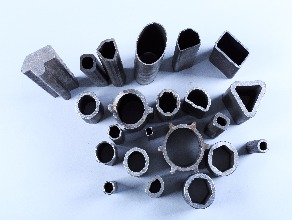
We produce A106 Grade B pipe through hot finishing or cold drawing, and the choice between those two processes affects dimensional tolerance and surface condition. Hot finished pipe is cost effective for larger diameters and standard schedule applications. Cold drawn pipe gives you tighter tolerances, often needed when the pipe will be machined or threaded for fittings.
One question I get regularly from procurement engineers is whether A106 Grade B can substitute for A53 Grade B. The answer: only if the service temperature stays low. A53 does not carry the same high-temperature verification. If your line runs above ambient on a regular basis, stick with A106.
The chemistry of ASTM A106 Grade B is straightforward, but the numbers matter when you are comparing mill certificates from different suppliers. Here is the composition range:
| Element | ASTM A106 Grade B Requirement |
|---|---|
| Carbon, max | 0.30% |
| Manganese | 0.29–1.06% |
| Phosphorus, max | 0.035% |
| Sulfur, max | 0.035% |
| Silicon, min | 0.10% |
Carbon caps at 0.30%, which keeps the steel weldable without preheating in most cases. If you see a heat analysis pushing right up to that 0.30% ceiling, it is worth asking the supplier about carbon equivalent, especially if field welding is part of your installation plan.
Mechanical properties are where Grade B earns its reputation for reliability:
| Property | Minimum Requirement |
|---|---|
| Tensile strength | 60,000 psi (415 MPa) |
| Yield strength | 35,000 psi (240 MPa) |
| Elongation | See standard (varies by specimen) |
The 35 ksi minimum yield strength is the number most piping designers work with for wall thickness calculations. But a detail that gets overlooked: the elongation requirement changes depending on the specimen type and size. A longitudinal strip test has a different minimum elongation than a transverse strip test. If your end user has specific forming requirements (say, the pipe needs to be bent cold), you will want to confirm elongation values on the actual MTR rather than assuming the standard minimum covers it.
I learned this early in my career when a batch of A106 Grade B pipe met the tensile and yield requirements but failed in the field during cold bending. The elongation was at the bare minimum, and the bending radius the contractor used was too tight for that ductility level. Now I always recommend buyers confirm elongation and discuss forming plans with the mill before cutting a purchase order.
ASTM A106 Grade B pipe comes in standard NPS sizes and schedule numbers, most commonly Schedule 40, 80, 160, and XXS. But the schedule number alone does not tell you enough. The actual wall thickness for a given NPS and schedule is defined in ASME B36.10, and it is those millimeter or inch values that matter for pressure containment and corrosion allowance.
Here is a reference for commonly ordered sizes:
| NPS | Schedule | Wall Thickness (in) | Typical Application |
|---|---|---|---|
| 2 | 40 | 0.154 | General process piping |
| 2 | 80 | 0.218 | Higher pressure lines |
| 4 | 40 | 0.237 | Moderate temperature steam |
| 6 | 80 | 0.432 | High pressure steam headers |
The mistake I see most often: ordering by schedule alone without checking whether the corresponding wall thickness meets the design pressure at the maximum operating temperature. As temperature rises, the allowable stress for A106 Grade B decreases. A pipe that is adequate at 500°F might be under-designed at 750°F, even if the schedule number has not changed.
For procurement, this means you need the design temperature and pressure from your engineering team before you can confirm the right wall thickness. Do not let a supplier quote you “Schedule 40 A106 Grade B” without knowing the service conditions. If something goes wrong, the schedule number alone will not protect you.
If you are ordering cold drawn A106 pipe, the wall thickness tolerance is typically tighter than hot finished. For critical applications where you are pushing the pressure envelope, the tighter tolerance can give you just enough margin to avoid stepping up to a heavier schedule, which saves weight and cost.
A106 Grade B pipe can be supplied in the hot finished or cold drawn condition. Hot finished pipe typically does not require additional heat treatment if the hot working process finishes above the critical temperature. But cold drawn pipe must be heat treated after the final cold draw pass, usually at a temperature of 1200°F (650°C) or higher, to relieve residual stresses and restore ductility.
Every A106 pipe order should come with a mill test report that covers:
Heat analysis (chemical composition)
Tensile test results (one per lot of 200 lengths or fewer)
Flattening test (for pipe 2.375 in OD and larger, when required)
Hydrostatic test or nondestructive electric test
The hydrostatic test is standard. Every length of A106 pipe must withstand a pressure that produces a hoop stress of 60% of the specified minimum yield strength for at least 5 seconds. Some end users also request ultrasonic testing or eddy current inspection as a supplement. If your spec calls for NDT beyond the standard hydro test, state it clearly on the purchase order. Do not assume the mill includes it by default.
For orders going into pressure vessel or boiler applications, I recommend asking for the flattening test results even if the specification technically exempts your size range. It is a quick way to verify that the pipe has no laminations or internal defects that could propagate under pressure cycling. The cost adder is small, and the extra confidence is worth it.
When you are ready to send an inquiry, a complete specification saves everyone time and reduces the risk of receiving material that does not fit your application. Based on what I have seen work well, here is what a solid inquiry for A106 Grade B pipe should include.
NPS and schedule (or exact OD and wall thickness), quantity in meters or feet, end finish (plain end, beveled, threaded), and any supplementary requirements. If you need the pipe cut to specific lengths, specify the length tolerance. If the pipe will be galvanized or coated after delivery, let the supplier know. Certain surface conditions are easier to coat than others.
State your required documentation upfront. If you need a 3.1 inspection certificate per EN 10204, or if the MTR needs to show heat numbers traceable to each pipe length, put that in the inquiry. Adding documentation requirements after the order is placed almost always causes delays and sometimes triggers price adjustments.
If your project involves both A106 Grade B and other carbon steel grades, do not try to consolidate everything under one spec. A106 has different testing and certification requirements than A53 or API 5L. Mixing specs on a single PO creates confusion at the mill and can result in material that does not fully comply with any standard.
For buyers sourcing A106 Grade B pipe from overseas, verify that the supplier’s test reports are issued by a laboratory accredited to ISO/IEC 17025 or an equivalent standard. A low price on A106 pipe that arrives without traceable test data is not a bargain. It is a liability.
Specifying ASTM A106 Grade B pipe correctly comes down to matching the material to the actual service conditions, not just the pipe schedule. Temperature derates allowable stress, chemistry affects weldability, and heat treatment history determines how the pipe behaves during fabrication. If even one of those variables is overlooked, the pipe can pass a visual inspection and still fail prematurely.
We manufacture A106 Grade B seamless pipe at our Changzhou facility with full process control from raw material to finished product, including PMI verification and NDT inspection as required. If you have a specific project requirement, a particular schedule, a tight delivery window, or supplementary testing, send your part number and quantity to Sunny@tenjan.com or call +86 13401309791. We will confirm stock and provide a mill test report package that matches your spec.
The standard answer is that A106 is designed for high-temperature service, not low-temperature applications. For temperatures below -20°F (-29°C), you normally need a material with impact testing like ASTM A333. That said, if your low-temperature application stays above about 0°F and the pipe is not subject to impact loading, some engineers will use A106 with the understanding that the material has not been tested for toughness at those temperatures. I would not recommend it without a formal engineering review.
Both are carbon steel pipes, but the scope is different. A53 covers both welded and seamless pipe, while A106 is seamless only. More importantly, A106 carries a mandatory heat treatment requirement for cold drawn pipe and is intended for high-temperature service with verified mechanical properties at elevated temperatures. A53 is a general-purpose standard with no elevated-temperature verification. If your line operates above 400°F consistently, A106 is the appropriate specification.
Not inherently. The carbon content is limited to 0.30%, which keeps the material weldable without PWHT under most conditions. However, if the wall thickness exceeds about 3/4 inch (19 mm) or the service involves certain corrosive environments, your welding procedure may call for stress relief. The decision depends on your specific fabrication code rather than the A106 standard itself.
The chemical composition and minimum mechanical properties are the same. The differences are in dimensional tolerance, surface finish, and residual stress state. Cold drawn pipe has tighter OD and wall tolerances and a smoother surface, but it must be heat treated after drawing. Hot finished pipe has wider tolerances but can be used as-is if the finishing temperature was high enough. For precision machining or tight-fit assemblies, cold drawn is usually worth the extra cost.
Start with the mill test report. Confirm that the heat analysis falls within the composition limits and that tensile properties meet the minimums. Then check that the hydrostatic test or NDT alternative is documented. For critical applications, you can perform a PMI spot check on a few lengths to confirm the alloy grade. If dimensional accuracy matters, measure OD and wall thickness on a sample from each bundle. If anything does not match the MTR or purchase order, contact the supplier with your specific project conditions so you can determine whether the deviation matters. Share your requirements at Sunny@tenjan.com and we will confirm available documentation.


Home Product Capabilities Case Studies Blogs About Get a Quote
Pipe & Tube Manufacturing Process Shapes & Profiles Pipes & Tubes Material Standard Steel Pipes & Tube Rebar Couplers Cold Drawn Steel Profiles & Bars
Oil & Petrochemical Industry Automotive & Motorcycle Components Mechanical Engineering Components Mining Construction Support Structures High-Pressure Boiler System Construction Machinery Geological Drilling Agricultural Machinery Parts Industrial Fluid Transfer Systems


© 2024 Changzhou Tenjan Steel Tube Co., Ltd All rights reserved. Privacy StatementTerms-ConditionsSitemap
