Welcome to Changzhou Tenjan Steel Tube Co., Ltd
Sunny@tenjan.com



Manufacturing steel tubes is a disciplined sequence that runs from choosing the right melt to the final inspection, and each decision shows up later in performance. Over years of producing precision tubing, we’ve come to trust the fundamentals: select the correct steel grade, take the seamless or welded route as needed, refine by cold drawing or cold rolling, and finish and verify against recognized standards. What follows traces that path from raw materials through forming, heat treatment, inspection, and customization, with practical use cases where these choices matter.
The journey of a steel tube begins long before it takes its final shape. We meticulously manage each phase, ensuring material integrity and optimal performance. This foundation supports the production of high-quality steel products.
The process starts with extracting iron ore, which undergoes reduction in a blast furnace to produce pig iron. This pig iron is then refined in a basic oxygen furnace or electric arc furnace, removing impurities and adjusting carbon content to create steel. The molten steel is cast into billets or slabs, forming the basic stock for tube manufacturing. We carefully select specific grades of carbon steel and alloy steel based on their intended applications. Carbon steel offers a balance of strength and ductility, suitable for general structural uses. Alloy steel, incorporating elements like chromium, molybdenum, or nickel, provides enhanced properties such as increased strength, toughness, or corrosion resistance. Material selection directly influences the tube’s performance in demanding environments like high-pressure boilers or automotive components. This initial stage dictates the fundamental characteristics of the final product.
Seamless steel tubes are critical for applications requiring high pressure and structural integrity. We employ precise techniques to ensure these tubes meet stringent performance demands. The absence of welds eliminates potential weak points.
Hot piercing forms the initial hollow from a solid steel billet. This process typically uses a rotary piercer, also known as the Mannesmann process. A heated, solid cylindrical billet rotates between two obliquely positioned rolls, which simultaneously push it over a piercing mandrel. This action creates a concentric hollow shell. Maintaining precise temperature control during hot working is essential to prevent material defects and ensure uniform grain structure. The Mannesmann process allows for the production of tubes with excellent concentricity and internal surface quality. This foundational step establishes the tube’s basic dimensions and structural integrity.
After hot piercing, cold working processes further refine the tubes. Cold drawing involves pulling the tube through a die, reducing its outer diameter and wall thickness. This process enhances dimensional accuracy and improves surface finish. Cold rolling uses rollers to reduce the tube’s diameter and wall thickness, providing even tighter tolerances and a smoother surface. We specialize in cold-drawn precision tubing, which exhibits superior mechanical properties due to strain hardening during the cold working. These processes significantly improve the tube’s strength, hardness, and overall quality. Our expertise ensures that these tubes meet the exact specifications required for specialized applications.
Welded steel tubes offer a cost-effective solution for many industrial applications. We employ advanced welding techniques to ensure strong, reliable seams. The production process involves forming and joining flat steel.
Welded steel tubes begin as flat steel strips or coils. These strips are progressively formed into a tubular shape using a series of rollers. Once formed, the edges are joined using various welding methods. Electric Resistance Welding (ERW) uses electric current to heat the edges, which are then pressed together to form a weld. Submerged Arc Welding (SAW) employs a continuously fed consumable electrode and a blanket of granular flux, providing high deposition rates and deep penetration for thick-walled pipes. Laser Welding uses a concentrated laser beam to melt and fuse the edges, offering high precision and minimal heat-affected zones. Each method has specific advantages; ERW is efficient for smaller diameters, while SAW is ideal for large-diameter, heavy-wall pipes. We select the appropriate welding technique to ensure seam integrity and performance.
Following welding, many tubes undergo further processing through cold drawing. This additional step significantly enhances the tube’s dimensional precision, surface quality, and mechanical strength. Cold drawing reduces the outer diameter and wall thickness, creating a more uniform and refined product. The process also improves the tube’s yield strength and tensile strength, making it suitable for demanding applications where precision is paramount. Our cold drawn welded tube offerings provide superior performance compared to standard welded tubes. These tubes are particularly valuable in automotive components and hydraulic systems where tight tolerances and high strength are crucial. We meticulously control this process to ensure consistent quality.
If you’re interested, check Analysis of Key Causes and Prevention Strategies for Cracking in Seamless Steel Tubes during Bending and Flattening.
Finishing processes and rigorous quality assurance are critical to delivering high-performance steel tubes. We apply a full suite of measures to ensure every product meets strict industry standards. These steps enhance durability and functionality.
Heat treatment modifies the microstructure of steel tubes, enhancing their mechanical properties. Annealing softens the steel, improving ductility and machinability. Normalizing refines grain structure and reduces internal stresses, resulting in a more uniform and stronger material. Quenching and tempering involve rapid cooling followed by reheating, which significantly increases hardness and toughness. Surface finishing techniques further prepare the tubes for their intended use. Pickling removes scale and rust, creating a clean surface. Coatings, such as galvanization or painting, provide corrosion resistance. Polishing improves surface smoothness and aesthetic appeal. These processes are vital for optimizing the tube’s performance and longevity in various environments.
| Heat Treatment Type | Primary Effect | Key Benefits | Typical Applications |
| Annealing | Softens steel | Improved ductility, machinability | Forming, bending, general purpose |
| Normalizing | Refines grain structure | Enhanced strength, reduced internal stress | Structural components, automotive |
| Quenching & Tempering | Increases hardness and toughness | High strength, wear resistance | High-stress parts, tools |
| Stress Relieving | Reduces residual stress | Improved dimensional stability | Precision components |
Quality control is integrated throughout our manufacturing process. We conduct non-destructive testing (NDT) to detect internal and surface flaws without damaging the material. Ultrasonic testing identifies internal discontinuities, while eddy current testing detects surface and near-surface defects. Hydrostatic testing verifies leak tightness under pressure. Dimensional checks ensure precise adherence to specified outer diameter and wall thickness tolerances. Positive Material Identification (PMI) confirms the chemical composition of the steel. We adhere strictly to international standards such as ASTM, EN, DIN, and JIS. Our ISO certification further demonstrates our commitment to consistent quality and continuous improvement. These measures guarantee that our products meet the highest performance and safety requirements.
Steel tubes are indispensable across numerous industries due to their versatility and strength. We provide tailored solutions to meet specific engineering demands. Our products serve critical roles in various sectors.
Steel tubes find extensive use in automotive and motorcycle components, providing structural integrity and fluid transport. In construction machinery and engineering support, they form robust frameworks and hydraulic systems. Fluid transport systems, including high-pressure boilers and petroleum cracking units, rely on their ability to withstand extreme conditions. Agricultural machinery also utilizes steel tubes for durable and efficient operation. We offer a comprehensive range of products, including Precision Pipe&tube, Seamless Pipe&Tube, and Cold Drawn Pipe&Tube. Our capabilities extend to specialized materials like S355JR Steel Pipe, 4140 Steel Pipe, and 25CrMo4 Steel Pipe. We also produce tubes compliant with various international standards, such as JIS G3461 Steel Pipe and DIN 17175 Steel Pipe.
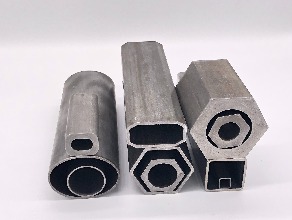
Customization is a cornerstone of our service. We manufacture tubes with various cross-sectional profiles, including Special-Shaped Alloy Steel Tubes, Special-Shaped Carbon Steel Tubes, Oval Steel Pipes&Tubes, Hexagonal Steel Pipes&Tubes, and Triangle Steel Pipes&Tubes. These custom shapes cater to unique structural and aesthetic requirements. Our production processes, including cold drawn and cold rolled, allow for precise control over outer diameter and wall thickness. This ensures that each tube meets the exact specifications of the application. We also provide various heat treatments, such as Annealed Pipe&Tube, Normalized Pipe&Tube, and Quenched and Tempered Steel Pipe, to optimize mechanical properties. This extensive customization ensures our steel tubes perform optimally in their intended environments.
We also supply specialized tubes like 1215 Steel Pipe for superior machinability and 09CrCuSb Steel Pipe for enhanced atmospheric corrosion resistance. For rebar connections in construction, we offer various mechanical Rebar Coupler systems, including Rolling Straight Thread Rebar Coupler and Bolted Rebar Coupler. These couplers ensure secure and efficient rebar splicing. Our commitment to precision and quality makes us a trusted partner for OEMs and engineering projects globally. We ensure every product, from standard Round Steel Pipes&Tubes to complex Shaped Steel Pipes&Tubes, delivers exceptional performance.
Seamless steel tubes are manufactured from a solid billet that is pierced and drawn, resulting in a tube without any welded seams. Welded steel tubes are produced by forming a flat strip of steel into a tube shape and then welding the edges together. Seamless tubes generally offer higher pressure resistance and uniformity, while welded tubes can be more cost-effective for certain applications.
Cold drawing is a key process that refines the steel tube’s dimensions, improves its surface finish, and enhances its mechanical properties such as tensile strength and hardness. It also allows for the production of tubes with tighter tolerances and specific shapes, which are necessary for precision applications.
Steel tubes can be manufactured from a wide range of steel types, including various grades of carbon steel (e.g., 1020, 1035, S45C) and alloy steel (e.g., 4130, 4140, 25CrMo4). The choice of material depends heavily on the intended application, considering factors like strength, corrosion resistance, and temperature requirements.
Tenjan Steel Tube ensures product quality through a vertically integrated manufacturing process, stringent ISO-certified quality control systems, and comprehensive inspections. This includes Positive Material Identification (PMI) and Non-Destructive Testing (NDT) to verify material integrity and structural soundness, ensuring all products meet or exceed international standards like ASTM, EN, DIN, and JIS.
Absolutely. Steel tubes can be highly customized in terms of material composition, outer diameter, wall thickness, cross-sectional shape (e.g., square, rectangular, hexagonal, oval, special-shaped), and specific heat treatments. Manufacturers like Tenjan Steel Tube specialize in providing tailored, high-precision tubing solutions to meet unique OEM and engineering project requirements.
Discover the precision and reliability of Tenjan Steel Tube’s manufactured products. Whether you need seamless, cold-drawn, or custom-shaped steel tubes for automotive, hydraulic, or construction applications, our experts are ready to provide tailored solutions. Contact us today for a consultation or to request a quote for your next project. Email: Sunny@tenjan.com | Tel: +86 51988789990 | WhatsApp: +86 13401309791| Tel: +86 51988789990 | WhatsApp: +86 13401309791


Home Product Capabilities Case Studies Blogs About Get a Quote
Pipe & Tube Manufacturing Process Shapes & Profiles Pipes & Tubes Material Standard Steel Pipes & Tube Rebar Couplers Cold Drawn Steel Profiles & Bars
Oil & Petrochemical Industry Automotive & Motorcycle Components Mechanical Engineering Components Mining Construction Support Structures High-Pressure Boiler System Construction Machinery Geological Drilling Agricultural Machinery Parts Industrial Fluid Transfer Systems


© 2024 Changzhou Tenjan Steel Tube Co., Ltd All rights reserved. Privacy StatementTerms-ConditionsSitemap
