Selecting Steel Pipes for Drilling Equipment: Core Factors
Selecting steel pipes for drilling equipment is not a catalog exercise. Rig masts, feed cylinders, and drill rod handling systems operate under shock...
Selecting steel pipes for drilling equipment is not a catalog exercise. Rig masts, feed cylinders, and drill rod handling systems operate under shock loading, misalignment, and long unsupported spans. The tube straightness, dimensional tolerance, and material grade accepted on the purchase order directly determine how long the equipment keeps working. Much of the published guidance stops at casing and drill pipe specifications, but the hollow components inside the rig create the more immediate field failures. This article covers the precision cold drawn tube decisions that matter for geological drilling, mining support, and rig service, from material standards to the checks that keep rework off the site.
What Do Drilling Rigs Really Ask of Steel Pipe?
Drilling equipment is not a single tube application. The drill string and casing often follow API standards and sit outside the precision tube range; the feed cylinders, mast guides, rod handling arms, and hydraulic lines are different. These components carry cyclic side loads, pressure pulses, and abrasive slurry while the tube is expected to maintain alignment over long spans. In practice, a plain carbon steel grade with good dimensional control will outlast a higher alloy grade supplied with poor straightness. Since 2004 I have seen this pattern repeat: drilling component failures frequently begin as tolerance drift, not as an obvious material defect.
Precision tube for drilling equipment earns its value through repeatability. A cold drawn seamless or cold drawn welded tube can hold tight OD and wall tolerances, but only if the supplier controls the full route from raw material to finished product. On a drill mast that is assembled in a jig, inconsistent straightness forces the crew to compensate with shims. On a feed cylinder, ovality kills seals. The specification should therefore read as a control document, not merely a material callout.
Which Steel Pipe Standards Apply to Drilling Equipment?
No single standard covers all steel pipes for drilling equipment. The rotating drill stem and surface casing follow API 5CT and API 5DP because those standards define thread form, wall thickness, and yield properties. The precision mechanical tubes inside the rig usually reference mechanical or pressure service standards instead: EN 10297-1 for general engineering, JIS G3445 for machine structural tube, ASTM A519 for seamless carbon and alloy mechanical tubing, and GB/T 3087 or DIN 17175 for pressure and elevated-temperature service. The table below is the reference set I use when a drilling equipment maker sends a procurement package.
| Drilling component | Common reference standards | Procurement focus |
|---|---|---|
| Rotating drill stem and casing | API 5CT, API 5DP | Thread form, wall thickness, yield |
| Hydraulic feed cylinders and mast guide tubes | EN 10297-1, JIS G3445, ASTM A519 | Dimensional tolerance, mechanical strength |
| Rig pressure and heat exchange service | GB/T 3087, DIN 17175, JIS G3461 | Pressure rating, high-temperature stability |
| Structural tube for rig frames | S355JR, Q355B, ASTM A500 | Weldability, yield, section straightness |
| Wear-prone mechanical parts | 4130, 4140, 25CrMo4 | Hardenability, toughness after heat treatment |
Should You Use Seamless or Welded Steel Pipes for Drilling Equipment?
If the tube carries hydraulic fluid under pressure or sees reversing stress, seamless is the safer default. The absence of a weld line removes a crack initiation path and simplifies ultrasonic testing. If the part is structural and lightly loaded, a cold drawn welded tube can reduce material cost, provided the seam is processed to near-parent metal condition. The mistake is rarely welded tube itself; it is applying a structural welded specification to a pressure or fatigue part.
Fatigue in drilling service does not announce itself. A feed cylinder that cycles from low to high pressure several times per hour accumulates stress at micro-discontinuities. Seamless stock gives a cleaner baseline for that environment. For mast members and nonpressure guides, the economics are different, and the weld line can be acceptable when NDT is defined. The decision belongs in the first specification review, before a price comparison, because swapping production routes later changes lead time and testing.
If your drilling program includes long hydraulic feed cylinders or unsupported rod guide tubes, the ovality and straightness callout is a decision point that is hard to resolve from a catalog. Send the drawing to Sunny@tenjan.com and we can check which production route matches before you freeze the bill of materials.
Why Do Tolerances and Straightness Decide Drilling Performance?
A feed cylinder tube that is oval at the gland end will chew seals. A drill rod guide that bows will create side load and premature wear. These failures are slow and expensive because they reveal themselves after the rig is built. Cold drawn and cold rolled steel tubes in our product range hold OD and wall tolerance to ±0.1 mm across diameters from 10 mm to 108 mm and walls from 1 mm to 20 mm, which is the level of control that precision drilling components generally need.
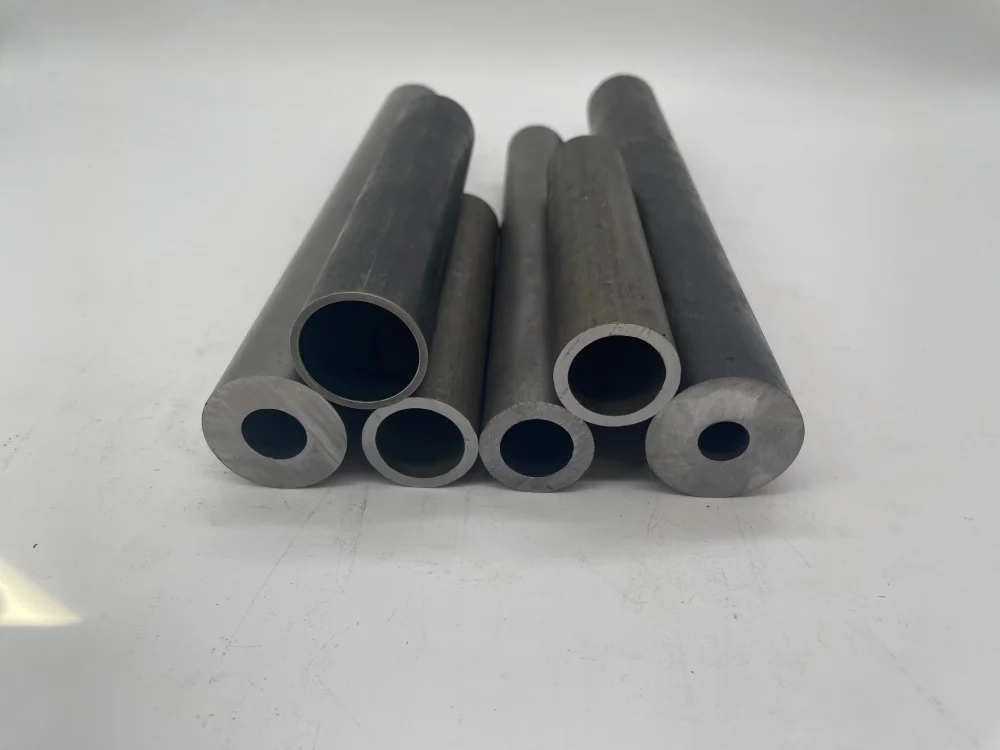
Straightness is not cosmetic. In a long guide tube, a small bow over the full length becomes a constant bending load on the rod and the bushing. The point measurement may pass while the functional straightness fails. That is why serious drilling tube inquiries specify straightness in millimeters per meter over the full bar length, and why the mill should confirm the measurement method along with the number. Surface finish also matters where seals slide and where NDT sensitivity depends on a clean outside surface.
What Should You Specify Before Ordering Steel Pipes for Drilling Equipment?
Five callouts belong on the inquiry. Name the material grade and heat treatment condition first, because 4130, 4140, 25CrMo4, and carbon steel grades behave differently after machining and welding. Then give OD and wall with tolerance, straightness and ovality requirements, and the required length. Next state the inspection scope: PMI on the finished tube, ultrasonic testing for internal discontinuities, eddy current testing for surface and near-surface conditions, and hydrostatic testing for pressure service where applicable. Finally, give the order quantity and the delivery window, including any profile development if the tube is not round.
Drilling tube selection gets simpler when the supplier controls the route from raw material to finished diameter. When your drawing is ready, send the material grade, OD and wall tolerance, straightness callout, inspection scope, and order quantity to Tenjan Steel Tube at Sunny@tenjan.com or call +86 13401309791. We will confirm which standard, process, and delivery window fit your rig schedule.
What Questions Do Buyers Ask About Steel Pipes for Drilling Equipment?
Do I need API 5CT casing pipe for every drilling application?
No. This is the most common misread in drilling tube procurement. API 5CT governs casing and tubing for well construction, with thread geometry and collapse properties that matter in downhole service. Many drilling equipment components never go downhole. A mast guide, a feed cylinder, a rod handling arm, or a hydraulic line is a mechanical tube problem, not a casing problem. Choosing API 5CT for those parts adds cost and limits dimensional control that the component actually needs. Start with the function: downhole pressure and formation loads point to API; rig mechanical loads point to mechanical standards such as EN 10297-1 or ASTM A519.
What is the difference between drill pipe and the mechanical tube used inside the rig?
Drill pipe transmits rotation, tensile load, and drilling fluid down the hole. It is a high-tensile, high-torsion component with threaded tool joints and is treated as a consumable string. Mechanical tube inside the rig carries hydraulic pressure, guides moving parts, or forms part of the mast structure. The failure modes differ. Drill pipe fails from fatigue, wear, or thread damage under tension. Mast guide tube fails from ovality, bending, or seal damage. That difference changes the purchasing logic: drill pipe is bought to a string design and inspection schedule, while rig mechanical tube is bought to a dimensional and material specification that the OEM controls.
Can precision steel tubes be supplied in special shapes for drill masts and guides?
In drill mast and rod guide programs we have supplied, special shaped tubes often remove a separate bracket or weldment. A hexagonal, rectangular, or custom section can locate a bearing block, provide a sliding rail, or fit an existing spar without adding adapter plates. The process is cold drawing through a shaped die, so the outside profile follows the tooling. Dimensions are more consistent than a fabricated assembly made from multiple plates. The practical limit is that the profile must allow the tube to be drawn, checked, and straightened. Send a sketch early, because profile development influences lead time and tooling cost.
What minimum order quantity should I expect for drilling equipment tubes?
It depends on the tube type and production route. A standard round cold drawn tube in a common size and grade usually carries a smaller minimum order because the tooling already exists. A special shaped profile or an uncommon material grade often requires tooling setup, so the first order may need a larger minimum to cover that work. The condition is simple: if your size is standard, quantity flexibility is better; if your profile is custom, the tooling cost becomes the main variable. In most programs, the answer comes from the drawing, not from a general price list.
How do I confirm material composition and NDT inspection for drilling components?
Ask for the mill test certificate and the inspection record together. Material composition matters because free-cutting or low-alloy substitutions can change weld behavior, fatigue strength, and hardenability. The mill certificate alone does not prove that the tube you received is the same heat. PMI on the finished tube and the selected NDT method close that gap. Ultrasonic testing finds internal discontinuities in seamless material; eddy current testing screens surface and near-surface defects. Both should be tied to a defect threshold that matches the component’s service, not an arbitrary package. Share the drawing and inspection scope you actually need with Sunny@tenjan.com, and we will quote only the tests that are technically required.
If you’re interested, check out these related articles:
Custom-Shaped Steel Tubes: Design Considerations
Precision Tube Quality Inspection Checklist
Cold Drawn vs Cold Rolled Steel Tubes